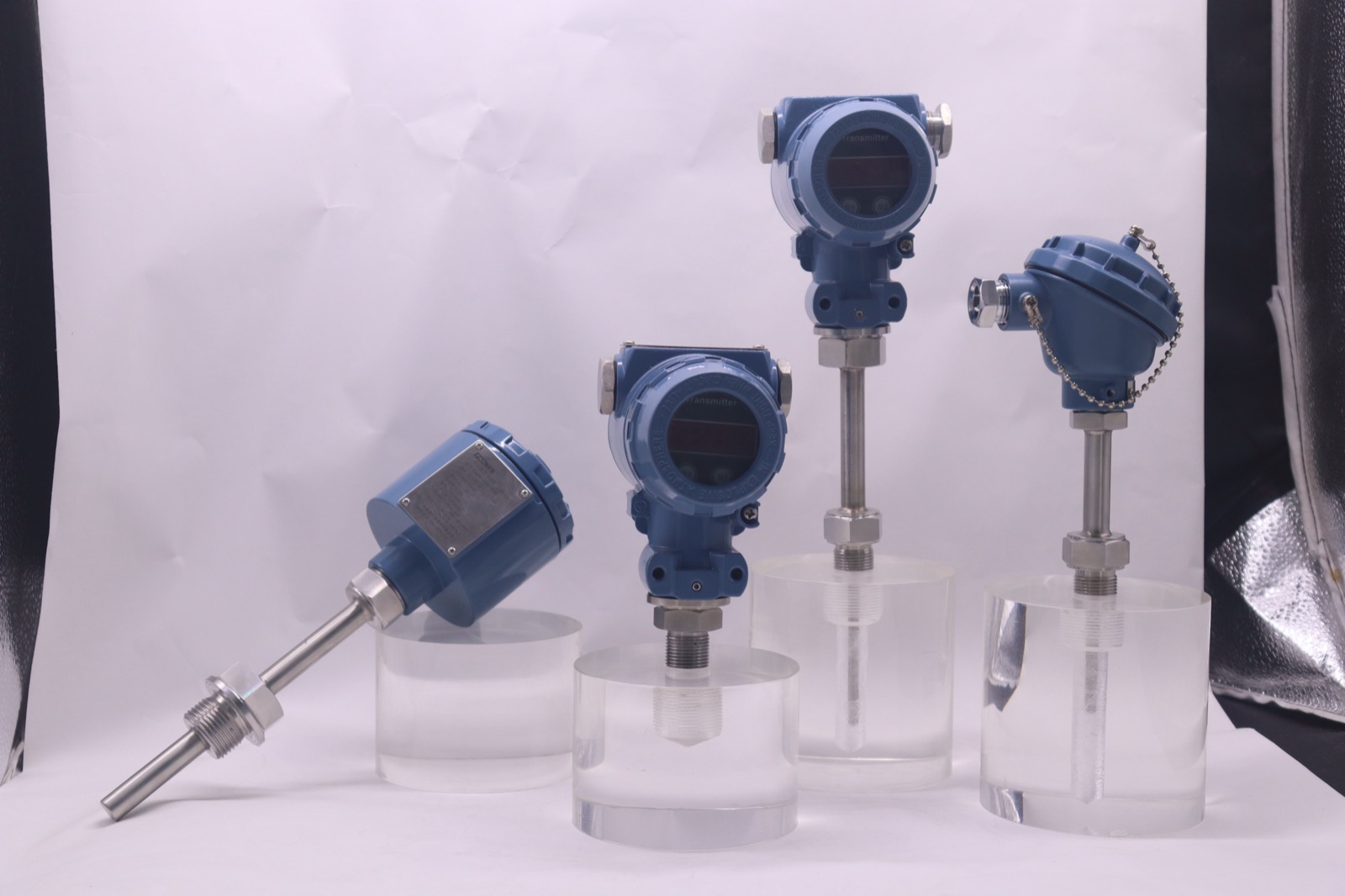
A 4-20 mA pressure transmitter is specified by seven decisions: pressure range (SEGMENsensor covers 0–0.1 to 0–400 bar), accuracy (±0.25% FS standard, ±0.1% FS high-accuracy), loop supply (10–36 V DC, 2-wire), process connection, wetted materials, media temperature and protection rating (IP68), plus ATEX for hazardous areas. OEM orders start at 10 pieces with samples in 5–7 days.
The 4-20 mA current loop is still the most common way to bring a pressure reading into a PLC, a building controller or a data logger. The transmitter itself, however, is a configured product: two units with the same "4-20 mA" label can differ in range, accuracy class, thread, seal material and temperature rating, and a wrong choice on any of these shows up as drift, a clipped signal or a leaking fitting. This guide walks through each selection decision in the order a purchasing or controls engineer usually meets it, using the published specifications of the SEGMENsensor 4-20 mA pressure transmitter. If the loop is already specified and only the wiring is open, see how to wire a 4-20 mA pressure transmitter.
How the 4-20 mA Loop Works, and Why It Matters for Selection
In a 2-wire loop-powered transmitter, the same two conductors carry the supply voltage and the measurement signal. The transmitter regulates the loop current between 4 mA at the bottom of the range and 20 mA at full scale. Direct current signals of this type for industrial-process measurement and control are defined in IEC 60381-1 — Analogue signals for process control systems, Part 1: Direct current signals ↗. The "live zero" at 4 mA is what makes the loop self-diagnosing: 0 mA means a broken wire or a dead transmitter, not zero pressure.
Three selection consequences follow directly from the loop principle:
- Supply voltage must cover the loop drop. The SEGMENsensor transmitter accepts 10–36 V DC. At 20 mA the receiver's sense resistor (typically 250 Ω, a 5 V drop) and the cable resistance subtract from the supply. With a 24 V DC supply, the total loop resistance can be up to about (24 V − 10 V) ÷ 0.02 A = 700 Ω, which comfortably covers a 250 Ω input plus several hundred metres of cable.
- The signal is immune to voltage drop, not to noise. Current signals do not lose accuracy over long cable runs, but shielded twisted-pair cable and a single grounding point are still required near variable-frequency drives.
- One loop, one receiver input. If the same pressure must feed a PLC and a local display, the display must be a loop-powered indicator wired in series, or a 0-10 V or RS485 output version should be chosen instead.
Decision 1: Pressure Range
SEGMENsensor pressure transmitters are available in selectable ranges from 0–0.1 bar to 0–400 bar. The range is the single most important choice because it fixes both resolution and overload margin.
Rule of thumb. Choose a range so that the normal operating pressure sits roughly in the upper half of the span. A pump discharge that runs at 6 bar belongs on a 0–10 bar transmitter, not a 0–100 bar one: on the wider range the same ±0.25% FS accuracy would represent ±0.25 bar instead of ±0.025 bar. At the same time, keep pressure spikes inside the overload rating. The SEGMENsensor transmitter withstands 2–5 times its rated range as overload pressure, depending on the range, which is usually sufficient for water hammer in HVAC and process lines; hydraulic systems with sharp pressure peaks should be quoted with the actual peak value.
Gauge, absolute or vacuum. Most applications need gauge pressure (referenced to atmosphere). Vacuum and compound ranges, and absolute references for altitude-independent measurement, are specified on the enquiry. A companion vacuum pressure switch covers −1 to 0 bar where only a switch point is needed.
Decision 2: Accuracy Class
Two accuracy classes are offered: ±0.25% FS as standard and ±0.1% FS as the high-accuracy option. "FS" (full scale) means the error band is expressed as a fraction of the range, so it is a fixed pressure value across the whole span. For most control loops, filling stations and HVAC differential applications, ±0.25% FS is more than adequate; the ±0.1% FS version is chosen for test benches, custody-adjacent measurement, and semiconductor or laboratory utilities where the transmitter output is compared against calibrated references. Both classes are supplied with a per-unit calibration record from the ISO 9001:2015 line. Methods for evaluating transmitter performance, including accuracy, hysteresis and temperature effects, are set out in IEC 60770-1 — Transmitters for use in industrial-process control systems, Part 1: Methods for performance evaluation ↗.
Decision 3: Process Connection and Wetted Materials
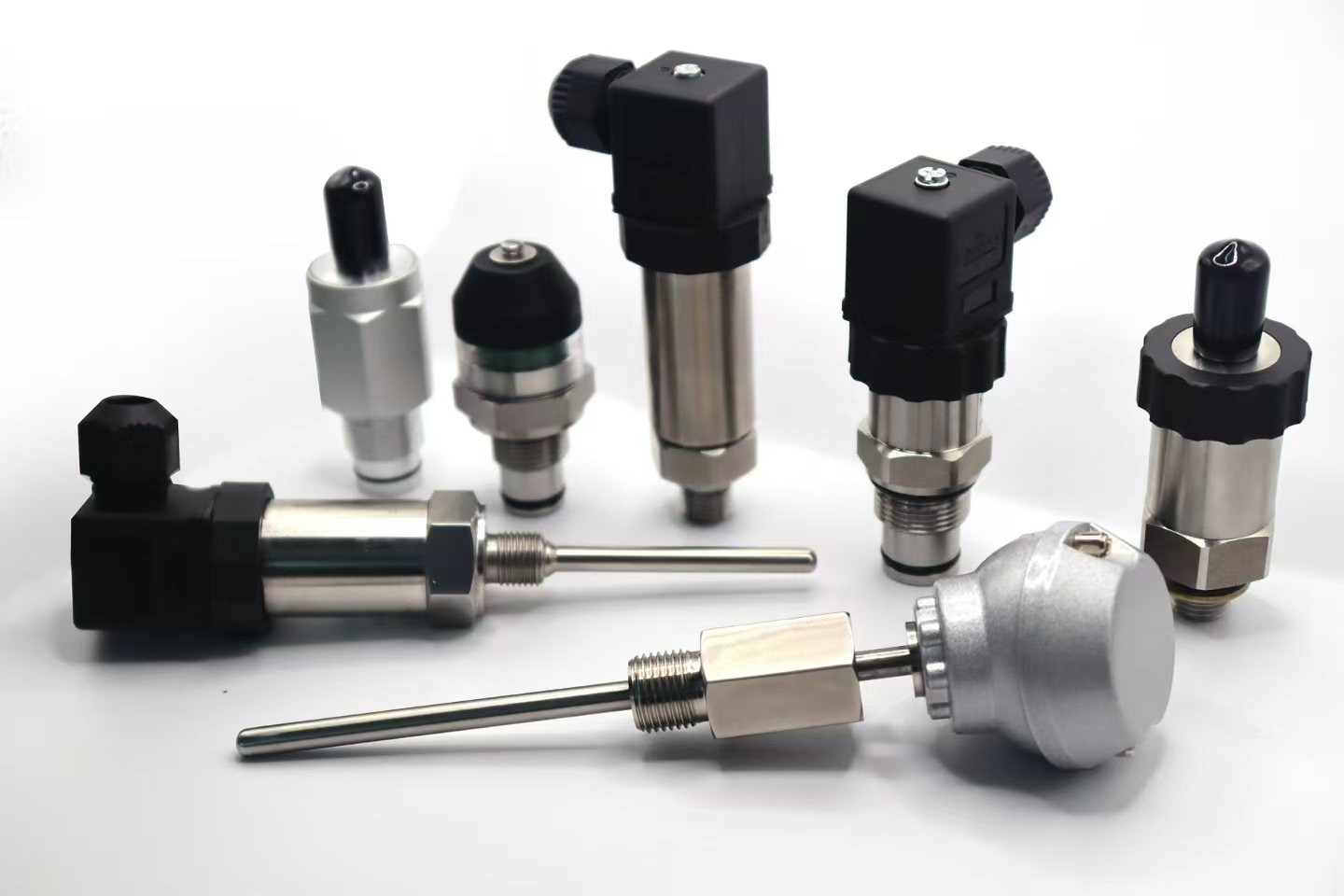
The transmitter body is 316L stainless steel with a piezoresistive silicon or ceramic membrane sensing element. Standard process connections are G1/4, G1/2, 1/4 NPT and 1/2 NPT; a flush diaphragm version is used for viscous, crystallising or particle-laden media that would block a threaded port. Wetted materials are 316L stainless steel as standard, with Hastelloy for aggressive chemicals and ceramic where a food-grade wetted surface is required. Specify the thread standard used at the destination: North American panels normally expect NPT, European and Australian skids expect BSPP (G) threads.
Decision 4: Media and Ambient Temperature
Two temperature ratings appear on the datasheet and they are not interchangeable. Media temperature is what the wetted diaphragm sees: −40 °C to +125 °C on the SEGMENsensor transmitter, which covers chilled water, hot-water heating loops and most process liquids without a cooling element. Ambient temperature is what the electronics housing sees: −20 °C to +85 °C. If the transmitter is mounted directly on a hot pipe in a sealed enclosure, ambient can exceed media temperature; a short impulse line or a siphon moves the electronics away from the heat.
Decision 5: Protection Rating and Electrical Connection
The 4-20 mA transmitter is rated IP68 (1.5 m continuous submersion) according to the IP code of IEC 60529 — Degrees of protection provided by enclosures (IP Code) ↗, and is supplied with either a 2-wire cable or an M12 connector. Choose the cable version for pits, outdoor tanks and wash-down areas where a connector interface would be a weak point; choose M12 for machine builders who want to swap units without rewiring the panel.
Decision 6: Hazardous-Area Option
Where the transmitter is installed in a potentially explosive atmosphere, an ATEX/IECEx option is available. State the required equipment group, category or zone on the enquiry so that the correct variant, barrier requirements and documentation are quoted; the intrinsically safe loop must then be designed as a whole, including the barrier and cable parameters.
Specification Summary
All figures below are taken from the SEGMENsensor pressure switch and transmitter product page and apply to the standard 4-20 mA pressure transmitter.
| Parameter | SEGMENsensor 4-20 mA pressure transmitter |
|---|---|
| Pressure range | 0–0.1 bar to 0–400 bar (selectable) |
| Output signal | 4-20 mA (2-wire) / 0-10 V / RS485 |
| Accuracy | ±0.25% FS (standard) / ±0.1% FS (high-accuracy) |
| Sensing principle | Piezoresistive silicon / ceramic membrane |
| Process connection | G1/4, G1/2, 1/4 NPT, 1/2 NPT, flush diaphragm |
| Wetted materials | 316L stainless steel / Hastelloy / ceramic (food grade) |
| Electrical connection | 2-wire loop powered, cable or M12 connector |
| Supply voltage | 10–36 V DC (loop powered) |
| Media temperature | −40 °C to +125 °C |
| Ambient temperature | −20 °C to +85 °C |
| Overload pressure | 2–5 × rated range |
| Protection rating | IP68 (1.5 m continuous) |
| Certifications | CE, RoHS; ATEX/IECEx option; ISO 9001:2015 factory |
| OEM MOQ / lead time | 10 pcs · samples (1–5 pcs) in 5–7 days · production in 3–5 weeks |
Download the one-page datasheet (PDF)
The datasheet lists all available ranges, both accuracy classes, output options, supply voltage, process connections, wetted materials, temperature limits, IP rating, dimensions and the ordering code. No registration required.
Need a transmitter specified for your loop?
Send range, media, thread standard and quantity to our engineers. MOQ 10 pcs · samples in 5–7 days · reply within 24 hours.
Where 4-20 mA Pressure Transmitters Are Specified

HVAC and building services. Chilled-water and heating loops, pump differential control and filter monitoring typically use 0–10 bar or 0–16 bar gauge transmitters with G1/4 threads and ±0.25% FS accuracy. Media temperature up to +125 °C covers heating water without a siphon.
Water and wastewater. Pump stations and pressure zones use IP68 cable versions on 0–10 to 0–25 bar ranges; flush-diaphragm variants are chosen for sludge lines.
Hydraulic power units and machine tools. 0–250 and 0–400 bar ranges with 1/4 NPT or G1/4 connections and M12 connectors. Quote the pressure peak, not the nominal pressure, so that the overload margin is confirmed.
Energy storage, data-centre cooling and semiconductor utilities. Coolant distribution units and process-cooling loops combine a pressure transmitter with a level sensor on the reservoir; the ±0.1% FS class is common on semiconductor utilities. See the CDU liquid-cooling sensor guide for the full sensor set.
Chemical and food processing. Hastelloy or ceramic wetted parts and the ATEX/IECEx option are specified for aggressive media and classified areas.
Specifying for OEM Volume
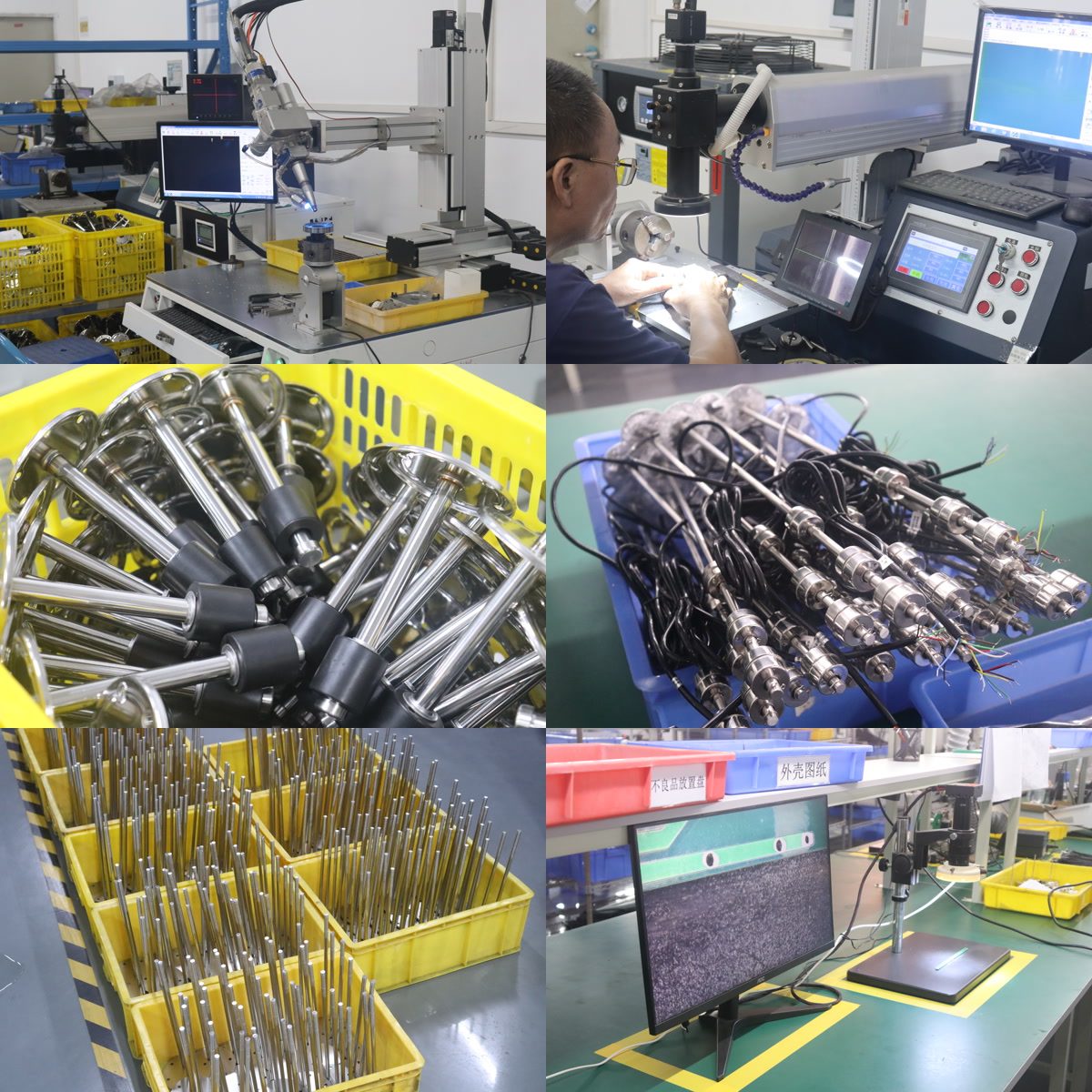
Segmen Industrial Development Co., Ltd. was founded in Shenzhen in 2019; its engineering team brings more than 20 years of sensor experience and supplies 200+ OEM customers in 30+ countries. Transmitters are built to order on an ISO 9001:2015 production line, so a validated sample carries directly into the series order.
- Range in bar (0–0.1 to 0–400 bar), gauge/absolute/vacuum, and the expected pressure peak.
- Accuracy class: ±0.25% FS standard or ±0.1% FS high-accuracy.
- Output: 4-20 mA 2-wire, 0-10 V or RS485, and cable or M12.
- Process side: thread (G or NPT), flush diaphragm if needed, media and its temperature, wetted material.
- Environment: ambient temperature, IP requirement, ATEX/IECEx zone if any.
- Quantity: sample count now and expected annual volume, plus destination and Incoterm (EXW, FOB Shenzhen, CIF, DDP).
Frequently Asked Questions
Selectable ranges from 0–0.1 bar to 0–400 bar. Choose a range so that the normal operating pressure sits in the upper part of the span; the transmitter tolerates 2–5 times the rated range as overload pressure.
±0.25% FS is standard; a ±0.1% FS high-accuracy version is available. FS means full scale, so on a 0–10 bar transmitter ±0.25% FS corresponds to ±0.025 bar anywhere in the range.
10–36 V DC on the loop. The supply must cover the transmitter's minimum voltage plus the drop across the receiver and cable at 20 mA; at 24 V DC that leaves up to about 700 Ω of total loop resistance.
G1/4, G1/2, 1/4 NPT and 1/2 NPT threads or a flush diaphragm. Wetted parts in 316L stainless steel as standard, with Hastelloy or ceramic for corrosive or food-grade media.
MOQ 10 pieces, samples of 1–5 pieces shipped in 5–7 days, production orders in 3–5 weeks, and every enquiry answered within 24 hours. The factory is ISO 9001:2015 certified; transmitters carry CE and RoHS, with ATEX/IECEx as an option.
Related reading: Pressure transmitters and switches — product page · How to wire a 4-20 mA pressure transmitter · Lead time, MOQ and OEM pricing terms · CDU liquid-cooling sensor guide
Last updated: 22 September 2026. Specifications reflect the SEGMENsensor product page at the date of publication; contact us for the current datasheet revision.