Multiply bar by 14.5038 to get psi, psi by 0.0689476 to get bar. To go from gauge to absolute pressure, add atmospheric pressure: psia = psig + 14.696 (bara = barg + 1.01325) at standard sea-level conditions.
Pressure unit converter
Conversion factors from NIST SP 811. inH₂O at 4 °C (249.0889 Pa); mH₂O conventional (9806.65 Pa). Change the local atmosphere for altitude.
Conversion factors
| 1 unit | = Pa | = bar | = psi |
|---|---|---|---|
| 1 bar | 100 000 | 1 | 14.5038 |
| 1 kPa | 1 000 | 0.01 | 0.145 038 |
| 1 MPa | 1 000 000 | 10 | 145.038 |
| 1 psi | 6 894.757 | 0.068 948 | 1 |
| 1 atm | 101 325 | 1.013 25 | 14.695 9 |
| 1 mmHg (torr) | 133.322 | 0.001 333 | 0.019 337 |
| 1 inH₂O (4 °C) | 249.089 | 0.002 491 | 0.036 127 |
| 1 mH₂O | 9 806.65 | 0.098 067 | 1.422 33 |
psi vs psig vs psia (gauge vs absolute)
psig (gauge) reads zero at local atmospheric pressure — a tyre at 32 psig is 32 psi above the surrounding air. psia (absolute) reads zero at perfect vacuum, so the same tyre is about 46.7 psia at sea level. Plain "psi" usually means gauge pressure in hydraulic and pneumatic practice, but datasheets should state g or a explicitly.
| Reference | Zero point | Typical use |
|---|---|---|
| Gauge (vented) | Local atmosphere | Hydraulics, pumps, compressed air, open-tank level |
| Sealed gauge | Atmosphere sealed in at manufacture | High ranges, wet or dusty sites where a vent tube is a problem |
| Absolute | Vacuum | Vacuum processes, altimetry, barometric compensation |
Worked examples
- Hydraulic system at 250 bar = 250 × 14.5038 = 3 626 psi (25 MPa).
- Compressed air at 100 psig = 100 + 14.696 = 114.7 psia = 7.89 bar(a).
- Water column 10 m = 10 × 9.806 65 kPa = 98.07 kPa ≈ 0.98 bar (see the hydrostatic level calculator).
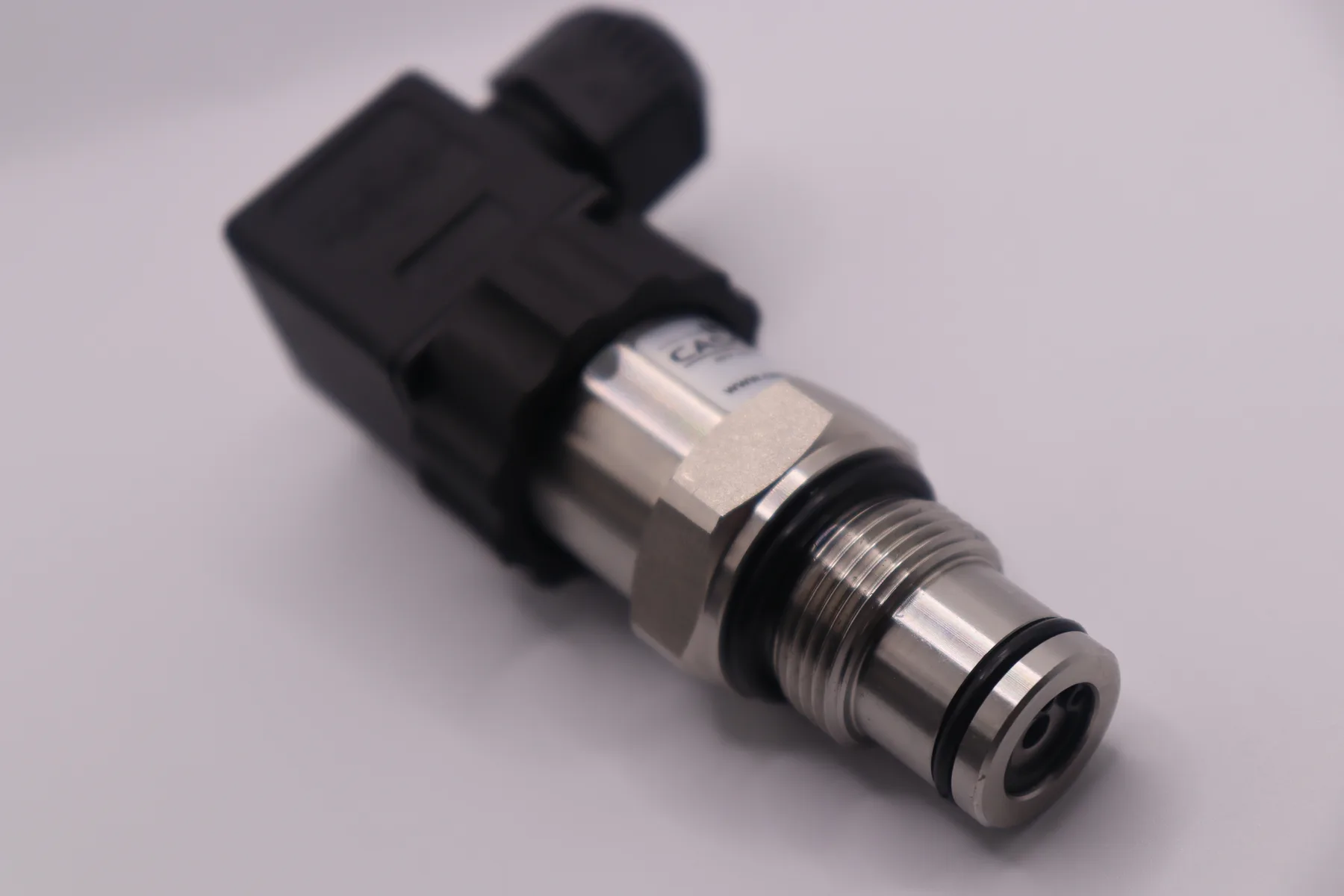
Choosing a range? Our pressure transmitters cover 0–0.1 to 0–400 bar with ±0.25 % FS accuracy (±0.1 % FS high-accuracy version); convert the loop signal with the 4–20 mA calculator.
Frequently Asked Questions
psig is gauge pressure, measured from local atmospheric pressure; psia is absolute pressure, measured from vacuum. psia = psig + atmospheric pressure (14.696 psi at standard sea-level conditions). "psi" alone usually means gauge.
1 bar = 14.5038 psi, and 1 psi = 0.068 948 bar (NIST SP 811 factors).
Multiply by 10: 1 MPa = 10 bar = 1 000 kPa = 145.04 psi.
When the reading must be independent of weather and altitude — vacuum processes, barometric measurements, or sealed vessels where changes in atmospheric pressure would otherwise appear as process changes.
1 mH₂O = 9.806 65 kPa ≈ 0.098 bar ≈ 1.42 psi, using standard gravity and a density of 1000 kg/m³.