±0.1% FS linearityOEM volume supplyCE / IP67lead time confirmed with the quotation
±0.1%
Linearity
±500 mm
Max Stroke
IP67
Protection
Key facts
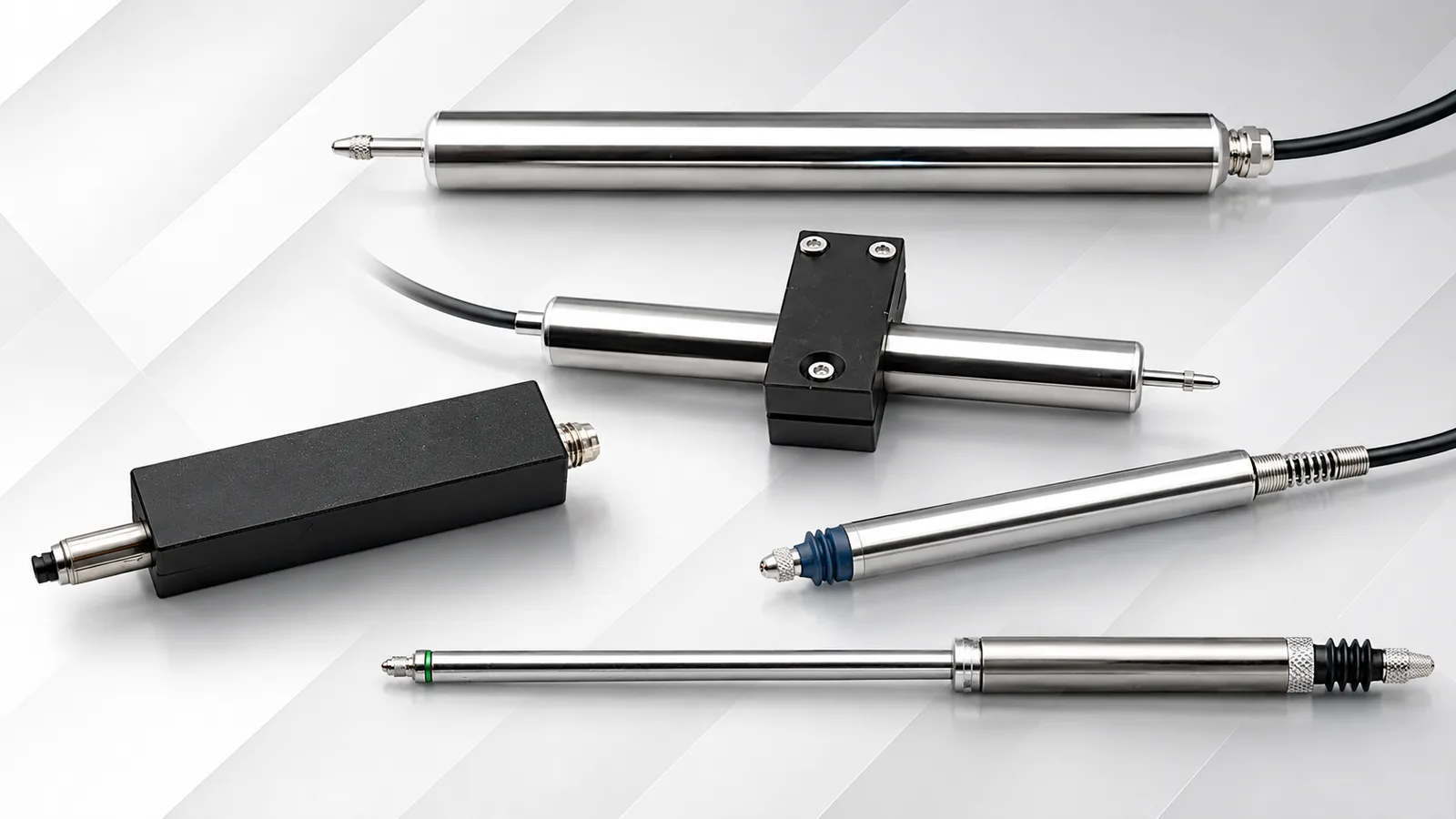
A SEGMENsensor LVDT (linear variable differential transformer) is a contactless inductive displacement sensor: a free ferromagnetic core moves inside primary and secondary coils, and the differential output is proportional to displacement, with no friction or wear. Three series cover strokes from ±0.5 mm to ±500 mm with AC, DC analog or RS485 output.
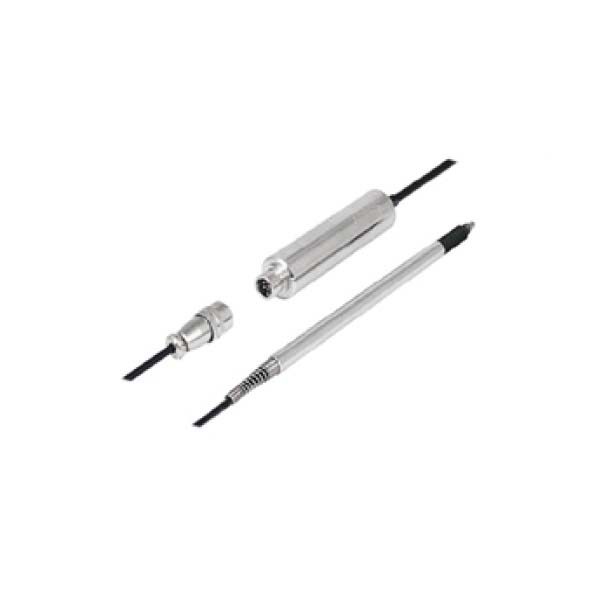
SDVH gauging probes cover ±0.5 to ±5 mm with ±0.1% FS linearity.
SDVG separate-core transducers cover ±2 to ±100 mm; SLT pen-type sensors cover ±10 to ±500 mm.
Repeatability is ±0.01% FS on all three series.
SDVH and SDVG operate from -40 to +125 °C; all series are rated IP67.
Qualification samples are 1–5 pcs, and production lead time is confirmed with the quotation.
Last updated · SEGMENsensor Engineering Team
Watch: how to choose, mount and wire an LVDT
LVDT Sensor: How to Choose, Mount and Wire It (AC vs DC)Gauging probe, separate core or pen type; AC or DC output; mounting without side load, setting the null point, and wiring to a PLC or a signal conditioner.
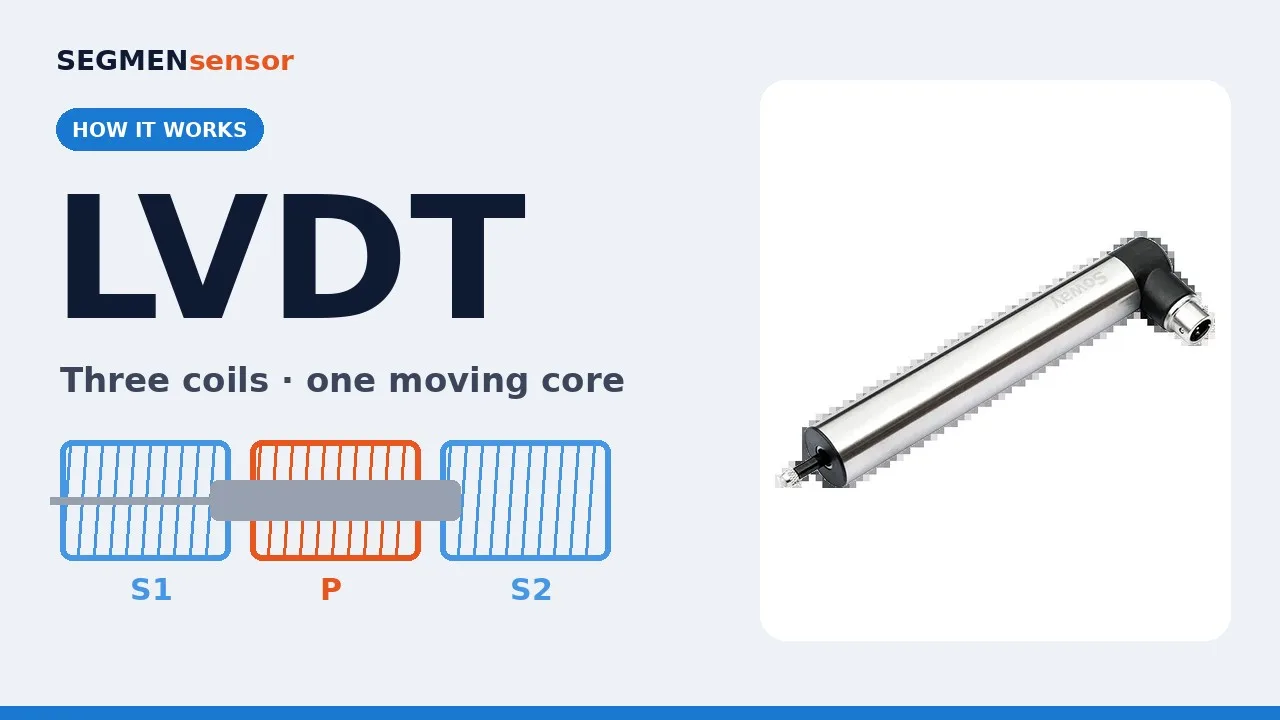
LVDT displacement sensors: how to choose one, mount it, and wire it. An LVDT has one primary coil and two secondary coils. A movable core changes how strongly they couple, so the output follows the core position, with no contact and no wear. With the core in the centre, the null point, the two secondary signals cancel. Move the core either way and the output rises, and its sign tells you the direction. There are three main types. Gauging probes have a spring-loaded tip for dimension checks, with ranges from ±0.5 mm to ±5 mm. Separate-core LVDTs, where the core rides on the moving part, cover ±2 to ±100 mm. Pen-type sensors with a built-in conditioner reach ±500 mm. Next, choose the output. An AC LVDT needs an external excitation of 1–10 kHz and a signal conditioner. A DC LVDT has the electronics built in. Supply 10–30 V DC, and read 4–20 mA, 0–10 V, or RS485 Modbus directly. Mounting. Centre the core in the bore so it never rubs the tube, and keep side loads off the probe. Clamp the body on its housing without over-tightening, so the housing is not deformed. For a ± range, set the reference position at the centre: the output reads zero, or 12 mA on a 4–20 mA output. Wiring a DC LVDT: supply + and 0 V, and the signal to the PLC analog input. Use shielded cable and ground the shield at one end only. An AC LVDT connects to a signal conditioner: its excitation output drives the primary, and the two secondaries return to its input. Keep the cable away from motor and drive cables. Before you order, specify the stroke, linearity, output, supply, temperature and connection. Linearity is ±0.25% FS as standard, or ±0.1% FS for high accuracy. SEGMENsensor makes gauging probes, separate-core and pen-type LVDTs, in 303 or 316L stainless steel, rated IP67. SEGMENsensor LVDT sensors. OEM volume supply. Datasheets and quotes at segmensensor.com.
How an LVDT WorksOne-minute animation of the linear variable differential transformer: primary and two secondary coils, the moving core, the null position, and how the size and phase of the difference signal give distance and direction.
What is an LVDT, and how does it measure position? An LVDT has three coils: a primary coil in the middle, and a secondary coil on each side. A movable core slides inside, on a push rod. An AC voltage excites the primary. With the core centred, both secondaries pick up equal voltages, and the difference is zero. When the core moves, one secondary couples more strongly than the other. The size of the difference shows how far the core moved, and its phase shows the direction. Electronics turn this into a DC signal, such as 4–20 mA. The core never touches the coils, so there is no wear. SEGMENsensor LVDT sensors: strokes from ±0.5 mm to ±500 mm. Learn more at segmensensor.com.
Made and tested in our factory
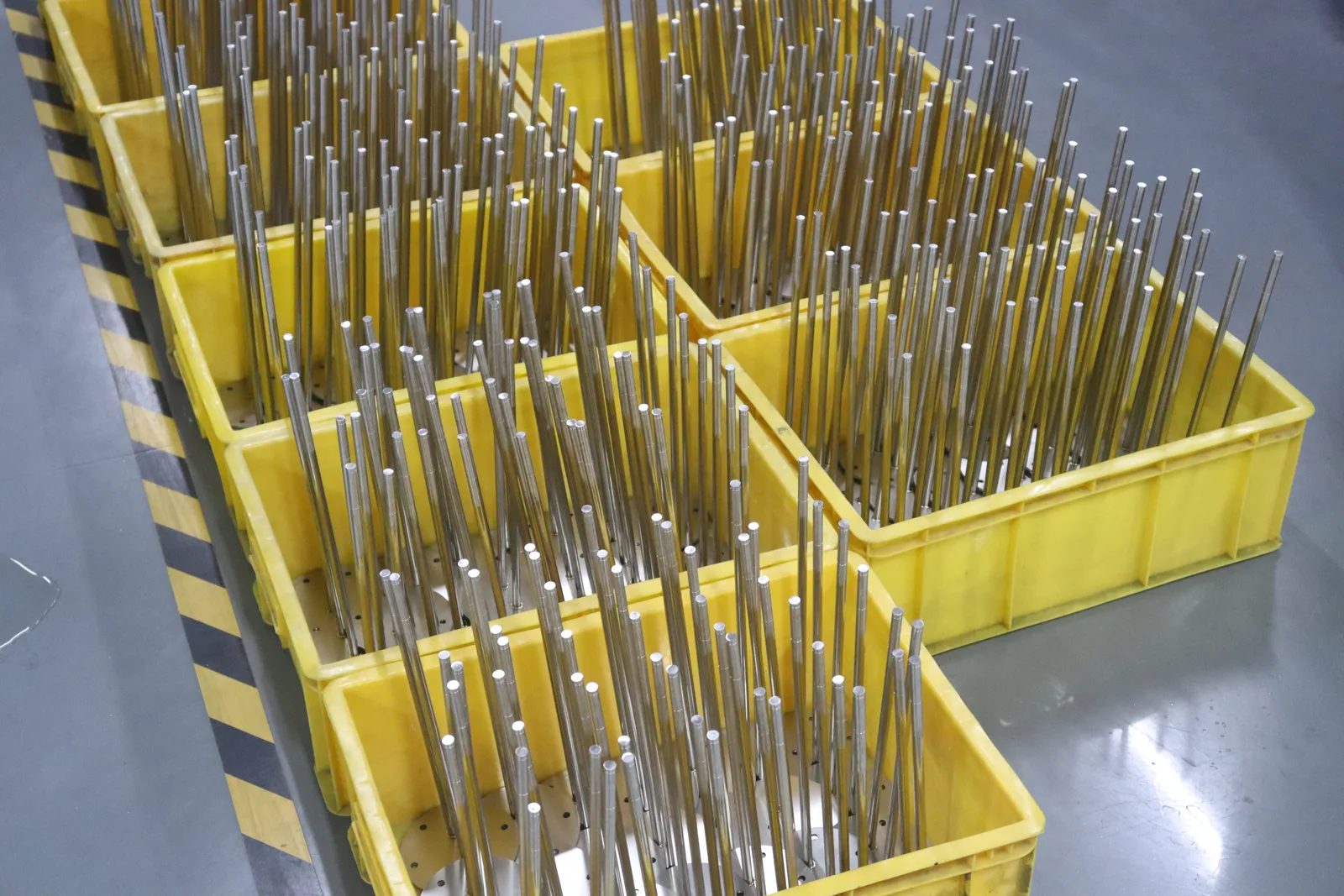
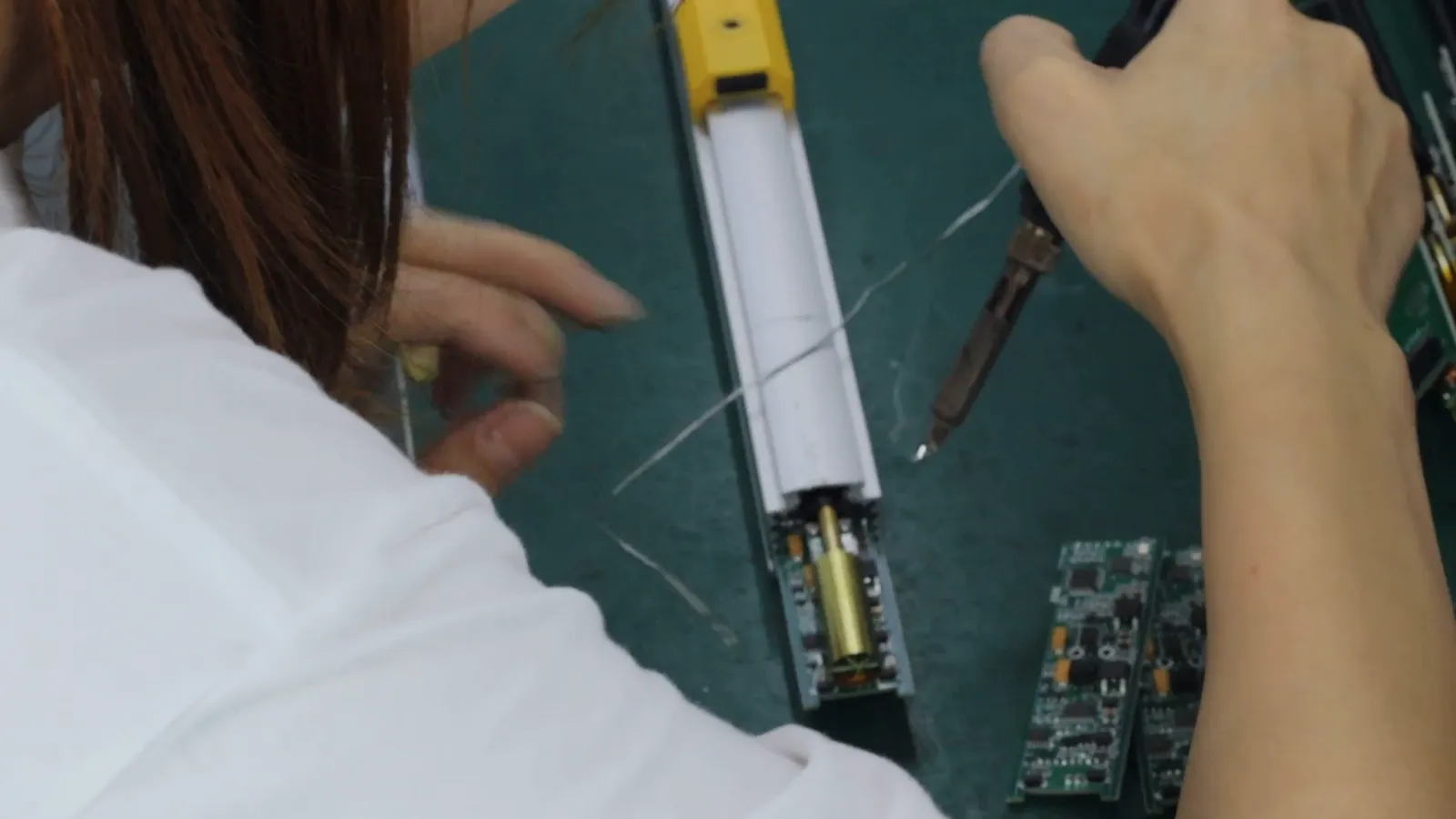
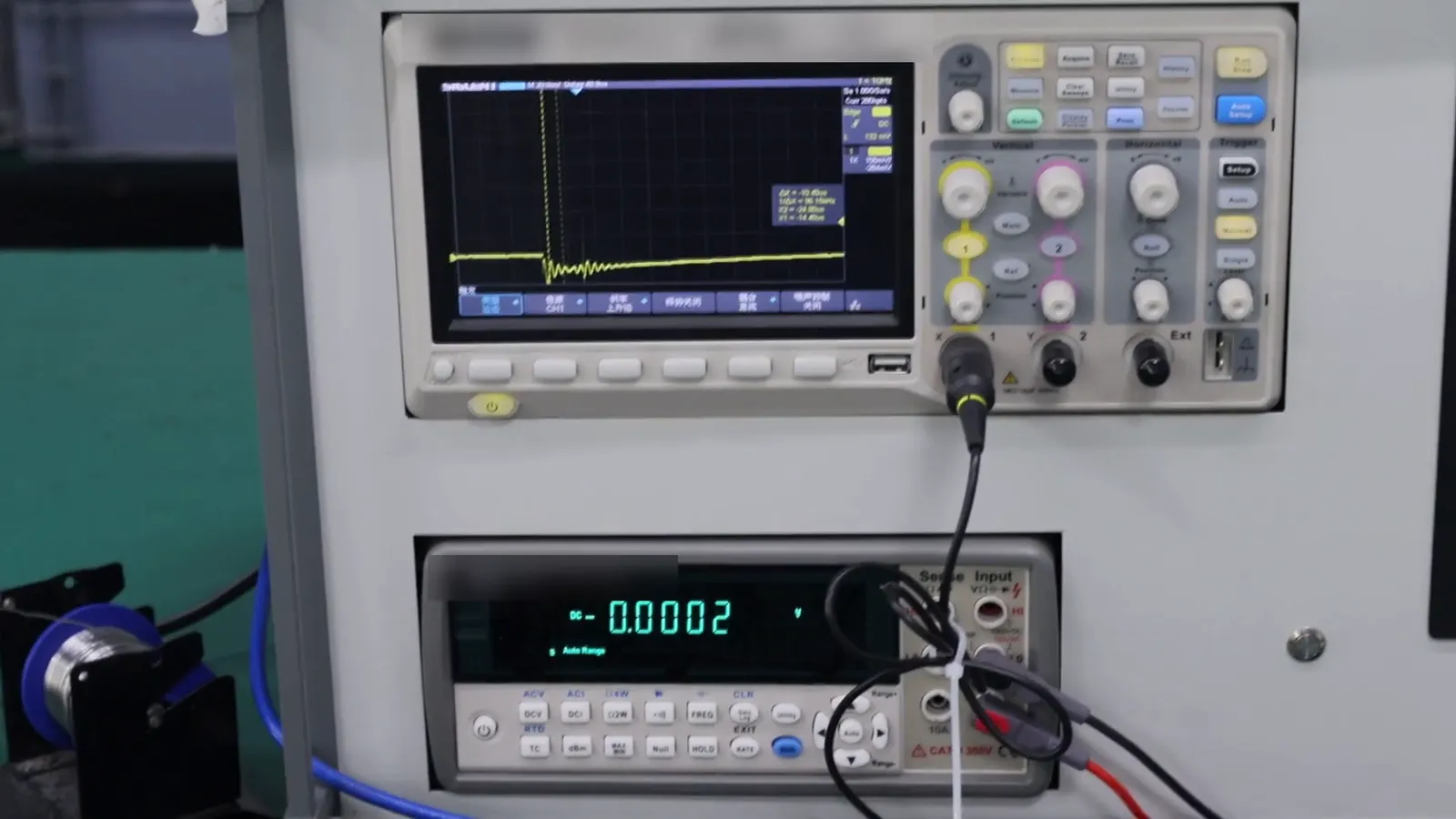
Stainless steel sensor rods staged for assemblySensor electronics soldered and assembled by handReturn-signal check on an oscilloscope
Every unit is tested before shipment. Photos from our own production and test lines.
Quick Answer
What is an LVDT displacement sensor? An LVDT (Linear Variable Differential Transformer) is a contactless inductive displacement transducer that measures linear position without friction or wear. A free-floating ferromagnetic core moves inside a wound coil assembly — the differential output voltage is precisely proportional to displacement. Zero mechanical contact means theoretically infinite service life. SEGMENsensor manufactures LVDT sensors as a factory-direct OEM supplier in Shenzhen, China, with strokes from ±0.5 mm to ±500 mm, linearity ±0.1% FS, and outputs in 4-20 mA, 0-10 V, or RS485.
Product Range
LVDT Displacement Sensor Product Lines
Four series covering gauging probes, spring-loaded sensors, separate-core transducers, and long-stroke pen-type LVDTs — all with DC or AC output options.
01
SDVH Series — Gauging Probes
±0.5–±5 mm±0.1% FSSpring-loadedIP67
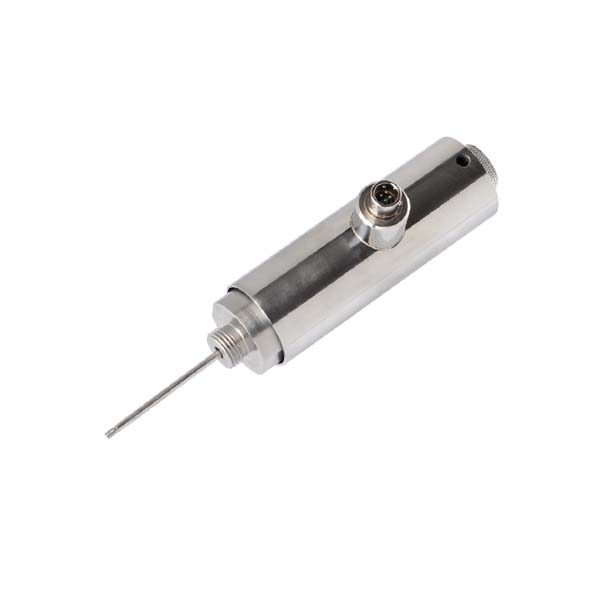
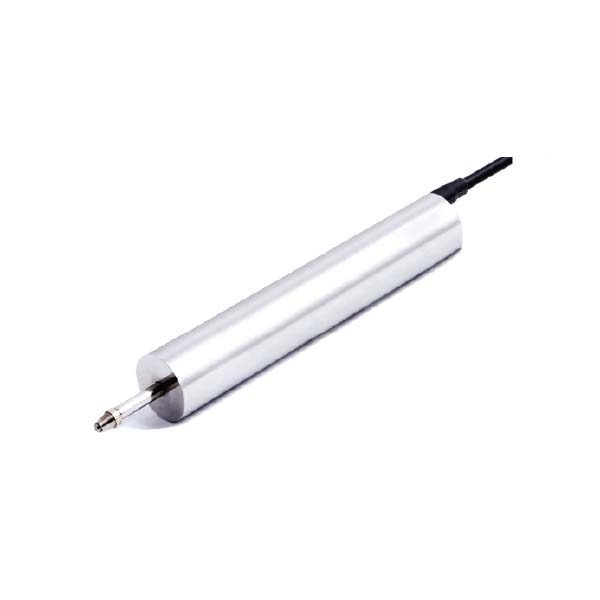
Ultra-high precision spring-loaded LVDT gauging probes for dimensional inspection, surface profiling, and quality control. Ruby or carbide tip. Resolution limited only by signal conditioner. Ideal for CMM integration and automated inspection lines.
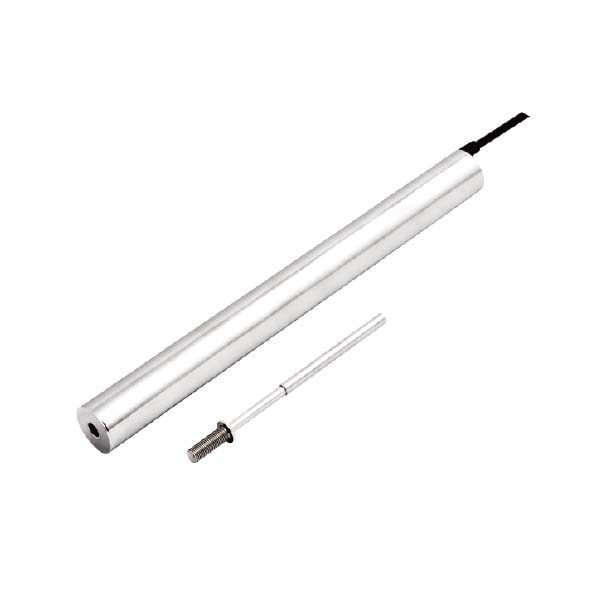
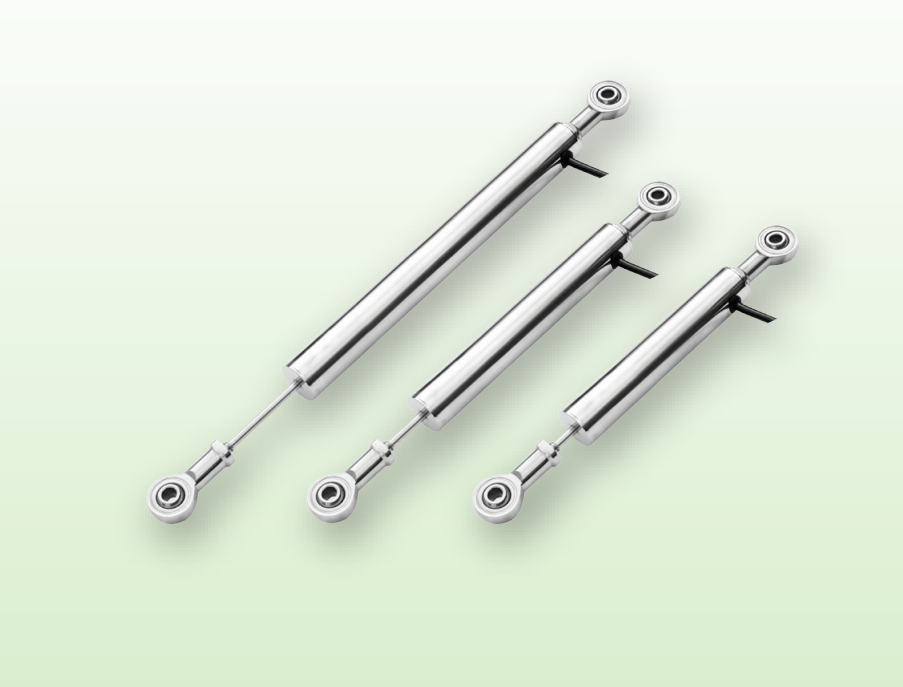
Separate-core LVDT with rigid core rod attachment. The coil body is fixed while the core rod is bolted to the moving part — ideal for hydraulic valve spool position, actuator stroke, and injection moulding machine screw position monitoring.
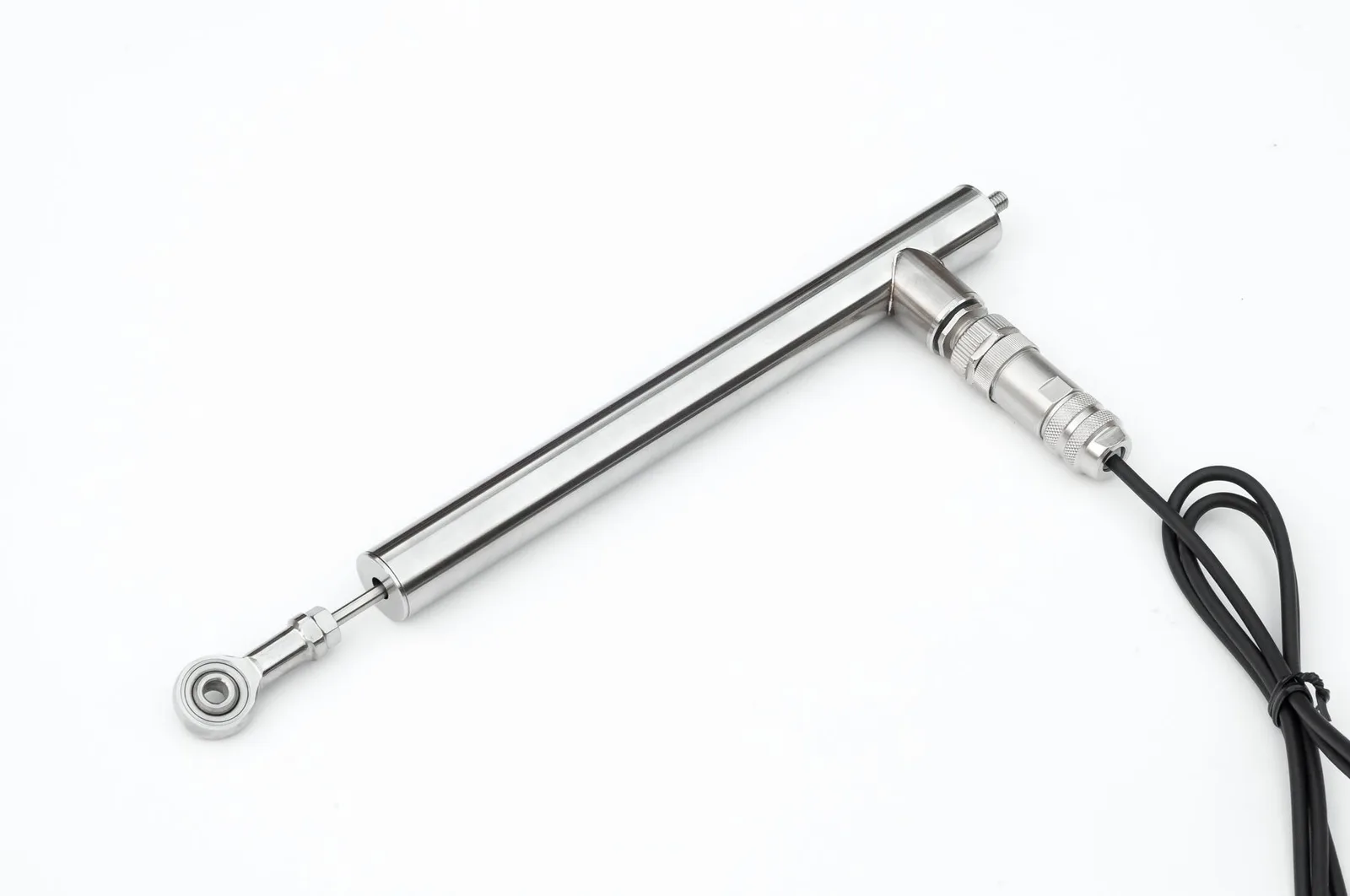
Long-stroke pen-type LVDT with integrated signal conditioner. Available in 4-20 mA, 0-10 V, and RS485/Modbus RTU outputs. Single-cable connection to PLC analog or digital input. Ideal for press machines, test rigs, and machine tool axis monitoring.
Download the LVDT displacement sensor datasheet (PDF)
One-page datasheet with all ranges, accuracy classes, output options, supply voltage, process connections, materials, temperature limits, IP rating, dimensions and the ordering code. No registration required.
Understanding LVDT operating principle helps engineers select the correct variant for their OEM application.
01
Primary Coil Excitation
An AC voltage (1–10 kHz) is applied to the primary coil, creating an alternating magnetic field throughout the cylindrical coil former.
02
Core Position Changes Coupling
The ferromagnetic core moves inside the bore. Its position determines how much magnetic flux couples into each of the two secondary coils — one increases while the other decreases.
03
Differential Output is Linear
The two secondary voltages are subtracted (differential connection). The result is a voltage proportional to displacement with excellent linearity — positive or negative depending on direction.
04
Signal Conditioning to DC / Digital
A built-in ASIC conditioner (DC-powered models) demodulates the AC signal to a 4-20 mA, 0-10 V, or RS485 output. AC output models connect directly to external LVDT signal conditioners.
LVDT sensors excel in environments with vibration, temperature extremes, and demanding duty cycles where contact-based sensors fail. Custom LVDT OEM factory — specify your application below.
Hydraulic Cylinder Position
LVDT for hydraulic cylinder feedback — separate-core SDVG series attached to piston rod. IP67, vibration-resistant.
Press Machine Stroke
Displacement sensor for press machine ram position. SLT pen-type with 4-20mA output to press PLC for closed-loop force/position control.
Material Testing Machines
Extensometer-class gauging probes for tensile test specimen elongation measurement. ±0.1% FS linearity for traceable results.
Engine Test Benches
Valve lift and throttle position on engine dynamometers. Vibration-immune LVDT replaces contact potentiometers for life > 100M cycles.
Injection Moulding
Screw position and clamp stroke on injection moulding machines. High-temperature variants up to +150°C for proximity to barrel heaters.
Dimensional Inspection
Gauging probes for automated go/no-go dimensional inspection in high-throughput production lines. Spring-loaded tip with constant contact force.
Turbine & Aerospace
Turbine blade clearance and actuator position. High-temp LVDT (-55°C to +150°C) with hermetic sealing for aircraft and gas turbine applications.
Robotics & Automation
End-effector position and gripper stroke measurement. Compact M8 body diameter available for space-constrained robot integrations.
Custom LVDT OEM Factory China
Why OEM Engineers Source LVDT Sensors From SEGMENsensor
SEGMENsensor has manufactured LVDT displacement sensors for OEM equipment builders since 2019. We are a direct factory — not a distributor — with in-house winding, signal conditioning PCB assembly, and calibration traceable to national standards.
20+
Years Experience
In-house coil winding since 2019
1–5 pcs
Samples in 5–7 working days
MOQ confirmed with the quotation
Per quote
Production Lead Time
Confirmed with the quotation, FOB China
±0.1%
Max Linearity
ISO 9001 calibration traceable
OEM Customization Available
Custom stroke length (any value within series range)
CE declaration and calibration certificate included
Comparison
LVDT vs Other Displacement Sensor Technologies
Choose the right displacement sensor for your OEM application. LVDT is the best choice for short-stroke, vibration-rich, high-accuracy environments.
Criterion
LVDT (SEGMENsensor)
Magnetostrictive
Linear Potentiometer
Draw-Wire Encoder
Mechanical Contact
✓ None — frictionless
✓ None
✗ Wiper contact
Wire friction
Service Life
✓ Infinite (no wear)
✓ Very long
Limited (10M cycles)
Wire fatigue limit
Best Stroke Range
±0.5 mm – ±500 mm
25 mm – 8,000 mm
10 mm – 1,000 mm
100 mm – 50,000 mm
Accuracy
✓ ±0.1% FS
✓ ±0.01% FS
±0.1–±1% FS
±0.1–±0.5% FS
Vibration Immunity
✓ Excellent
Good
Poor (wiper bounce)
Moderate
Absolute Position
Absolute (power-cycle safe)
✓ Absolute
Absolute
Absolute
OEM Cost
✓ Low–Medium (factory direct)
Medium–High
✓ Lowest
Low–Medium
Decision guide
LVDT vs RVDT vs Linear Potentiometer: Which One Fits Your Design?
Choose an LVDT for linear travel that needs non-contact, wear-free sensing; an RVDT when the axis rotates; and a linear potentiometer only when low cycle counts and a simple DC voltage divider are acceptable. SEGMENsensor LVDTs cover ±0.5 mm to ±500 mm with ±0.25% FS linearity as standard and ±0.1% FS optional.
What is the difference between an LVDT and an RVDT?
An LVDT measures linear displacement; an RVDT (rotary variable differential transformer) measures rotation angle. Both use one primary and two secondary windings with a moving ferromagnetic core or rotor, so neither has a sliding electrical contact. If the part you track moves in a straight line, use an LVDT; if it turns on a shaft, an RVDT is the matching principle.
When is a linear potentiometer good enough?
A linear potentiometer is adequate when the axis moves few cycles, vibration is low and a plain voltage-divider signal is enough. Its wiper slides on a resistive track, so the track wears with every stroke and contact noise rises under vibration. For valve spools, test rigs and in-line gauging that run millions of strokes, a non-contact LVDT avoids that wear mechanism.
LVDT vs RVDT vs linear potentiometer — decision table
Criterion
LVDT
RVDT
Linear potentiometer
Motion measured
Linear displacement
Rotation angle
Linear displacement
Sensing contact
None — core does not touch the coil
None — rotor does not touch the windings
Wiper slides on a resistive track
Wear over life
No electrical wear part
No electrical wear part
Track and wiper wear with every stroke
Electronics
AC type: 1–10 kHz excitation + conditioner; DC type: built-in, 10–30 V DC supply
AC excitation + demodulator
DC voltage divider
Output options
AC differential / 0–10 V / ±10 V / 4–20 mA / RS485 Modbus
AC or conditioned DC (per supplier)
Ratiometric voltage
Typical fit
Gauging probes, valve spool and actuator stroke, test machines
Valve shaft angle, rotary actuator feedback
Low-cycle position feedback, manual adjusters
SEGMENsensor range
SDVH, SDVG and SLT series, ±0.5 mm to ±500 mm
Not in our standard range — send the requirement for review
Not supplied
Picking the LVDT type: for dimension checks with a spring-returned tip, see the spring-loaded LVDT sensor and the LVDT gauging probe; for a core fixed to the moving part, use the SDVG separate-core series above. The background is explained in What Is an LVDT Sensor?.
Talk to an engineer about LVDT selection
Send stroke, linearity, output, supply voltage, temperature and connection. An engineer reviews it and replies within 24 hours; qualification samples of 1–5 pcs ship in 5–7 days, and production is planned around your annual volume.
Controlled coil winding, PCB assembly, and calibration. Batch traceability on every order.
CE
CE Certified
EMC and LVD directive compliance. CE declaration provided for EU customs clearance.
RoHS
RoHS Compliant
All standard LVDT models are RoHS compliant. Declaration of conformity on request.
2019
Since 2019
Core engineering team with 20+ years of technical experience. Factory direct — not a distributor or trading company.
UKCA
UKCA Certified
UK Conformity Assessed — required for Great Britain market entry. Equivalent to CE for England, Scotland and Wales.
Buyer questions
Buyer questions: gauging probe or position sensor, ±50 mm samples
Short answers to questions engineers ask before ordering. Values come from the specification table on this page; anything not listed there is confirmed with the quotation.
What is the difference between an LVDT position sensor and an LVDT gauging probe, and which should I buy?
An LVDT gauging probe is a spring-loaded LVDT whose tip touches the part to check its dimensions; an LVDT position sensor follows a moving machine part. Buy the SDVH gauging probe (±0.5 to ±5 mm, ±0.1% FS) for inspection, and the SDVG separate-core LVDT (±2 to ±100 mm, core fixed to the moving part) or the SLT pen-type (±10 to ±500 mm, 4–20 mA, 0–10 V or RS485) for position feedback. For a quote, send stroke, mounting, output and quantity.
Can you ship ±50 mm LVDT samples with 0.1% linearity?
Yes. A ±50 mm stroke is a standard value in both the SLT pen-type and the SDVG separate-core series, and ±0.1% FS linearity is an option on the SLT pen-type; SDVG is specified at ±0.25% FS. Both have ±0.01% FS repeatability and a 10–30 V DC supply for DC types. Qualification samples are 1–5 pcs in 5–7 working days; production lead time and MOQ are confirmed with the quotation. Send stroke, linearity class, output, supply voltage and quantity.
Customization and limits
Item
What can be specified
Limit / not suitable
Stroke
SDVH ±0.5 to ±5 mm; SDVG ±2 to ±100 mm; SLT ±10 to ±500 mm; custom stroke within the series range
Beyond ±500 mm: use a magnetostrictive position sensor (25–8,000 mm)
Linearity
SDVH ±0.1% FS; SDVG ±0.25% FS; SLT ±0.25% FS standard, ±0.1% FS optional; ±0.01% FS repeatability on all series
±0.1% FS is not listed for the SDVG series
Output and supply
SDVH / SDVG: AC differential, 0–10 V or 4–20 mA; SLT: 4–20 mA, 0–10 V, ±10 V or RS485 Modbus; 10–30 V DC for DC types
RS485 output is listed only on the SLT pen-type
Temperature
SDVH and SDVG -40 °C to +125 °C; SLT -40 °C to +85 °C
SLT is not listed above +85 °C
Connection and labelling
Integral cable or M12 × 1 connector; non-standard connector, cable length and private label evaluated per project
—
Pressure and motion
IP67 housing in stainless steel (SLT also aluminium alloy)
Not for mounting inside a hydraulic cylinder above 100 bar (use a magnetostrictive sensor); rotary axes (RVDT) are not in the standard range
Send these details for a quote
Stroke (± mm) and the travel you actually need to measure
Linearity class: ±0.25% FS or ±0.1% FS
Mounting: spring-loaded tip touching the part, or core fixed to the moving part
Output (AC differential, 4–20 mA, 0–10 V, ±10 V or RS485 Modbus) and supply voltage
Operating temperature, and any oil, coolant or pressure at the sensor
Connection: cable length or M12 × 1 connector
Quantity: qualification samples (1–5 pcs) and estimated annual volume
Application, for example dimensional inspection, valve spool or press stroke
Common questions from OEM engineers. Can't find your answer? Email info@segmensensor.com — we reply within 24 hours.
What is an LVDT sensor and how does it work?
LVDT stands for Linear Variable Differential Transformer. It is a contactless inductive displacement sensor — a ferromagnetic core moves inside a wound coil assembly without touching it. The differential output voltage is precisely proportional to core position. Because there is no mechanical contact, LVDTs have theoretically infinite service life and are immune to friction and wear.
What stroke ranges are available for LVDT displacement sensors?
SEGMENsensor LVDT sensors range from ±0.5 mm (gauging probes) to ±500 mm (long-stroke pen-type). Common standard strokes: ±0.5, ±1, ±2, ±5, ±10, ±25, ±50, ±75, ±100, ±150, ±200, ±250, ±500 mm. Custom strokes are available for OEM projects and are quoted by quantity.
What is the accuracy and linearity of your LVDT sensors?
Standard models achieve ±0.25% FS linearity. High-accuracy SDVH gauging probes achieve ±0.1% FS linearity with theoretically infinite resolution. Repeatability is ±0.01% FS across all series. All specifications verified by ISO 9001 calibration process with traceable standards.
What output signals are available?
Four output options: (1) AC differential output for use with external LVDT signal conditioners; (2) DC voltage 0-10V or ±10V with built-in DC-DC converter; (3) 4-20mA current loop for PLC analog inputs; (4) RS485 / Modbus RTU digital output. Specify your required output when requesting a quote.
What is the difference between a spring-loaded and a separate-core LVDT?
A spring-loaded LVDT (SDVB/SDVH series) has an internal spring that keeps the core tip in constant contact with the measurement surface — ideal for gauging probes and surface profiling. A separate-core LVDT (SDVG series) has a free-floating core rod rigidly attached to the moving part — ideal for hydraulic valve spool position and actuator stroke monitoring.
Can LVDT sensors be used in hydraulic cylinders?
Yes. Our SDVG separate-core series is designed for hydraulic valve spool and cylinder applications at pressures up to IP67 sealing. For high-pressure in-cylinder (above 100 bar), we recommend our magnetostrictive position sensors which are pressure-rated to 350 bar and can be installed directly inside the cylinder bore.
What is the minimum order quantity and lead time for LVDT sensors?
Samples: 1–5 pcs. Production OEM volume supply; fully customised OEM versions are quoted by quantity. Production lead time: confirmed with the quotation. Quoted FOB China. International freight and import duties/taxes are not included.
How does LVDT compare to a magnetostrictive position sensor?
LVDT is better for short strokes (under 300mm), vibration-rich environments, and applications needing AC output compatibility. Magnetostrictive sensors are better for long strokes (up to 8,000 mm), absolute position without zeroing, and hydraulic cylinders requiring SSI or RS485 output. Both are non-contact with long service life — SEGMENsensor manufactures both.
What is the difference between an LVDT and an RVDT?
An LVDT measures linear displacement and an RVDT measures rotation angle; both are non-contact differential transformers with one primary and two secondary windings. SEGMENsensor manufactures linear LVDTs from ±0.5 mm to ±500 mm. RVDTs are not in our standard range — send the rotary requirement and an engineer will review it.
Should I use an LVDT or a linear potentiometer?
Use an LVDT when the axis runs many cycles, sees vibration or needs ±0.25% FS linearity (±0.1% FS optional) with ±0.01% FS repeatability. A linear potentiometer has a wiper sliding on a resistive track, so it wears with every stroke; it suits low-cycle feedback where a simple voltage divider is enough.
Which LVDT type should I choose: gauging probe, separate-core or pen-type?
Choose the SDVH gauging probe (±0.5 to ±5 mm, ±0.1% FS) for dimension checks, the SDVG separate-core LVDT (±2 to ±100 mm) when the core can be fixed to a valve spool or actuator, and the SLT pen-type (±10 to ±500 mm) when you need a built-in conditioner with 4–20 mA, 0–10 V or RS485 Modbus output.