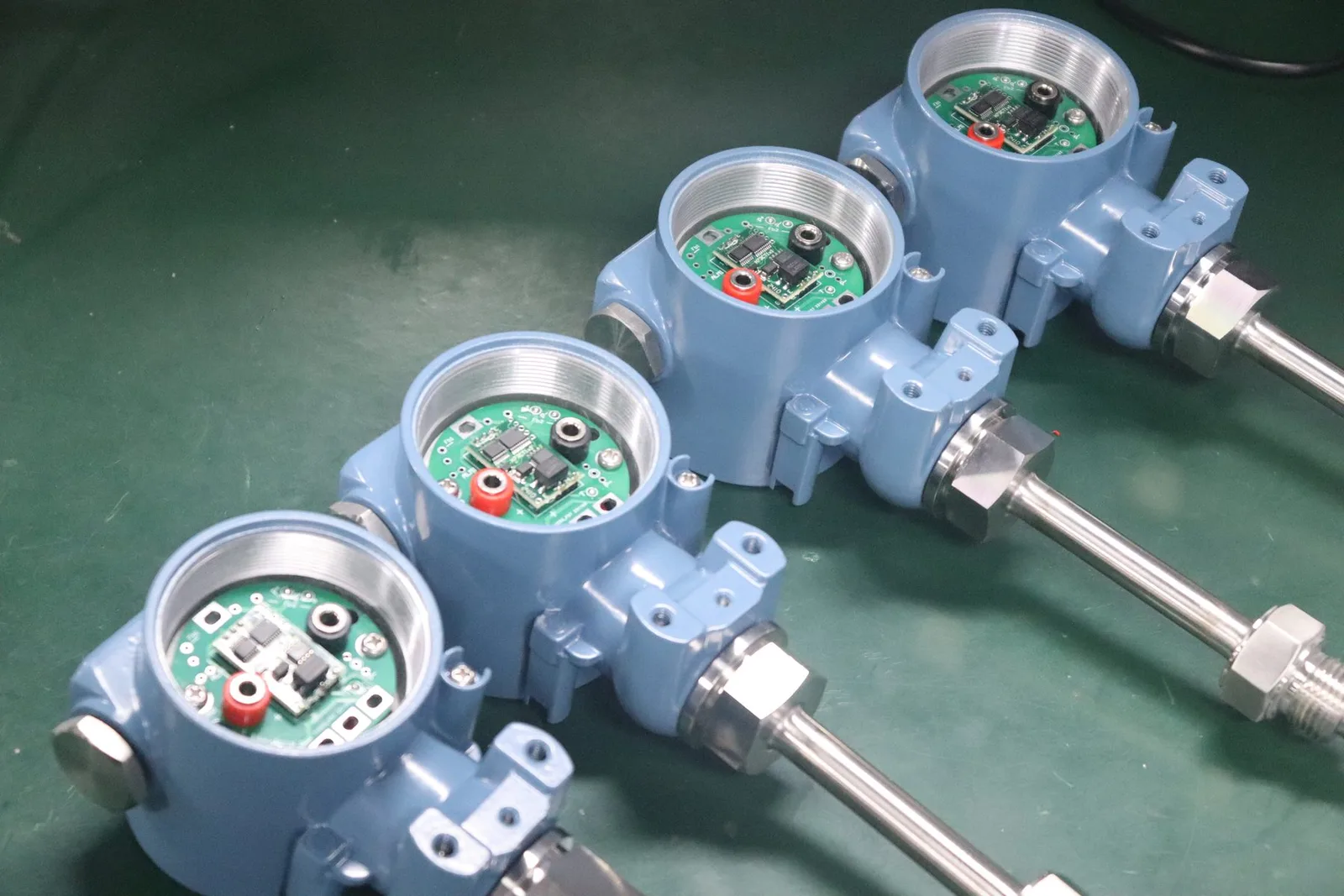
Overpressure is the maximum pressure a pressure sensor survives without permanent change: after the overload it measures within specification again. Burst pressure is the pressure at which the diaphragm or housing fails and medium can escape — the sensor is destroyed. Size the sensor so that every pressure peak, including spikes, stays below the overpressure rating; burst pressure is a safety limit, never an operating limit.
What do rated pressure, overpressure and burst pressure mean?
Data sheets use several names for the same limits. The table puts them in order from the lowest to the highest pressure.
| Term (other names) | Definition | Sensor condition | Output |
|---|---|---|---|
| Rated range (measuring range, full scale, FS) | Pressure range over which the accuracy specification applies | Normal operation | Valid, within the stated accuracy |
| Overpressure (proof pressure, overload, max. overpressure) | Highest pressure that may be applied without permanent change in performance | Returns to specification after the pressure falls back into range | Not valid while above FS; analog output saturates |
| Burst pressure (rupture pressure) | Pressure at which the sensing element or pressure-retaining parts rupture or leak | Destroyed; loss of containment | No output |
Between the overpressure limit and the burst pressure there is a grey zone: the sensor may still hold pressure, but the diaphragm can deform permanently, leaving a zero offset or a changed span. Test procedures for industrial transmitters, including the effect of over-range, are described in IEC 62828-1 — Reference conditions and procedures for testing industrial and process measurement transmitters ↗ and IEC 60770-1 — Transmitters for industrial-process control: methods for performance evaluation ↗.
How do you calculate the overpressure limit?
Multiply the full-scale value by the overload factor on the data sheet, then compare it with the highest pressure the process can produce:
| Quantity | Formula | Example |
|---|---|---|
| Overpressure limit | Pover = k × FS | 2 × 10 bar = 20 bar |
| Design check | Ppeak ≤ Pover | 16 bar ≤ 20 bar → OK |
| Water-hammer surge (Joukowsky) | Δp = ρ × a × Δv | 1000 kg/m³ × 1200 m/s × 1 m/s = 1.2 MPa = 12 bar |
| Peak at the sensor | Ppeak = Pstatic + Δp | 4 bar + 12 bar = 16 bar |
Here k is the overload factor, FS the full-scale value, ρ the fluid density, a the pressure-wave speed in the pipe (about 1000–1400 m/s for water in steel pipe, below the 1480 m/s speed of sound in open water because the pipe wall flexes) and Δv the sudden change in flow velocity. The Joukowsky equation gives the upper bound for a fast valve closure; slower closing reduces the surge. Convert bar to psi or kPa with the pressure unit converter.
Worked example: pump discharge line at 4 bar
- Normal pressure 4 bar, maximum steady pressure 6 bar. A 0–10 bar range keeps the reading high in the span for good accuracy.
- A check valve slams shut and stops water flowing at 1 m/s: Δp ≈ 12 bar, so the peak is 4 + 12 = 16 bar.
- With a 2× overload rating the limit is 20 bar: 16 bar is survivable, and the 4–20 mA signal just saturates for the duration of the spike.
- With a 1.5× rating (15 bar) the spike would exceed the limit: choose a higher overload factor, add a snubber or damping orifice, or reduce the surge at its source.
Choosing a much larger range only to gain overload margin costs accuracy, because a % FS error grows with the range — see % FS vs % of reading. Check the 4–20 mA values for any pressure with the 4–20 mA calculator.
What happens when a pressure sensor is overpressured?
Overpressure is the most common reason for a transmitter that “drifted” after a pressure event. Typical symptoms and their causes:
| Symptom | Likely cause | What to do |
|---|---|---|
| Output stays at or just above 20 mA during operation | Process pressure above full scale (zone 2) | Check the real peak pressure; choose a higher range if it is a steady condition |
| Zero offset at 0 bar after a pressure event | Overpressure limit exceeded; diaphragm permanently deformed (zone 3) | Re-check zero against a reference; replace the sensor if the offset is outside specification |
| Span error: correct at zero, wrong at full scale | Repeated spikes above the overpressure limit | Fit a snubber or damping orifice; review valve closing times |
| Medium leaking at the sensor, no output | Burst pressure reached (zone 4) or connection over-stressed | Depressurise, isolate and replace; find the source of the pressure peak |
For hydraulic and pneumatic machinery, ISO 4413 — Hydraulic fluid power: general rules and safety requirements for systems and their components ↗ requires systems to be protected against pressures above the rated limits of their components. A sensor’s overpressure rating should therefore cover the relief-valve setting and any transient above it.
Not sure how much overload margin you need?
Send us the normal and peak pressure, the medium and how the pressure is generated (pump, hydraulic valve, compressor). We will suggest the range and overload rating. MOQ 1 pc · samples in 5–7 working days · production 3–5 weeks · reply within 24 hours.
What overpressure ratings do SEGMENsensor sensors have?
| SEGMENsensor product | Rated range | Overload rating | Example limit |
|---|---|---|---|
| 4–20 mA pressure transmitter | 0–0.1 bar to 0–400 bar | 2–5× rated range | 0–10 bar → 20 to 50 bar |
| SYK102 mechanical pressure switch | 0.5–8.5 bar adjustable | 1.5× rated range | 8.5 bar → 12.75 bar |
| Vacuum pressure switch | −1 to 0 bar | 2× rated range | — |
The overload factor of the transmitter depends on the range and model; we confirm it for your range in the quotation. Burst pressure is model-specific and is provided on request. Ranges, ±0.25% FS (±0.1% FS high-accuracy) accuracy and outputs are listed on the pressure sensor page; for the full selection process read the 4-20 mA pressure transmitter selection guide and pressure switch vs pressure transmitter.
Frequently Asked Questions
Overpressure is the highest pressure the sensor survives without permanent change; it measures correctly again once pressure is back in range. Burst pressure is the higher pressure at which the diaphragm or housing ruptures and the medium escapes. Overpressure is a design limit; burst pressure is a safety limit.
In most data sheets, yes: proof pressure, overload pressure and maximum overpressure all describe the highest pressure that causes no permanent change in performance. Read the definition on the specific data sheet, because some manufacturers use the terms slightly differently.
Below the overpressure limit the output saturates above 20 mA and recovers when pressure falls. Above the limit the diaphragm can deform permanently, which shows as a zero offset or span error. At burst pressure the sensor ruptures and must be replaced.
Multiply full scale by the overload factor: a 0–10 bar transmitter rated 2× withstands 20 bar. Then check that the highest pressure, including water-hammer spikes estimated with Δp = ρ × a × Δv, stays below that value.
Fit a snubber or damping orifice in front of the sensor, slow down valve closing, keep the relief-valve setting below the sensor’s overpressure limit, or choose a sensor with a higher overload factor. A larger range also adds margin but increases the error in pressure units.
SEGMENsensor 4–20 mA pressure transmitters (0–0.1 to 0–400 bar) are rated 2–5× the rated range, the SYK102 switch 1.5× and the vacuum switch 2×. Burst pressure is given per model on request. MOQ is 1 piece, samples ship in 5–7 working days, production takes 3–5 weeks, quotations are FOB China, and we reply within 24 hours.