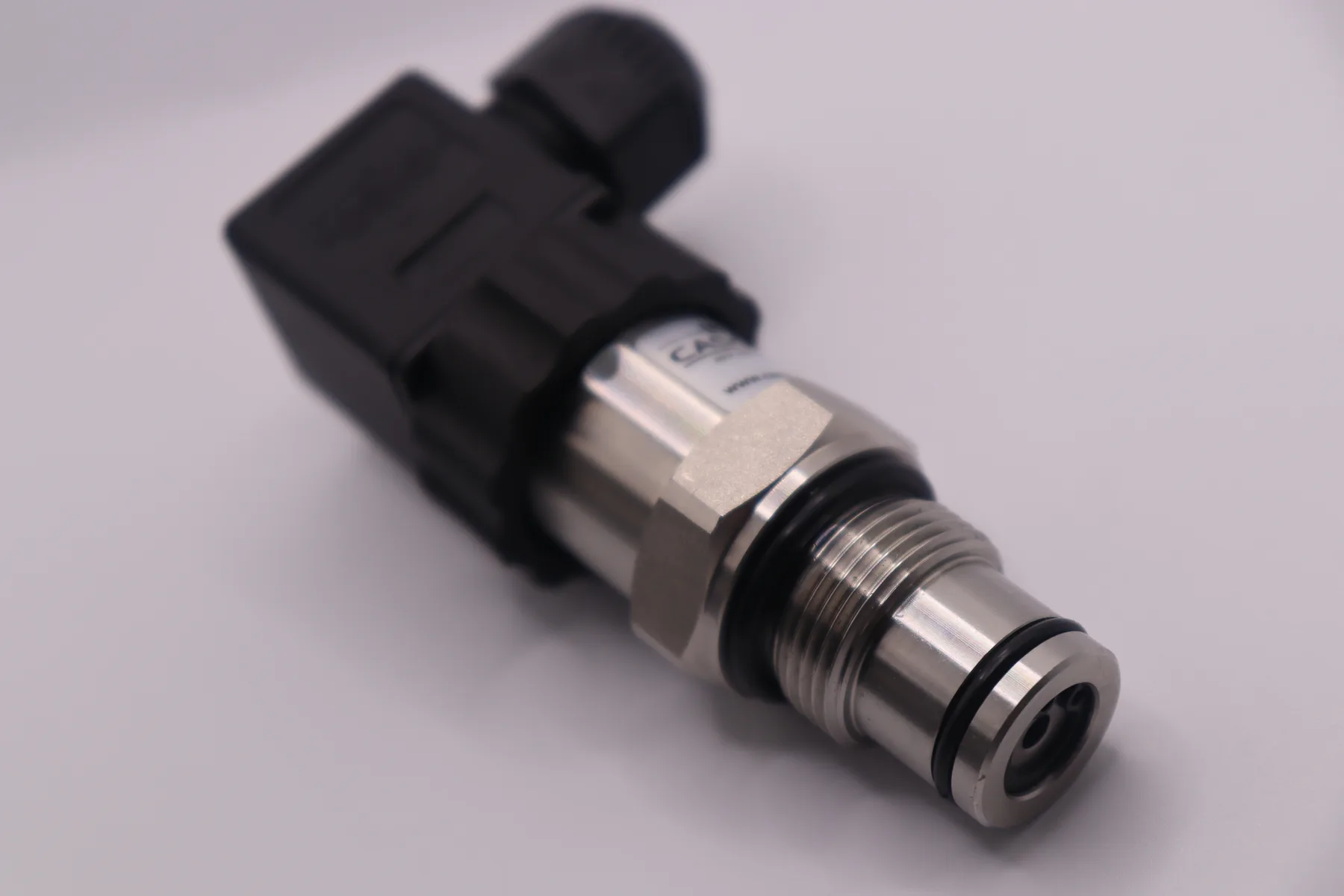
SEGMENsensor supplies 4-20 mA pressure transducers (transmitters) to Australian OEMs, pump builders and plant engineers direct from its ISO 9001:2015 factory: ranges from 0–0.1 to 0–400 bar, ±0.25% FS accuracy (±0.1% FS high-accuracy), G (BSPP) or NPT threads, IP67/IP68 housings and an IECEx option. OEM volume supply, samples in 5–7 days, every enquiry answered within 24 hours.
Australian buyers usually search for a "pressure transducer" and end up specifying a 4-20 mA pressure transmitter. Whichever word is on the purchase order, the device has to match local practice: BSPP threads on pump sets and skids, 24 V DC loops into PLCs, outdoor and wash-down enclosures, and IECEx documentation for classified areas in mining, oil and gas and grain handling. This guide sets out what to put on an enquiry so that the first sample from a factory-direct supplier fits the installation, using the published specifications of the SEGMENsensor 4-20 mA pressure transmitter. For the full seven-point selection method, see the 4-20 mA pressure transmitter selection guide.
Transducer or Transmitter: What Australian Buyers Actually Receive
Strictly, a pressure transducer converts pressure into a raw electrical signal (a few millivolts per volt from a strain-gauge bridge, for example), while a pressure transmitter adds signal conditioning and outputs a standardised signal that a controller can read directly. In Australian purchasing the two terms are used interchangeably for the conditioned device, and that is what SEGMENsensor supplies: a 2-wire 4-20 mA loop output as standard, with 0-10 V or RS485 as alternatives. Direct-current signals for industrial process control, including the 4-20 mA range, are defined in IEC 60381-1 — Analogue signals for process control systems, Part 1: Direct current signals ↗.
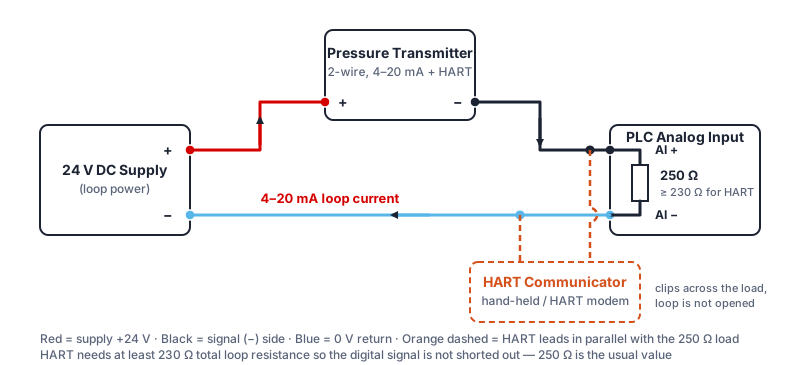
The practical consequence for a buyer is simple. A 2-wire transmitter needs only a 10–36 V DC loop supply, which every Australian control panel with a 24 V DC rail already has, and it can be run several hundred metres to a pump station or tank farm without loss of accuracy. If the same reading must be shown locally and at the PLC, ask for the RS485 or 0-10 V version, or specify a loop-powered indicator in series. Wiring detail, including 3-wire and HART loops, is covered in how to wire a 4-20 mA pressure transmitter.
Thread Standards: BSPP (G) for Most Australian Sites, NPT for Imported Skids
The single most common reason a sample does not fit on an Australian site is thread standard. Locally built pump sets, hydraulic power units, compressors and HVAC plant are almost always tapped for BSPP (G) parallel threads, so G1/4 or G1/2 is the default choice. Equipment imported from North America is tapped for NPT, and SEGMENsensor supplies 1/4 NPT and 1/2 NPT for those cases. For slurry, sewage, molasses or any medium that would block a threaded port, specify the flush diaphragm version.
Wetted parts are 316L stainless steel as standard, which covers potable water, chilled water, hydraulic oil, compressed air and most process liquids. Hastelloy is quoted for aggressive chemicals such as acid dosing lines, and a ceramic wetted surface for food-grade duties in dairy, brewing and wine production.
Outdoor, Wash-Down and Hazardous-Area Installations
Much Australian instrumentation is mounted outdoors: on bore pumps, irrigation mains, tank farms and solar-farm balance-of-plant. The SEGMENsensor transmitter is rated IP67 as standard, with an IP68 version for pits and submerged mounting, according to the IP code in IEC 60529 — Degrees of protection provided by enclosures (IP Code) ↗. Choose the cable-exit version for wet pits and wash-down areas; choose the M12 connector where units are swapped without opening the panel. Media temperature is −40 °C to +125 °C and ambient −20 °C to +85 °C, which covers inland summer conditions on an unshaded pipe; where the housing itself sits in direct sun for long periods, a short impulse line or a sunshade keeps the electronics inside its ambient rating.
For hazardous areas in mining, oil and gas, grain handling and chemical plants, an ATEX/IECEx option is available. Australian sites normally ask for IECEx certificates, the international scheme operated by the IEC for equipment used in explosive atmospheres (see IECEx — IEC System for Certification to Standards relating to Equipment for use in Explosive Atmospheres ↗). State the zone, gas or dust group and temperature class on the enquiry so that the correct variant, the intrinsically safe loop parameters and the certificate copies are quoted together.
Which wetted material should I choose for my medium?
Match the wetted part to the medium first, then confirm range and thread. The table summarises the options SEGMENsensor quotes for Australian duties.
| Medium | Wetted part to specify | Typical Australian duty |
|---|---|---|
| Potable water, chilled water, hydraulic oil, compressed air | 316L stainless steel (standard) | Pump sets, hydraulic power units, compressors, HVAC plant |
| Aggressive chemicals | Hastelloy (quoted) | Acid dosing lines |
| Food-grade media | Ceramic wetted surface | Dairy, brewing and wine production |
| Slurry, sewage, molasses | Flush diaphragm version | Media that would block a threaded port |
Which thread and output should an Australian buyer ask for?
Ask for G1/4 or G1/2 (BSPP) for locally built plant and 1/4 NPT or 1/2 NPT for equipment imported from North America. Choose the 2-wire 4-20 mA output with a 10–36 V DC loop supply for a PLC; choose RS485 or 0-10 V if the same reading must also be shown locally. State the range in bar, kPa or psi on the enquiry.
Specification Summary
All figures below are taken from the SEGMENsensor pressure switch and transmitter product page and apply to the standard 4-20 mA pressure transmitter.
| Parameter | SEGMENsensor 4-20 mA pressure transmitter |
|---|---|
| Pressure range | 0–0.1 bar to 0–400 bar (selectable); gauge, absolute or vacuum reference on request |
| Output signal | 4-20 mA (2-wire) / 0-10 V / RS485 |
| Accuracy | ±0.25% FS (standard) / ±0.1% FS (high-accuracy) |
| Sensing principle | Piezoresistive silicon / ceramic membrane |
| Process connection | G1/4, G1/2 (BSPP), 1/4 NPT, 1/2 NPT, flush diaphragm |
| Wetted materials | 316L stainless steel / Hastelloy / ceramic (food grade) |
| Electrical connection | 2-wire loop powered, cable or M12 connector |
| Supply voltage | 10–36 V DC (loop powered) |
| Media temperature | −40 °C to +125 °C |
| Ambient temperature | −20 °C to +85 °C |
| Overload pressure | 2–5 × rated range |
| Protection rating | IP67 standard; IP68 version for submerged mounting |
| Certifications | CE, RoHS, UKCA; ATEX/IECEx option; ISO 9001:2015 factory |
| Samples / lead time | Qualification samples (1–5 pcs) in 5–7 days · production lead time confirmed with the quotation |
Download the one-page datasheet (PDF)
The datasheet lists all available ranges, both accuracy classes, output options, supply voltage, process connections, wetted materials, temperature limits, IP rating, dimensions and the ordering code. No registration required.
Need a pressure transducer specified for an Australian site?
Send range, media, thread standard (G or NPT), IP requirement and quantity. OEM volume supply · samples in 5–7 days · reply within 24 hours.
Where Australian Buyers Specify 4-20 mA Pressure Transducers

Water utilities, bores and irrigation. Pump discharge and pipeline pressure on 0–10 to 0–25 bar ranges, G1/2 thread, IP68 cable version for pits and valve chambers. A pressure transmitter on the main is often paired with a level sensor on the storage tank; see how to choose a liquid level sensor.
Mining and mineral processing. Dewatering pumps, slurry lines and hydraulic systems on mobile and fixed plant: 0–40 to 0–400 bar ranges, flush diaphragm for slurry, IECEx option for underground and gas-rated zones. Quote the pressure peak rather than the nominal pressure so that the 2–5 × overload margin is confirmed.
Commercial HVAC and building services. Chilled-water and heating loops, pump differential control and filter monitoring on 0–10 or 0–16 bar with G1/4 threads and ±0.25% FS accuracy. Media temperature to +125 °C covers heating water without a siphon.
Solar farms, battery energy storage and data-centre cooling. Liquid-cooled inverters, battery containers and coolant distribution units combine a pressure transmitter with a reservoir level sensor; the ±0.1% FS class is common where the loop is monitored against a calibrated reference. See the coolant level sensor guide for BESS and CDUs.
Food, beverage and wine. Ceramic or 316L wetted parts, flush diaphragm for viscous product, G threads on locally built process skids.
Pressure Transducer Manufacturer vs Australian Distributor: What Changes for an OEM Buyer
Buying from a pressure transducer manufacturer changes who configures the sensor, not what the sensor must do: a factory-direct manufacturer such as SEGMENsensor builds each transmitter to the range, thread, output and housing on your enquiry, while a local distributor typically supplies catalogue stock and handles import, local invoicing and delivery. Many Australian OEMs use both routes at different stages of a program.
| Point to compare | Factory-direct from SEGMENsensor | Question to ask a local distributor |
|---|---|---|
| Configuration | Built to order: 0–0.1 to 0–400 bar, G (BSPP) or NPT thread, 4-20 mA / 0-10 V / RS485, cable or M12 exit | Which ranges and threads are held in stock, and which are special order? |
| OEM customisation | Custom range, cable length, connector and private-label marking evaluated per project | Can the brand owner change the specification for your annual volume? |
| Samples | 1–5 qualification samples, shipped in 5–7 working days | Does the sample match the build used for series supply? |
| Documents | CE, RoHS 3 and UKCA declarations, ATEX/IECEx certificate copies (option) and a per-unit calibration record, in English | Which certificates come with each delivery? |
| Commercial terms | FOB China; 100% T/T in advance; production lead time and MOQ confirmed with the quotation; 12-month warranty | Local invoicing, stock lead time and local warranty handling |
| Import and customs | Arranged by the buyer's freight forwarder or customs broker, including duties and taxes | Usually handled by the distributor |
| Response time | Every enquiry answered within 24 hours (working hours 09:00–18:00 GMT+8) | Local business hours and technical support contacts |
A practical route for an Australian OEM is to qualify the transmitter directly with the manufacturer, then decide whether series supply runs factory-direct or through an existing import channel. Either way, the qualification samples and the series units come off the same ISO 9001:2015 production line, so the test results on your pump, skid or hydraulic unit carry over. If you are still deciding on the measuring principle, see types of pressure sensors; for the pressure reference, see gauge vs absolute vs differential pressure transmitters.
Australian Pressure Transducer RFQ Checklist: Ranges in bar, kPa and psi
Australian drawings usually state pressure in kPa or bar, while imported skids often use psi. The table converts common SEGMENsensor ranges so an RFQ can be checked in any of the three units; conversions are calculated values using 1 bar = 100 kPa = 14.5038 psi, rounded. For other values, use the pressure unit converter.
| Range (bar) | kPa | MPa | psi (calculated) | Typical Australian duty on this page |
|---|---|---|---|---|
| 0–0.1 | 0–10 | 0–0.01 | 0–1.45 | Lowest selectable range |
| 0–10 | 0–1,000 | 0–1 | 0–145 | Water mains, HVAC chilled and heating water |
| 0–16 | 0–1,600 | 0–1.6 | 0–232 | HVAC loops, pump differential control |
| 0–25 | 0–2,500 | 0–2.5 | 0–363 | Pump discharge, bores and irrigation mains |
| 0–40 | 0–4,000 | 0–4 | 0–580 | Mining dewatering pumps |
| 0–400 | 0–40,000 | 0–40 | 0–5,802 | Hydraulic systems on mobile and fixed plant (highest selectable range) |
Fill in each line of the checklist below before sending the enquiry. Every option listed is taken from the specification summary above and the 4-20 mA pressure transmitter product page.
| RFQ field | What to state | SEGMENsensor options |
|---|---|---|
| Range and reference | Range in bar, kPa or psi; gauge, absolute or vacuum; expected pressure peak | 0–0.1 to 0–400 bar; overload 2–5 × rated range |
| Accuracy | Required accuracy class | ±0.25% FS standard / ±0.1% FS high-accuracy |
| Output | Signal type and electrical connection | 4-20 mA 2-wire / 0-10 V / RS485; cable or M12 exit |
| Process connection | Thread standard and size | G1/4, G1/2 (BSPP); 1/4 NPT, 1/2 NPT; flush diaphragm |
| Medium and temperature | Fluid and its temperature range | 316L standard, Hastelloy or ceramic on request; media −40 °C to +125 °C |
| Environment | Indoor, outdoor or submerged; ambient temperature | IP67 standard, IP68 version; ambient −20 °C to +85 °C |
| Hazardous area | Zone, gas or dust group, temperature class | ATEX/IECEx option |
| Quantity | Sample count now and expected annual volume | Samples 1–5 pcs in 5–7 working days; production lead time and MOQ confirmed with the quotation |
Buying Factory-Direct from Australia: Terms, Documents and Time Zones
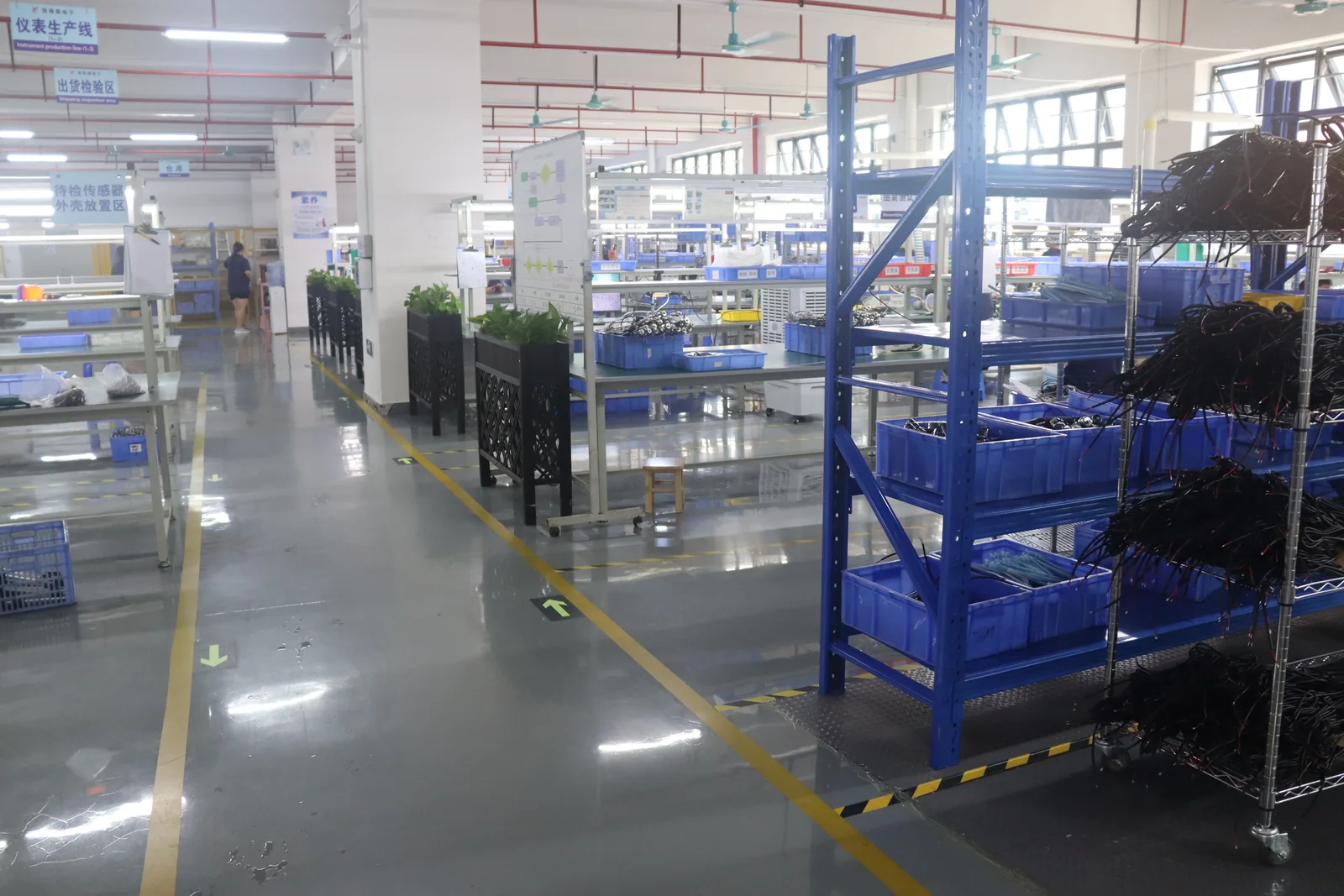
Segmen Industrial Development Co., Ltd. was founded in Shenzhen in 2019; its engineering team brings more than 20 years of sensor experience and supplies 200+ OEM customers in 30+ countries. Transmitters are built to order on an ISO 9001:2015 production line, so a validated sample carries directly into the series order. Shenzhen is two hours behind Australian Eastern Standard Time, so an enquiry sent in the Australian morning is normally answered the same working day, and always within 24 hours.
- Range in bar or kPa (0–0.1 to 0–400 bar), gauge/absolute/vacuum, and the expected pressure peak.
- Accuracy class: ±0.25% FS standard or ±0.1% FS high-accuracy.
- Output: 4-20 mA 2-wire, 0-10 V or RS485, and cable or M12 exit.
- Process side: G (BSPP) or NPT thread, flush diaphragm if needed, media and its temperature, wetted material.
- Environment: outdoor or submerged (IP67/IP68), ambient temperature, IECEx zone if any.
- Documents: CE / RoHS / UKCA declarations, ATEX/IECEx certificate copies and calibration records are supplied in English on request.
- Quantity and delivery: sample count now (1–5 pcs), expected annual volume. Quotations are FOB China port; your freight forwarder arranges transport to Australia.
Frequently Asked Questions
In Australian purchasing the two words are used for the same 4-20 mA device. Strictly, a transducer converts pressure into a raw electrical signal, while a transmitter adds signal conditioning and a standard loop output such as 4-20 mA. SEGMENsensor supplies the conditioned type: 4-20 mA 2-wire, 0-10 V or RS485 output, ready to wire to a PLC or controller. Full comparison: pressure transducer vs pressure transmitter.
Most Australian pump sets, skids and HVAC plant use BSPP (G) threads, so G1/4 or G1/2 is the usual choice. NPT (1/4 or 1/2 NPT) is available for imported North American equipment, and a flush diaphragm for slurry or viscous media. State the thread on the enquiry so the sample matches the fitting on site.
Yes. An ATEX/IECEx option is available for the 4-20 mA pressure transmitter. Australian sites normally ask for IECEx documentation; state the required zone and equipment group on the enquiry so the correct variant and certificates are quoted.
OEM volume supply, qualification samples of 1–5 pieces shipped in 5–7 days, production lead time and MOQ are confirmed with the quotation, and every enquiry answered within 24 hours. Quotations are FOB China port; your freight forwarder arranges transport to Australia.
Selectable ranges from 0–0.1 bar to 0–400 bar, with ±0.25% FS accuracy as standard and a ±0.1% FS high-accuracy version. Overload capability is 2–5 times the rated range, and media temperature covers −40 °C to +125 °C.
SEGMENsensor is a manufacturer. It designs and builds its 4-20 mA pressure transmitters in Shenzhen on an ISO 9001:2015 production line, so Australian OEMs deal directly with the factory that sets the range, thread, output and housing. Units are built to order and quoted FOB China.
RCM is not among SEGMENsensor's current certifications. The transmitters carry CE, RoHS 3 and UKCA documentation, with ATEX/IECEx as an option; Australian-specific marks can be arranged according to project needs, with timing and conditions confirmed in the quotation.
The buyer does. SEGMENsensor quotes FOB China port, so your freight forwarder or customs broker arranges international freight, Australian import clearance and any duties or taxes. Payment is 100% T/T in advance, and the warranty is 12 months.
Order 1–5 qualification samples, which ship in 5–7 working days, and test them on the actual pump, skid or hydraulic unit with the thread, range and output planned for series supply. Production lead time and MOQ are then confirmed with the quotation, and series units are built on the same line as the samples.
Related reading: Pressure transmitters and switches — product page · 4-20 mA pressure transmitter selection guide · How to wire a 4-20 mA pressure transmitter · Lead time, MOQ and OEM quotation terms · Tank level sensors for Australia · 4-20 mA pressure transmitter · Types of pressure sensors · Pressure unit converter
Last updated: 26 October 2026. Specifications reflect the SEGMENsensor product page at the date of publication; contact us for the current datasheet revision.