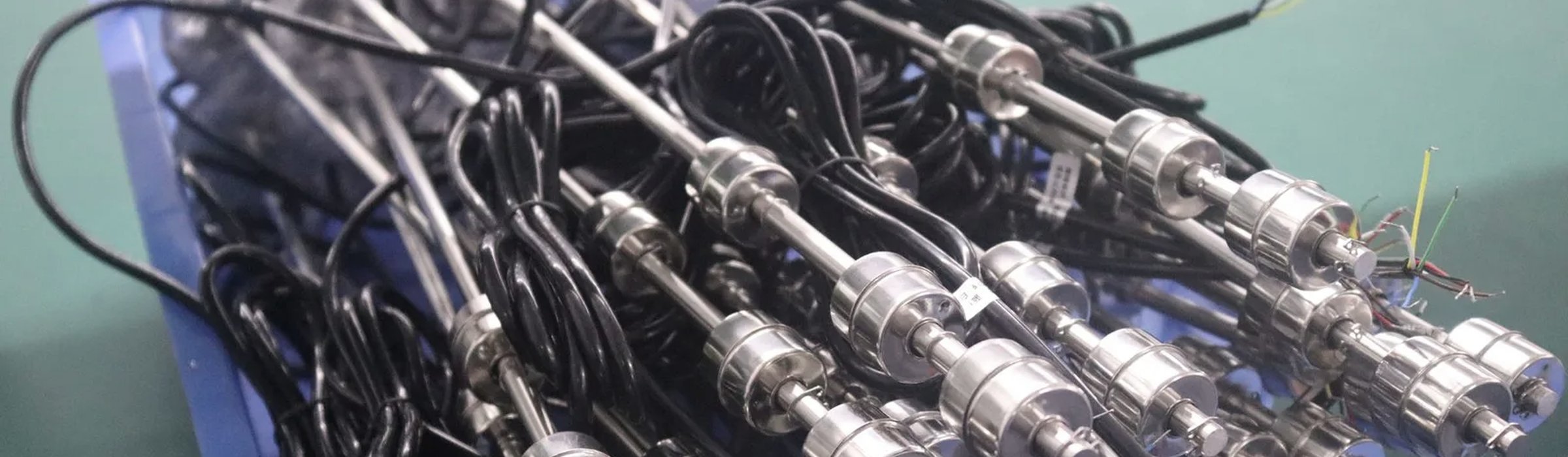
For most Australian water and fuel tanks, the right tank level sensor is an IP68 submersible hydrostatic transmitter with a 2-wire 4-20 mA output and vented cable; add a float switch for high or low alarms, and choose ultrasonic for non-contact or magnetostrictive for millimetre-level gauging. SEGMENsensor supplies all four from 1 piece, with samples in 5–7 days.
Australian buyers searching for a "tank level sensor" are usually solving one of a handful of problems: reading a rainwater or bore-fed poly tank on a farm or station, monitoring a diesel tank on a generator or mine site, gauging chemical or process tanks in a plant, or watching coolant reservoirs in solar-farm and battery-storage equipment. Each case points to a different sensing technology. This guide matches the technology to the tank, lists the published SEGMENsensor specifications, and sets out what to put on an enquiry so the first sample fits the installation. The same factory supplies pressure transducers for Australian sites, so one supplier can cover both the pump main and the storage tank.
Which Tank Level Sensor Technology Fits Which Australian Tank?
Four technologies cover almost every tank: a float level switch gives a contact at a fixed level; a submersible hydrostatic transmitter converts the pressure of the liquid column into a continuous 4-20 mA signal; an ultrasonic sensor measures the distance to the surface from above without touching the liquid; a magnetostrictive level transmitter reports the absolute position of a float along a probe. The table summarises how SEGMENsensor engineers usually match them to Australian applications. A wider comparison of the technologies is in how to choose a liquid level sensor.
| Australian application | Recommended sensor | Typical configuration | Why |
|---|---|---|---|
| Rainwater and stock-water poly tanks | Submersible hydrostatic transmitter | 0–5 mWC, 4-20 mA 2-wire, PVC vented cable | Continuous reading to telemetry; nothing to mount on a thin tank roof |
| Bores and wells | Submersible hydrostatic transmitter | 0–20 or 0–40 mWC, cable up to 50 m | Slim 316L probe drops down the casing; cable length matched to depth |
| Pump start/stop and overflow alarms | Float level switch | Single or multi-point rod, 2–6 switch points | No power needed for the reed contact; direct relay to the pump starter |
| Diesel and fuel-oil tanks | Submersible (316L, PTFE cable) or magnetostrictive | Range sized to tank height; SG set in PLC scaling | Fuel-compatible wetted parts; magnetostrictive avoids density effects |
| Chemical and dosing tanks | Ultrasonic or corrosion-resistant magnetostrictive | 0.25–15 m non-contact, or SGM-LC10 25–1000 mm | No wetted parts, or a PP/PFA probe for aggressive media |
| Coolant reservoirs in solar and BESS equipment | Submersible or slim-rod magnetostrictive | 0–1 or 0–2 mWC, or SGM-LK10 25–4000 mm | Small reservoirs need a low range and compact mounting |
How Does a Submersible Tank Level Sensor Work on a Water Tank?
A submersible transmitter hangs on its cable near the bottom of the tank. The liquid column above the diaphragm produces a pressure proportional to its height, and the transmitter converts that pressure into a 4-20 mA signal: on a 0–5 mWC unit, 12 mA means 2.5 m of water. The cable carries a small vent tube so the sensor reads gauge pressure, cancelling changes in atmospheric pressure; terminate the vent end in a dry junction box above the maximum level. The hydrostatic level calculator converts range, density and loop current into tank level.
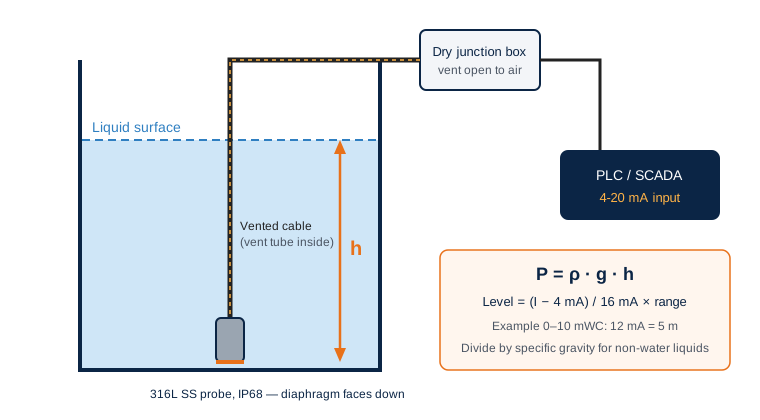
The SEGMENsensor submersible level transmitter has a 316L stainless steel probe rated IP68 for permanent submersion, a ceramic (Al₂O₃) or 316L diaphragm, and a G1/2 thread as standard, with 3/4" NPT or 1" BSP on request. Outdoor tanks on Australian properties see wide temperature swings, so the built-in temperature compensation and the -20 °C to +80 °C process temperature rating matter more than the headline accuracy.
When Is a Float Level Switch the Better Choice?
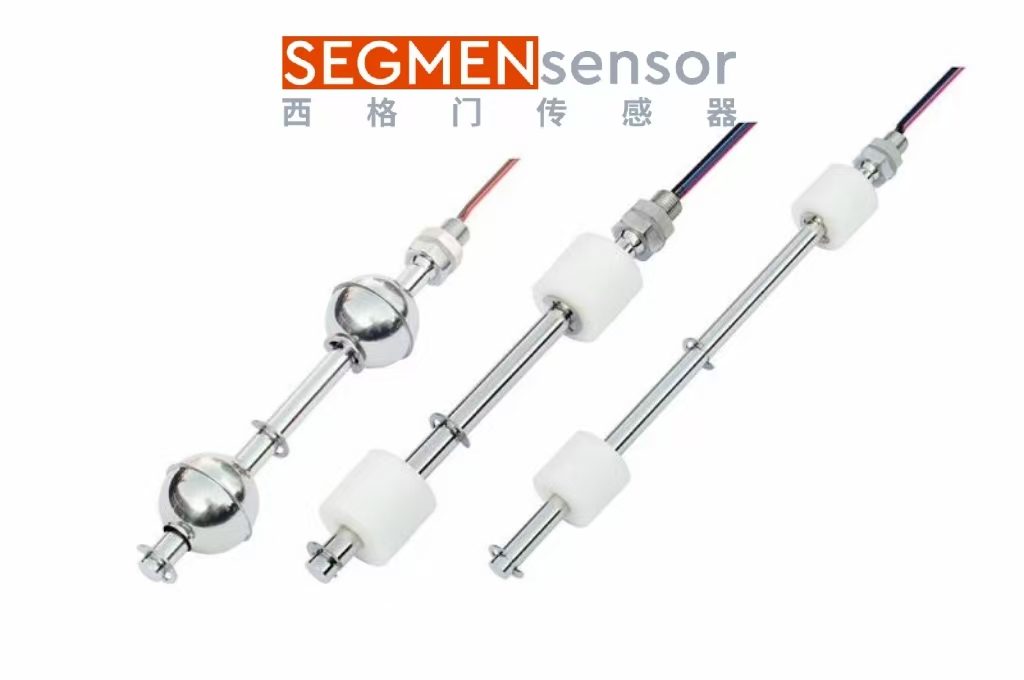
If the control task is simply "start the pump at low level, stop it at high level" or "alarm before the tank overflows", a float level switch is simpler to install and maintain than a transmitter. A magnet in the float operates a sealed reed switch in the stem, so the contact needs no supply; one rod can carry 2–6 switch points. SFL float switches handle liquid temperatures from -40 °C to +120 °C, with a +150 °C high-temperature version. Floats need a liquid specific gravity of 0.7 or more. More detail is in the float level switch selection guide.
Specification Summary
All figures below are taken from the SEGMENsensor liquid level sensor, submersible transmitter and magnetostrictive level transmitter product pages.
| Series | Range | Accuracy / switching | Output | Protection and materials |
|---|---|---|---|---|
| SLS submersible hydrostatic transmitter | 0–1 to 0–100 mWC (specify at order) | ±0.1% FS standard, ±0.05% FS high-accuracy | 4-20 mA 2-wire, 0-10 V, 0-5 V | IP68, 316L probe, 12–36 V DC supply |
| SFL float level switch | 2–6 switch points per rod | Point level, reed contact | Relay (SPDT reed) | -40 to +120 °C, +150 °C high-temperature version |
| SEU ultrasonic level sensor | 0.25–15 m | ±0.3% FS | 4-20 mA, RS-485 Modbus (by series) | Non-contact, no wetted parts |
| SGM-LS10 / SGM-LK10 magnetostrictive | 25–8000 mm / 25–4000 mm | Continuous float position | 4-20 mA, 0-10 V, RS485 Modbus, 4-20 mA + HART | IP68 |
| SE-LX10 / SE-LX20 / SE-LX30 magnetostrictive | 200–8000 mm | Level and oil–water interface | 4-20 mA, RS485 Modbus, 4-20 mA + HART | Flameproof, IP67, -40 to +85 °C (+250 °C high-temperature version) |
Download the one-page datasheet (PDF)
The datasheet lists float, submersible and ultrasonic series with ranges, accuracy, outputs, materials, temperature limits and ordering codes. No registration required.
Need a tank level sensor specified for an Australian site?
Send tank height, medium, mounting (top or submerged), output and quantity. MOQ 1 pc · samples in 5–7 days · reply within 24 hours.
Outdoor, Submerged and Hazardous-Area Installations
Most Australian tank sensors live outdoors or under water. Submersible probes and SGM-LS10 probes are rated IP68 and SE-LX heads IP67 under the IP code defined in IEC 60529 — Degrees of protection provided by enclosures (IP Code) ↗. Fit a desiccant vent plug on the cable end of submersible units in humid or coastal locations, and keep the probe away from the pump inlet in sumps and lift stations.
Fuel farms, mine sites, grain handling and chemical plants often fall within classified zones. ATEX/IECEx versions are an option on the SFL and SLS series, and the SE-LX magnetostrictive transmitters are flameproof models; Australian sites normally ask for documentation under the IECEx — IEC System for Certification to Standards relating to Equipment for use in Explosive Atmospheres ↗. State the zone, gas or dust group and temperature class on the enquiry so the correct variant is quoted.

Buying Factory-Direct from Australia: Terms and Time Zones
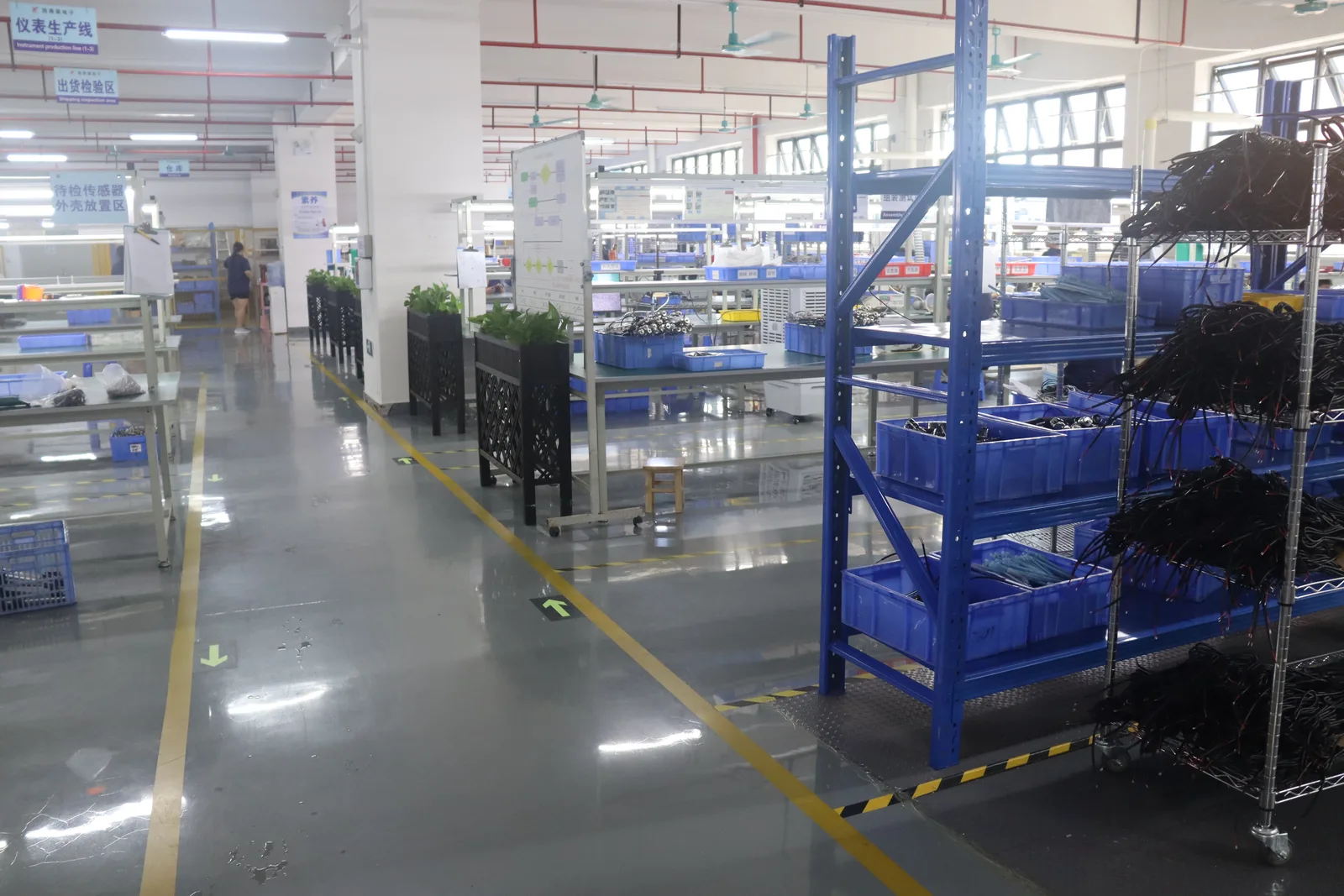
SEGMEN (Shenzhen) Industrial Development Co., Ltd. was founded in Shenzhen in 2019; its engineering team brings more than 20 years of sensor experience and supplies 200+ OEM customers in 30+ countries. Level sensors are built to order on an ISO 9001:2015 production line (see ISO 9001:2015 — Quality management systems ↗), so a validated sample carries directly into the series order. Office hours are 09:00–18:00 (GMT+8), two hours behind Australian Eastern Standard Time, so an enquiry sent in the Australian morning is normally answered the same working day and always within 24 hours.
- Tank: height or depth, material, open or closed top, and whether the sensor mounts on top or hangs submerged.
- Medium: water, diesel, chemical (name and concentration), temperature and specific gravity.
- Function: point alarm (float switch) or continuous reading (submersible, ultrasonic, magnetostrictive).
- Output: relay, 4-20 mA 2-wire, 0-10 V or RS-485 Modbus; cable length for submersible units.
- Environment: outdoor or submerged, IECEx zone if any.
- Quantity: sample count now (1–5 pcs) and expected annual volume. Quotations are FOB China with 100% T/T in advance; your freight forwarder arranges transport to Australia.
Frequently Asked Questions
For poly and steel water tanks the usual choice is an IP68 submersible hydrostatic transmitter with a 4-20 mA output and a vented cable, sized 0–5 mWC for typical tank heights. Where only a pump-start or low-level alarm is needed, a float level switch is simpler. Bores normally use the same submersible probe on a longer cable, up to 50 m.
Yes. The submersible transmitter is available with a 316L stainless steel diaphragm, Viton seal and PTFE vented cable for fuel oil and diesel. Because it measures hydrostatic pressure, the PLC scaling must use the specific gravity of the fuel. For higher resolution and no density effect, a magnetostrictive level transmitter reads the float position directly.
Yes. ATEX/IECEx versions are an option on the SFL float switch and SLS submersible series, and the SE-LX magnetostrictive level transmitters are flameproof models. Australian sites usually ask for IECEx documentation; state the zone and equipment group on the enquiry so the correct variant is quoted.
Depending on the series: relay contacts on float switches, and 4-20 mA, 0-10 V or RS-485 Modbus on continuous transmitters. The magnetostrictive level transmitters also offer 2-wire 4-20 mA with HART. 4-20 mA 2-wire is the most common choice for Australian PLC and telemetry panels.
MOQ is 1 piece for every series, samples of 1–5 pieces ship in 5–7 days, production orders take 3–5 weeks, and every enquiry is answered within 24 hours. Quotations are FOB China; your freight forwarder arranges transport to Australia. Payment is 100% T/T in advance and the warranty is 12 months.
Related reading: Liquid level sensors — product page · How to choose a liquid level sensor · Float level switch selection guide · Pressure transducer supplier for Australia
Last updated: 10 October 2026. Specifications reflect the SEGMENsensor product pages at the date of publication; contact us for the latest datasheet.