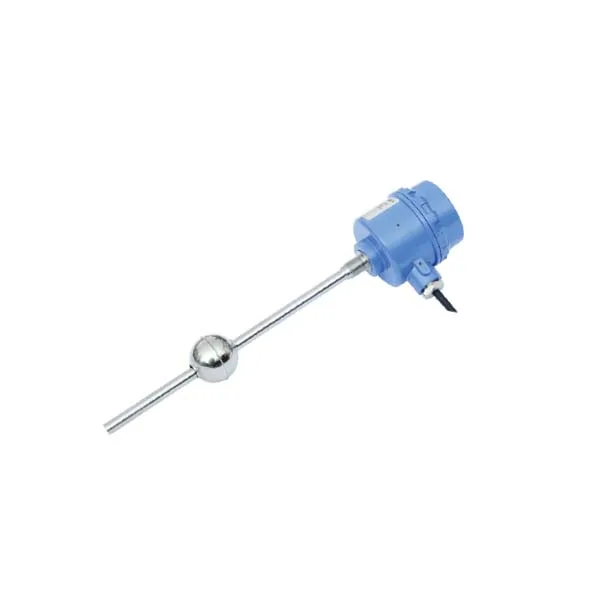
SEGMENsensor float level switches detect liquid levels using a buoyant float and a hermetically sealed reed switch — no power required for switching, no moving parts except the float. PP (polypropylene), 316L stainless steel, or PVDF float material covers water, chemicals, oils, and aggressive media. Vertical (side-mount) and horizontal configurations. SPDT relay output, 10A switching. IP68. CE and RoHS certified. OEM from Shenzhen since 2019, MOQ 10 pcs.
A float level switch is a simple, reliable liquid level detection device. A sealed buoyant float rides the liquid surface; inside or attached to the float is a permanent magnet. As the liquid level rises or falls, the float moves vertically on a stem. When the magnet passes a hermetically sealed reed switch in the stem, the reed switch contacts open or close, triggering a circuit. No electrical power is needed for switching — the reed switch contacts open and close mechanically. Float switches are the simplest, most cost-effective level switches available, used for pump control, high-level alarms, tank overflow protection, and dry-run protection in water, oil, and chemical applications worldwide.
Specifications
Float Level Switch — Full Specification Table
Standard configurations available from stock. Custom stem length, float material, multi-point, cable type, and connector available from MOQ 10 pcs.
≥0.7 (standard float) / configurable for lighter liquids
Cable Length
1 m (standard) / up to 20 m custom
Cable Type
PVC / silicone / PTFE
Process Connection
3/4" NPT (standard) / G3/4" / 1" NPT / 1/2" NPT
Operating Temperature
-20°C to +85°C (PP) / -20°C to +120°C (316L SS)
IP Rating
IP68
Certifications
CE, UKCA, RoHS
MOQ
10 pcs
Lead Time
2–3 weeks (standard)
Selection Guide
Choose the Right Float Material for Your Liquid
Float material determines chemical compatibility, temperature range, and cost. Match your process medium to the right float to ensure reliable operation.
💧
PP Float Water / Chemicals (General)
Most economical option — suitable for water, mild acids, mild alkalis, cleaning agents, cooling liquids
Lightweight; floats in liquids with specific gravity ≥0.7
Most commonly used in water tanks, storage vessels, and sump pits
Maximum process temperature: 80°C
→ Standard PP float switch
🔩
316L SS Float Oil / Solvents / High Temperature
Suitable for lubricating oil, diesel, hot water, steam condensate, and food-grade liquids
Handles up to 120°C process temperature (150°C high-temperature version available)
Heavier than PP — verify liquid specific gravity ≥0.85
→ 316L SS float switch
⚗️
PVDF Float Strong Acids / Alkalis
Suitable for sulfuric acid, hydrochloric acid, NaOH, HF, and other aggressive chemical media
Exceptional chemical resistance — outperforms PP and SS in oxidizing environments
Works in liquids with specific gravity ≥0.7; pair with PVDF stem and PTFE cable
Maximum process temperature: 120°C
→ PVDF float switch + PTFE cable
Not sure which float material is right for your liquid?
Provide your process medium, temperature, specific gravity, and process connection size — our engineers will specify the correct float switch model within 24 hours.
From pump protection to chemical dosing — SEGMENsensor float switches serve the full range of liquid level control and alarm requirements.
⚡
Pump Dry-Run Protection
Tank empty detection to disable pump before it runs dry — prevents seal and impeller damage in water supply, irrigation, and industrial process pump systems.
🔔
High-Level Alarm
Tank overflow prevention — switch activates alarm or closes inlet valve at high level. Suitable for storage tanks, IBC containers, and chemical process vessels.
🏗️
Sump Pump Control
Lift station wet well — two floats control pump on/off levels automatically. Low float starts pump; high float stops it. Simple, reliable, and maintenance-free.
🌡️
Cooling Water Tank
CNC machine and industrial chiller coolant level monitoring — low-level alarm prevents pump cavitation and coolant starvation in machining operations.
⚗️
Chemical Dosing Tank
Dosing tank low-level alarm to prevent dosing pump cavitation. PVDF or PP float selected based on chemical compatibility. Used in water treatment and industrial cleaning.
🍺
Food & Beverage
Ingredient tank level in food production lines — 316L SS float, CIP-compatible. Level control for mixing tanks, ingredient vessels, and clean-in-place rinse systems.
🏢
HVAC Condensate Pan
Air handling unit drip pan overflow detection — float switch triggers shutdown or alarm before condensate overflows, preventing water damage to ceilings and equipment.
⚓
Marine Bilge
Bilge water level switch for automatic bilge pump activation on commercial and recreational vessels. IP68 rated for full submersion in bilge environment.
Installation
Float Switch Installation Guide
Three installation configurations — vertical side-mount, top-mount multi-point rod, and wiring — each suited to different tank types and control requirements.
01
Vertical Side-Mount (Most Common)
Install through a side or bottom threaded opening with the float free to move up and down on the liquid surface. Ensure the float is not obstructed by agitators, inlet pipes, or tank walls. Minimum clearance between float and tank wall: 20 mm. Suitable for most storage tanks and process vessels with calm liquid.
02
Top-Mount Multi-Point Rod
Install from a single top opening — the guide rod passes through multiple floats at different heights. Each float carries a magnet that triggers its corresponding reed switch at a set level. Ideal for tall storage tanks where multiple independent switch points are required from a single process opening. Available in 2, 3, 4, and 6-point configurations.
03
Wiring the SPDT Output
SPDT contacts: Common (C), Normally Open (NO), Normally Closed (NC). When liquid rises and float lifts: C–NO closes (circuit energizes), C–NC opens. When liquid falls and float drops: C–NC closes (circuit returns to rest). For pump control or alarm relay coils, always use an intermediate relay — do not connect float switch contacts directly to high-current loads. For multi-point switches, each switch point has its own independent C/NO/NC terminals.
FAQ
Float Switch — Frequently Asked Questions
Common questions from OEM buyers, engineers, and plant maintenance teams sourcing float level switches.
How does a float level switch work?
A float level switch works on magnetic reed switch actuation. Inside the hollow, sealed float is a permanent magnet. The float slides freely on a stem that contains a hermetically sealed reed switch — a glass-enclosed pair of flexible metal contacts. When the liquid level rises and the float moves up, the magnetic field of the float magnet reaches the reed switch contacts and pulls them together (normally open closes) or pushes them apart (normally closed opens). When the liquid level falls and the float descends, the magnet moves away and the reed switch returns to its rest state. No electrical connection passes through the float — the only electrical component is the reed switch in the stem, wired to the cable.
What float material should I choose for my liquid?
PP (polypropylene): suitable for water, wastewater, cooling water, mild acids (pH 3–11), cleaning chemicals, and light hydrocarbons. Maximum temperature 80°C. Most cost-effective option. 316L Stainless Steel: suitable for oils, fuels, hot water (to 120°C), food-grade liquids, solvents, and CIP-cleaned tanks. Heavier than PP — verify specific gravity ≥0.85 for the float to function. PVDF (Polyvinylidene Fluoride): highest chemical resistance — suitable for concentrated acids (H₂SO₄, HCl, HNO₃), caustic soda, halogens, and oxidizing chemicals. Use with PVDF stem and PTFE cable. Always specify your process medium, temperature, and specific gravity when ordering.
What is SPDT and how do I wire a float switch?
SPDT (Single Pole Double Throw) means the reed switch has three terminals: Common (C), Normally Open (NO), and Normally Closed (NC). At rest (float down, low level): C–NC contacts are closed (circuit complete); C–NO contacts are open. When float rises to switch actuation point: C–NO contacts close (circuit energizes); C–NC contacts open. Wiring for pump-on (low level): connect pump relay coil between C and NO — pump runs when float is down (low level), stops when float rises. Wiring for high-level alarm: connect alarm between C and NO — alarm sounds when float rises to high level. Never wire float switch contacts directly to high-current loads — use an intermediate relay rated for your load.
What is the specific gravity requirement for float switches?
The float must be less dense than the liquid to float. Standard PP floats (density ~0.91 g/cm³) work in liquids with specific gravity ≥0.7. For lighter liquids (petroleum naphtha, light solvents, SG 0.65–0.75), specify the high-buoyancy variant with larger float volume. For very dense liquids (brine, concentrated acid, SG >1.4), the standard float sinks too deep — specify the adjustable-buoyancy or top-weighted float. SEGMENsensor can select the float size and ballast for your specific gravity on request — provide liquid density when ordering.
Can float switches be used in turbulent or agitated tanks?
Float switches should be used in calm liquid zones away from agitators, inlet pipes, and pump discharge. Turbulence causes the float to bounce, creating rapid switch chatter that can burn relay contacts and give false signals. Solutions: install a stilling tube (standpipe) around the float stem — a perforated pipe that damps surface waves while allowing liquid level equalization. Alternatively, use a time-delay relay (0.5–5 second delay) to filter chattering signals. For highly agitated tanks (reactors, mixing vessels), consider ultrasonic or guided wave radar level sensors that have no moving parts.
What is the multi-point float switch and when is it used?
A multi-point (multi-level) float switch has multiple floats on a single rod, each with its own magnet and corresponding reed switch at a different height in the stem. With 2 floats: independent high-level alarm and low-level pump-on control without needing two separate sensors and two process openings. With 3–6 floats: sequential pump control in holding tanks, step-level alarms. SEGMENsensor supplies 2, 3, 4, and 6-point versions with individual cable cores for each switch point. Specify the required switch levels (in mm from process connection face) and switching direction (float rising = NO closes or NO opens) when ordering.
What temperature range can float switches operate in?
PP float and stem: -20°C to +80°C process temperature. 316L SS float: -20°C to +120°C. PVDF float: -20°C to +120°C. Reed switch operating temperature: -40°C to +120°C (hermetically sealed). For steam condensate (100–120°C): use 316L SS float. For hot oil above 120°C (heat transfer fluids): use a bi-metal or magnetic type level switch — contact SEGMENsensor engineering. Note: maximum temperature also depends on cable insulation — PVC cable is rated to 80°C ambient; silicone cable to 180°C; PTFE cable to 200°C. Specify process temperature and ambient temperature when ordering.
What is the MOQ and lead time for OEM float switches from a China factory?
MOQ 10 pcs for standard float switches (PP float, G3/4" process connection, SPDT reed switch, 1 m PVC cable, IP68). Samples 1–2 pcs accepted. Standard lead time: 2–3 weeks. Custom configurations (316L or PVDF float, non-standard stem length, multi-point 2–6 switch points, silicone or PTFE cable, M12 connector, custom cable length, private label): add 1–2 weeks. CE and RoHS documentation included. Factory: Segmen Industrial Development Co., Ltd., Registration No. 91440300MAEUXXQU04, Shenzhen, Guangdong, China.