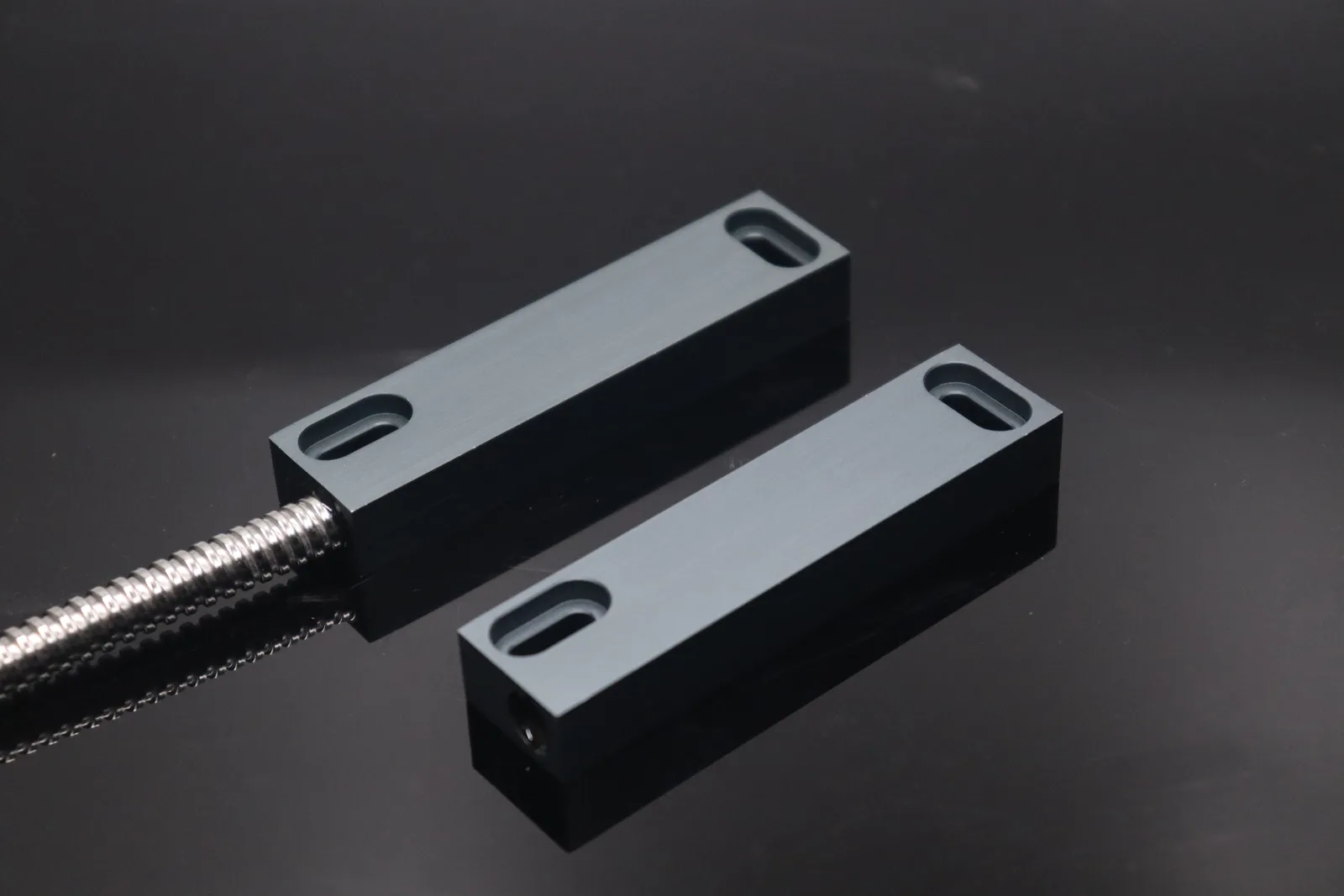
Inductive proximity sensors detect metal targets only using an oscillating electromagnetic field and eddy current principle — ideal for CNC, stamping, and wet machining environments. Capacitive proximity sensors detect any material with a higher dielectric constant than air (metal, plastic, glass, liquid, powder) — ideal for level detection and through-wall non-metallic sensing. If your target is metal, choose inductive. If your target or its container is non-metallic, choose capacitive.
How Inductive Proximity Sensors Work
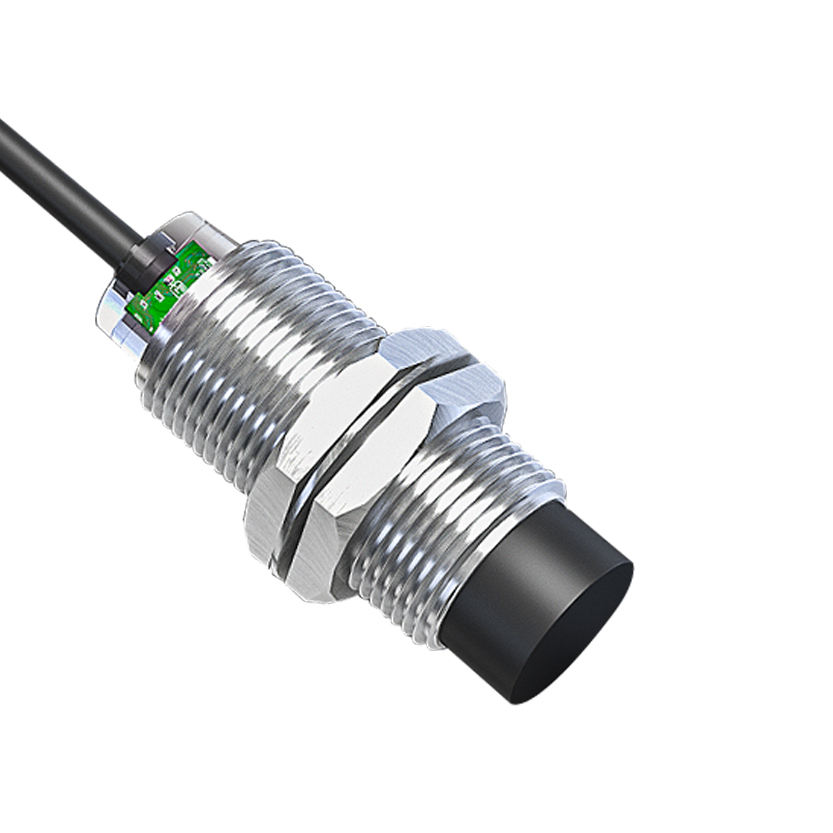
An inductive proximity sensor contains a ferrite-core coil driven by an oscillator circuit. The coil generates a high-frequency alternating electromagnetic field that projects from the sensing face into the detection zone. When a metallic target enters this field, eddy currents are induced in the metal surface. These eddy currents draw energy from the oscillator, causing the amplitude of oscillation to decrease — a process governed by Faraday's law of induction.
As the target moves closer, eddy current losses increase and oscillation amplitude falls further. When the amplitude drops below a preset threshold, a trigger circuit switches the output state (NO or NC). When the target moves away, the oscillation amplitude recovers and the output resets. This entire process is purely electronic — there are no moving parts, no contact, and no mechanical wear.
Because eddy currents require electrically conductive material to flow, inductive proximity sensors detect only metals — ferrous (iron, steel) and non-ferrous (aluminum, copper, brass, stainless steel). Non-metallic materials such as plastic, wood, glass, and water pass straight through the electromagnetic field without triggering the sensor. This inherent metal-selectivity is both a strength (immunity to non-metallic false triggers) and a limitation (cannot detect non-metal targets).
Response time is extremely fast — typically below 1 ms — and the sensors are completely unaffected by contamination from water, oil, cutting fluid, dust, and most chemicals. This makes inductive sensors the dominant choice for machine tool, press, conveyor, and food processing applications.
How Capacitive Proximity Sensors Work
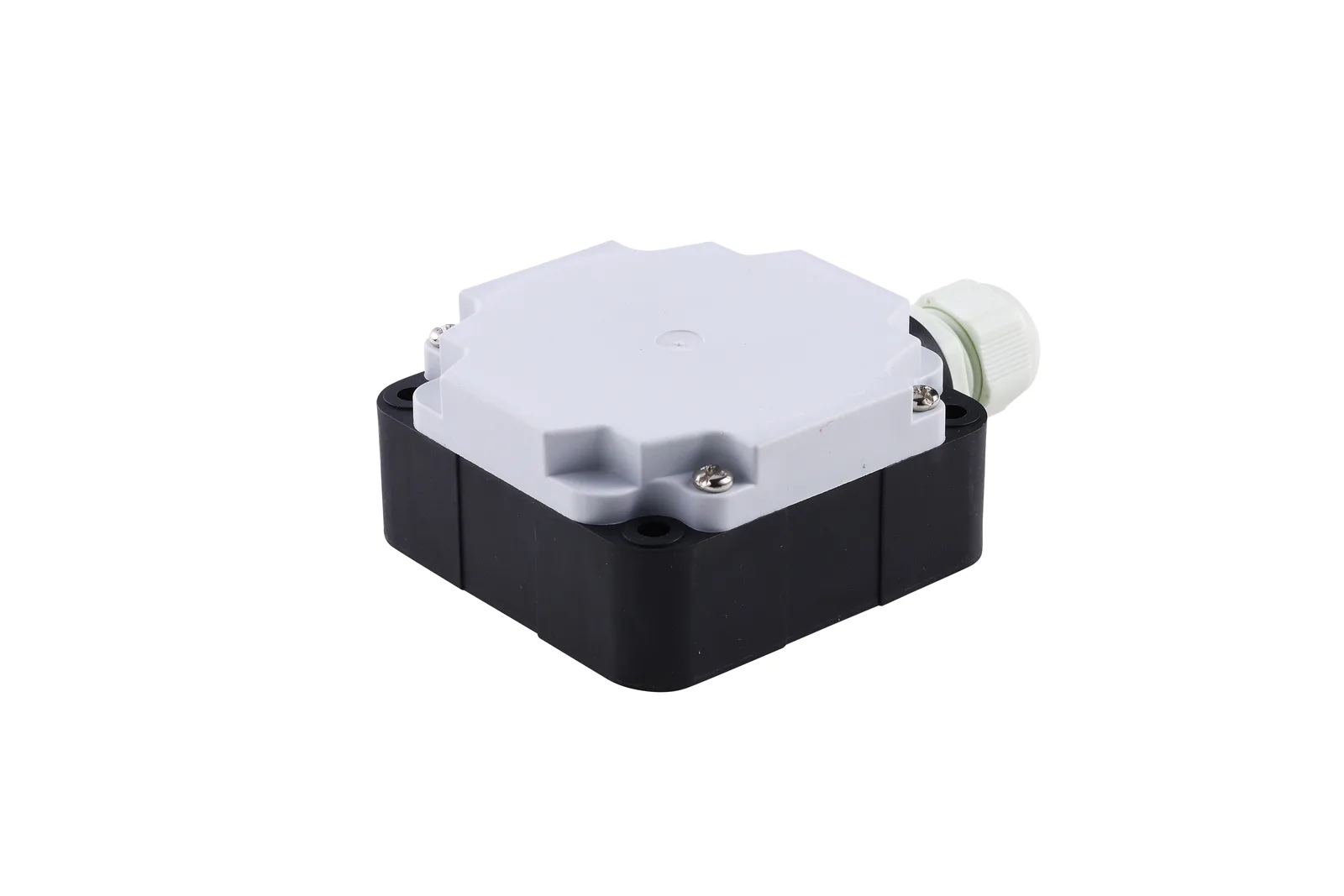
A capacitive proximity sensor has two electrodes positioned near the sensing face, forming an open capacitor. The sensor's oscillator circuit drives an alternating electric field between these electrodes. In free air, the field capacitance is low and the oscillator operates below the trigger threshold.
When any material with a dielectric constant higher than air (air ≈ 1.0) enters the detection zone, it changes the effective capacitance between the electrodes. The higher the dielectric constant of the material, the stronger the capacitance change and the longer the sensing range. Water has a dielectric constant of approximately 80 — making it very easy for capacitive sensors to detect. Plastics range from 2–10, wood from 2–7, granular materials from 3–10 depending on moisture content.
As capacitance increases, the oscillator amplitude rises above the trigger threshold and the output switches. An adjustment potentiometer on most capacitive sensors sets the sensitivity level, allowing the user to tune out background interference (such as the sensor housing or a plastic tank wall) while still detecting the target material inside.
Unlike inductive sensors, capacitive sensors can detect metals, plastics, glass, ceramics, liquids, powders, and granular materials. This makes them ideal for liquid level detection through plastic tank walls, grain silo fill level, paper and cardboard detection, and similar non-metallic sensing tasks. The trade-off is that capacitive sensors are sensitive to ambient humidity and surface moisture, which can cause false triggers if sensitivity is set too high.
Inductive vs Capacitive — Head-to-Head Comparison
The table below compares the two sensor types across the eight most decision-critical dimensions for industrial selection:
| Parameter | Inductive Proximity Sensor | Capacitive Proximity Sensor |
|---|---|---|
| Detection target | Metal only (ferrous and non-ferrous) | Metal, plastic, glass, liquid, powder, granules |
| Sensing range (M18) | Up to 8 mm (standard flush), 40 mm (long-range non-flush) | Up to 15 mm (dry non-metallic), shorter through glass or plastic walls |
| Effect of water / oil | Immune — liquids cause no false triggers | Can cause false triggers; sensitivity adjustment or shielding required |
| Humidity / ambient drift | Stable, immune to humidity variation | Sensitivity affected by ambient humidity; re-adjustment may be needed |
| Typical IP rating | IP67 / IP68 standard | IP67 standard; IP68 on selected models |
| Response time | <1 ms | <1 ms |
| Operating temperature | −25 °C to +85 °C | −25 °C to +70 °C |
| Best applications | CNC machining, metalworking, packaging metal parts, high-speed counting | Level detection, granule hopper, through-plastic detection, non-metallic targets |
When to Choose an Inductive Proximity Sensor
Inductive proximity sensors are the correct choice whenever the target is metallic and the environment demands robustness against liquids, contamination, or electromagnetic interference. The following scenarios consistently favor inductive technology:
Metal target detection in machine tools and automation
CNC machining centers use inductive sensors for workpiece clamping confirmation, pallet present/absent detection, and spindle tool length measurement. Because coolant and cutting oil flood the work zone, inductive sensors are preferred — they are completely immune to these liquids. A capacitive sensor in the same environment would require constant sensitivity re-adjustment to reject coolant false triggers.
High-speed counting and rotary sensing
Stamping presses, rotary indexing tables, encoder discs, gear tooth counters, and label applicator cam followers all require switching frequencies of 500 Hz to 5 kHz. M8 and M12 inductive sensors in fast-switching configuration handle these rates reliably. The high switching frequency combined with metal-only detection makes inductive the dominant technology for pulse counting applications.
Wet and oily environments
Automotive body shops, food processing lines, hydraulic test stands, and outdoor conveyors expose sensors to water spray, oil mist, and rain. Inductive sensors with IP67 or IP68 stainless steel housings operate without performance degradation in these conditions. There is no sensitivity drift, no false trigger from liquid on the sensing face, and no need for sensitivity adjustment after cleaning.
Food and beverage — washdown-safe stainless steel
Food processing requires stainless steel housings that withstand high-pressure hot water washdown (typically 80 °C, 80 bar). SEGMENsensor M12 and M18 stainless steel inductive sensors with IP68 rating meet these requirements. The all-stainless construction also satisfies hygienic design requirements for food contact proximity applications.
When to Choose a Capacitive Proximity Sensor
Capacitive proximity sensors are the correct choice when the target is non-metallic, when you need to detect material through a non-metallic container wall, or when the sensing task requires detecting a wide variety of target materials.
Non-metallic target detection
Plastic bottle capping lines use capacitive sensors to detect bottle presence before the capper descends — the plastic bottle is invisible to an inductive sensor but easily detected by a capacitive sensor. Paper and cardboard detection on printing and packaging lines, wood presence detection on furniture manufacturing conveyors, and ceramic tile detection in ceramic kilns all require capacitive technology.
Liquid level detection through non-metallic tank walls
Capacitive sensors can detect liquid level through plastic, glass, or fiberglass tank walls without any penetration of the tank. The sensor is mounted on the outside of the tank and senses the change in dielectric constant when liquid is present on the other side of the wall. This non-invasive installation eliminates leak risk and simplifies compliance in chemical storage, pharmaceutical, and food ingredient applications. Sensitivity is adjusted so the sensor trips when liquid is at the sensor level and ignores the empty tank wall above.
Granule and powder level in hoppers and silos
Plastic pellets, grain, cement powder, coffee beans, and pharmaceutical powders in storage hoppers or injection molding feed hoppers are detected reliably with capacitive sensors. The sensor is mounted flush with or recessed into the hopper wall; sensitivity is calibrated to the specific material's dielectric constant. Low-level alarms trigger automatic refill systems or production stop signals.
SEGMENsensor's standard production range focuses on inductive proximity sensors (M8 to M30, IP67/IP68). Capacitive proximity sensors are available as OEM custom orders — please contact our team with your target material and tank wall specification for a capacitive sensor recommendation.
NPN vs PNP Output — Which Do You Need?
Both inductive and capacitive proximity sensors are available in NPN (sinking) and PNP (sourcing) output configurations. The choice depends entirely on your PLC or controller's input module type:
NPN (sinking output)
An NPN output transistor connects the load to the negative supply (0 V) when active. Current flows from the PLC input module through the load and into the sensor output. NPN outputs are common in Asian automation ecosystems, including many domestic PLC brands and servo controllers. The PLC input must be sourcing type (positive common) to work with NPN sensors.
PNP (sourcing output)
A PNP output transistor connects the load to the positive supply (+24 V) when active. Current flows from the sensor output through the load and into the PLC input. PNP outputs are standard in European automation systems. The PLC input must be sinking type (negative common) to work with PNP sensors.
For a complete wiring guide including 2-wire, 3-wire, and 4-wire configurations with diagrams, see our dedicated guide: NPN vs PNP Proximity Sensor Wiring Guide.
- 2-wire sensors: Supply current flows through the sensor in series with the load. Simple wiring, but minimum load current (residual current) must be satisfied. Available in AC and DC versions.
- 3-wire sensors: Separate power supply and output wires. Most common configuration: Brown (+24 V), Blue (0 V), Black (output). NPN or PNP. No minimum load current requirement.
- 4-wire sensors: Two output wires — one NO and one NC simultaneously. Allows both normally open and normally closed logic from a single sensor.
Housing Sizes and Sensing Distance — Inductive Quick Reference
Inductive proximity sensors are available in standard cylindrical housing diameters from M5 to M30 (M-prefix = metric thread diameter in millimetres). Larger housings contain larger coils, which produce stronger electromagnetic fields and longer sensing ranges. Flush (embeddable) mounting reduces sensing range compared to non-flush installation for a given diameter.
| Housing Size | Flush (Standard Steel) | Non-Flush (Standard Steel) | Long-Range Non-Flush |
|---|---|---|---|
| M8 | 1–2 mm | 4 mm | — |
| M12 | 2–4 mm | 8 mm | — |
| M18 | 5–8 mm | 12 mm | — |
| M30 | 10–15 mm | 20 mm | Up to 40 mm (long-range models) |
Correction factors for non-ferrous metals: The sensing ranges above are rated for mild steel (Fe360). For non-ferrous metals, apply these typical correction factors: stainless steel (austenitic) 0.85×; aluminum 0.50×; copper 0.45×; brass 0.50×. A sensor with 8 mm rated range for steel detects aluminum at approximately 4 mm. Always verify with the specific datasheet correction factor table.
SEGMENsensor Inductive Proximity Sensors — Product Range
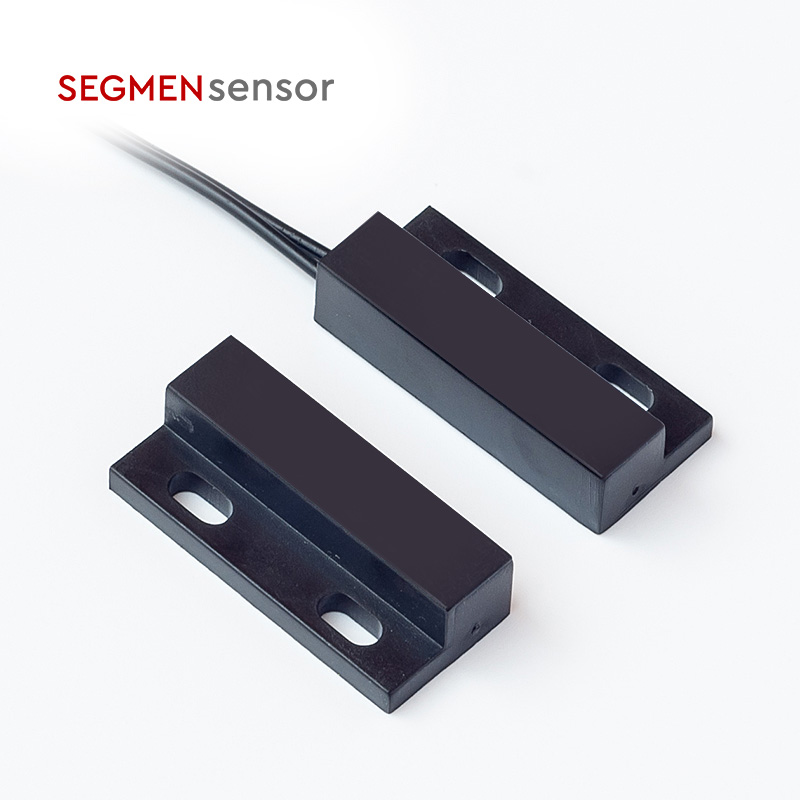
SEGMENsensor manufactures a complete range of inductive proximity sensors for industrial OEM and end-user applications. All models are CE certified and manufactured under ISO 9001 quality management. Key specifications:
- Housing sizes: M8, M12, M18, M30 (square housings available on request)
- Protection rating: IP67 standard; IP68 available on stainless steel models
- Output types: NPN NO / NPN NC / PNP NO / PNP NC
- Connection: 2 m cable standard; M12 4-pin connector option
- Housing materials: Nickel-plated brass (standard), 316L stainless steel (food/chemical grade)
- Mounting types: Flush (embeddable) and non-flush (non-embeddable)
- Supply voltage: 10–30 VDC (24 VDC nominal)
- Output current: 200 mA standard
- Certifications: CE, RoHS, ATEX (selected models), ISO 9001
- OEM minimum order: 50 pcs; lead time 3–5 weeks
For full technical specifications and datasheet downloads, visit the SEGMENsensor proximity sensor product page or the proximity sensor downloads page.
Frequently Asked Questions
Inductive proximity sensors generate an oscillating electromagnetic field and detect only metallic targets (steel, aluminum, copper, brass) by measuring eddy current losses when metal enters the field. Capacitive proximity sensors measure changes in capacitance caused by the presence of any material with a dielectric constant higher than air — including metals, plastics, glass, liquids, and granular materials. Choose inductive for metal detection in machinery; choose capacitive when the target or container is non-metallic.
Yes, but with reduced sensing range. Inductive proximity sensors are most sensitive to ferrous metals (iron, steel), which have the highest magnetic permeability. Non-ferrous metals (aluminum, copper, brass) have lower permeability and produce weaker eddy current losses, so the effective sensing range for aluminum and copper is typically 40–50% of the rated range for steel. Some sensors are calibrated for specific metals — check the correction factor table in the datasheet for aluminum and copper targets.
No. Water, oil, cutting fluid, and other liquids do not affect inductive proximity sensor operation. Inductive sensors detect metal only and are completely immune to liquid contamination on the sensing face. This makes them ideal for CNC machining centers, food processing washdown environments, and outdoor applications where rain and condensation are present. Capacitive proximity sensors, by contrast, can be triggered by water droplets on the sensing face, requiring sensitivity adjustment or a protective cover.
A flush (embeddable) proximity sensor can be mounted with the sensing face flush with the surface of a metal bracket or machine frame — the electromagnetic field is focused forward and not disturbed by surrounding metal. A non-flush (non-embeddable) sensor must have a clear space around the body equal to its body diameter to prevent the surrounding metal from affecting sensing range. Non-flush sensors have a longer sensing range for a given diameter, but require more mounting space. SEGMENsensor offers both types in all standard housing sizes.
SEGMENsensor inductive proximity sensors support switching frequencies of 200 Hz to 5 kHz depending on body size and model. M8 and M12 sensors in fast-switching variants reach 5 kHz, suitable for high-speed counting of gears, encoder discs, and label applicator cams. Standard M18 and M30 sensors typically switch at 200–500 Hz, suitable for most machine tool and conveyor applications. Check the specific datasheet for the switching frequency of the selected model.
For food, beverage, pharmaceutical, and general washdown environments, IP67 is the minimum requirement (dust-tight, immersion to 1 m for 30 min). For marine, underwater, or continuous submersion applications, specify IP68 (continuous immersion beyond 1 m). SEGMENsensor stainless steel inductive proximity sensors are available in IP67 and IP68. The stainless steel housing also satisfies FDA-compliant materials requirements for food contact proximity.
Inductive proximity sensors are suitable for end-of-stroke detection (confirming cylinder fully retracted or fully extended) but not for continuous position measurement. For continuous position feedback throughout the hydraulic cylinder stroke, use a magnetostrictive linear position sensor installed inside the cylinder piston rod, which provides analog or SSI position output with ±0.05 mm accuracy and unlimited service life. See the SEGMENsensor magnetostrictive sensor range for cylinder integration options. For simple end-stop sensing, M12 or M18 inductive sensors are a cost-effective choice.
Most SEGMENsensor inductive proximity sensors operate from 10 to 30 VDC (24 VDC nominal), covering both 12 V and 24 V PLC supply rails. The wide supply range accommodates voltage drop in long cable runs. Load current (output switching current) is typically 200 mA for standard models. Short-circuit protection and reverse polarity protection are included as standard. For 2-wire AC-powered sensors (for legacy relay-output systems), 100–240 VAC models are available on request.