Special-environment proximity sensors
Weld-Field Immune Inductive Proximity Sensors 150 mT
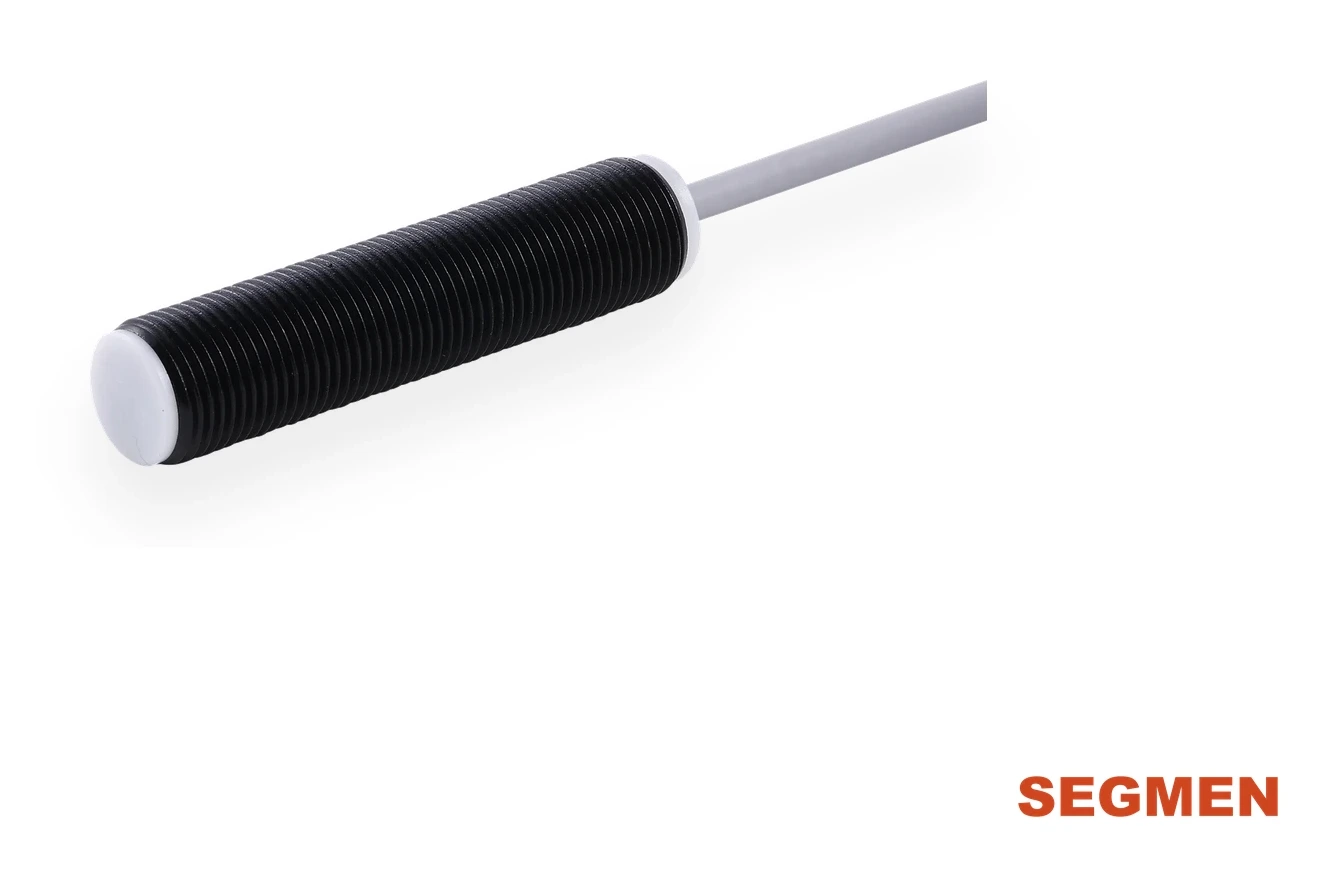
For resistance and MIG welding lines. The sensors ignore magnetic fields from the welding current up to 150 mT, and the PTFE coating stops weld spatter from sticking to the housing.
- Field immunity
- 150 mT
- Housing
- PTFE-coated brass
- Sensing distance
- 1–15 mm
- Housings
- M8 · M12 · M18 · M30
Key facts
A SEGMENsensor weld-field immune proximity sensor is an inductive sensor that keeps switching correctly next to resistance and MIG/MAG welding equipment. SGI-WR models ignore constant and alternating magnetic fields up to 150 mT, and their PTFE-coated brass housing stops weld spatter from sticking. They come in M8, M12, M18 and M30.
- Magnetic field immunity covers constant and alternating fields up to 150 mT.
- Sensing distance is 1 / 2 mm (M8), 2 / 4 / 6 mm (M12), 5 / 8 mm (M18) and 15 mm (M30).
- Outputs are NO, NC or NO+NC, with 200 mA maximum load current.
- Protection is IP67 and operating temperature is -25 to +70 °C.
- Qualification samples are 1–5 pcs, and the sensors are CE and RoHS compliant.
Watch: how inductive sensors work and how they are tested
Transcript
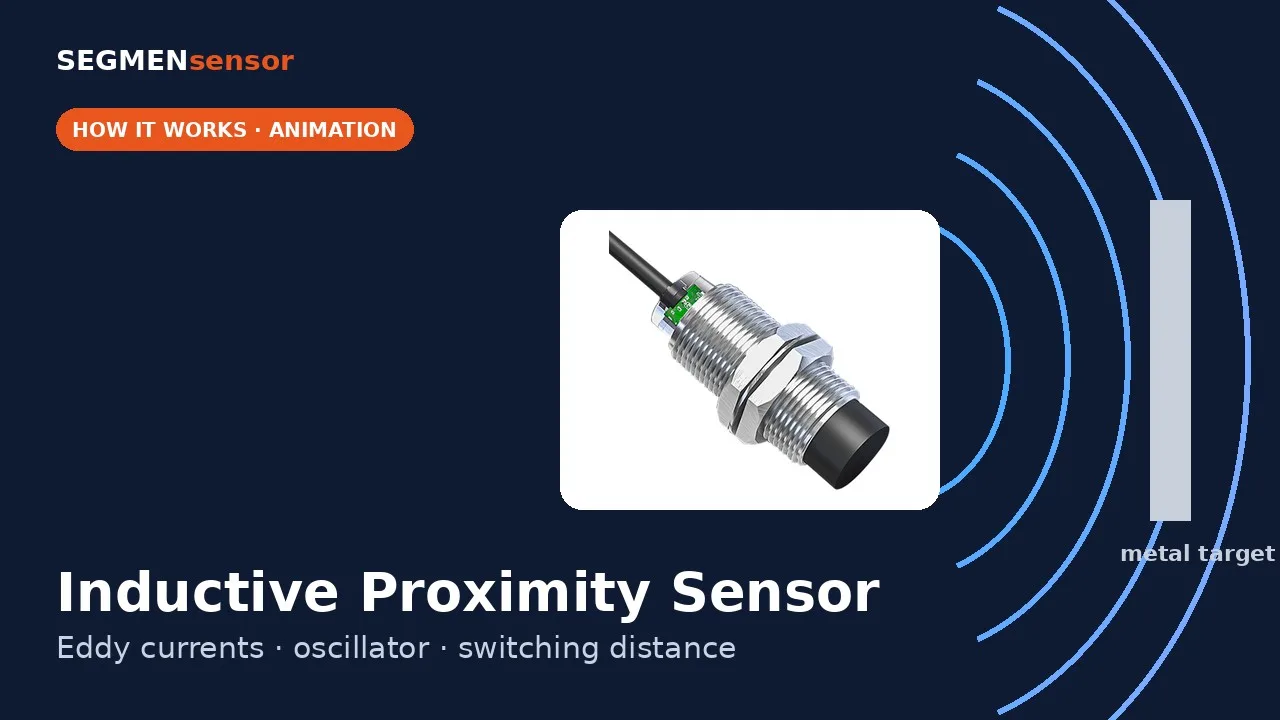
How does an inductive sensor detect metal without contact? Inside the sensor, an oscillator drives a coil wound on a ferrite core. It creates a high-frequency magnetic field in front of the sensing face. When a metal target enters the field, eddy currents are induced in the metal. They draw energy from the field, and the oscillation amplitude drops. When the amplitude falls below the threshold, the trigger switches the output, and the LED lights up. The switching distance, Sn, depends on the sensor size and the target material. Mild steel gives the full rated distance. SEGMENsensor inductive sensors: M8 to M30, Sn 1–25 mm. Learn more at segmensensor.com.
Transcript
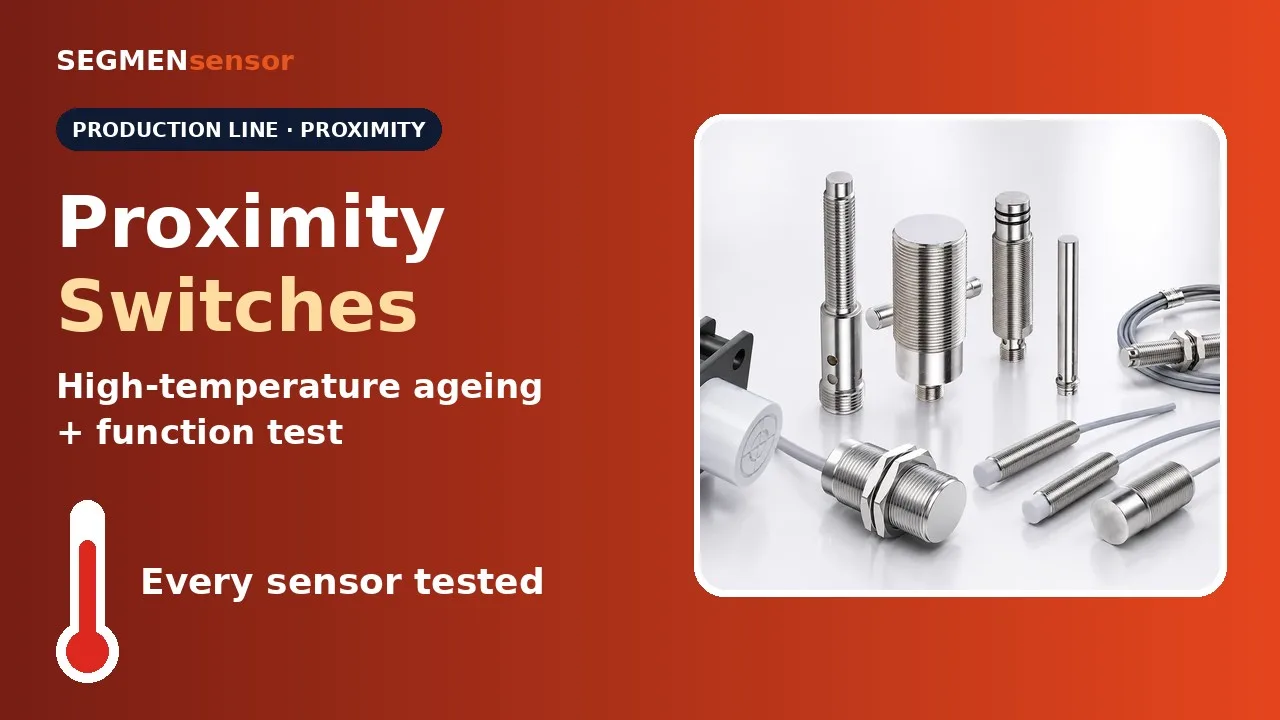
Proximity switches on the production line, from sensing element to final test. Reed sensing elements are fed into automatic assembly machines. Each element is positioned, formed and fitted automatically, one after another. Finished switches are aged in a high-temperature test chamber. Dedicated test stations then check the switching function and the output of every sensor. The readings on each station are checked before the sensors are packed. Every sensor tested · OEM volume supply. Request a quote at segmensensor.com.
Quick answer
What is a weld-field immune proximity sensor?
A weld-field immune proximity sensor is an inductive sensor that keeps switching correctly next to welding equipment. SEGMENsensor WR models are immune to constant and alternating magnetic fields up to 150 mT, and their PTFE-coated brass housing resists weld spatter. They come in M8, M12, M18 and M30 with 1–15 mm sensing distance.
Model finder
Choose by housing, output and connection
Every model below is rated for magnetic fields up to 150 mT. NO+NC models give both a normally open and a normally closed output.
| Part number | Housing | Mounting | Sensing distance | Output | Supply | Connection | Frequency | |
|---|---|---|---|---|---|---|---|---|
| SGI-WR08S-010DA-C2 | M8 | Flush | 1 mm | DC 2-wire NO | 10–60 VDC | 2 m cable | 1 kHz | Quote |
| SGI-WR08S-010DA-Q3 | M8 | Flush | 1 mm | DC 2-wire NO | 10–60 VDC | M8 connector | 1 kHz | Quote |
| SGI-WR08S-010DB-C2 | M8 | Flush | 1 mm | DC 2-wire NC | 10–60 VDC | 2 m cable | 1 kHz | Quote |
| SGI-WR08S-010DB-Q3 | M8 | Flush | 1 mm | DC 2-wire NC | 10–60 VDC | M8 connector | 1 kHz | Quote |
| SGI-WR08S-010NA-C2 | M8 | Flush | 1 mm | NPN NO | 10–30 VDC | 2 m cable | 1 kHz | Quote |
| SGI-WR08S-010NA-Q3 | M8 | Flush | 1 mm | NPN NO | 10–30 VDC | M8 connector | 1 kHz | Quote |
| SGI-WR08S-010NB-C2 | M8 | Flush | 1 mm | NPN NC | 10–30 VDC | 2 m cable | 1 kHz | Quote |
| SGI-WR08S-010NB-Q3 | M8 | Flush | 1 mm | NPN NC | 10–30 VDC | M8 connector | 1 kHz | Quote |
| SGI-WR08S-010NC-C2 | M8 | Flush | 1 mm | NPN NO+NC | 10–30 VDC | 2 m cable | 1 kHz | Quote |
| SGI-WR08S-010NC-Q3 | M8 | Flush | 1 mm | NPN NO+NC | 10–30 VDC | M8 connector | 1 kHz | Quote |
| SGI-WR08S-010PA-C2 | M8 | Flush | 1 mm | PNP NO | 10–30 VDC | 2 m cable | 1 kHz | Quote |
| SGI-WR08S-010PA-Q3 | M8 | Flush | 1 mm | PNP NO | 10–30 VDC | M8 connector | 1 kHz | Quote |
| SGI-WR08S-010PB-C2 | M8 | Flush | 1 mm | PNP NC | 10–30 VDC | 2 m cable | 1 kHz | Quote |
| SGI-WR08S-010PB-Q3 | M8 | Flush | 1 mm | PNP NC | 10–30 VDC | M8 connector | 1 kHz | Quote |
| SGI-WR08S-010PC-C2 | M8 | Flush | 1 mm | PNP NO+NC | 10–30 VDC | 2 m cable | 1 kHz | Quote |
| SGI-WR08S-010PC-Q3 | M8 | Flush | 1 mm | PNP NO+NC | 10–30 VDC | M8 connector | 1 kHz | Quote |
| SGI-WR08U-020DA-C2 | M8 | Non-flush | 2 mm | DC 2-wire NO | 10–60 VDC | 2 m cable | 1 kHz | Quote |
| SGI-WR08U-020DA-Q3 | M8 | Non-flush | 2 mm | DC 2-wire NO | 10–60 VDC | M8 connector | 1 kHz | Quote |
| SGI-WR08U-020DB-C2 | M8 | Non-flush | 2 mm | DC 2-wire NC | 10–60 VDC | 2 m cable | 1 kHz | Quote |
| SGI-WR08U-020DB-Q3 | M8 | Non-flush | 2 mm | DC 2-wire NC | 10–60 VDC | M8 connector | 1 kHz | Quote |
| SGI-WR08U-020NA-C2 | M8 | Non-flush | 2 mm | NPN NO | 10–30 VDC | 2 m cable | 1 kHz | Quote |
| SGI-WR08U-020NA-Q3 | M8 | Non-flush | 2 mm | NPN NO | 10–30 VDC | M8 connector | 1 kHz | Quote |
| SGI-WR08U-020NB-C2 | M8 | Non-flush | 2 mm | NPN NC | 10–30 VDC | 2 m cable | 1 kHz | Quote |
| SGI-WR08U-020NB-Q3 | M8 | Non-flush | 2 mm | NPN NC | 10–30 VDC | M8 connector | 1 kHz | Quote |
| SGI-WR08U-020NC-C2 | M8 | Non-flush | 2 mm | NPN NO+NC | 10–30 VDC | 2 m cable | 1 kHz | Quote |
| SGI-WR08U-020NC-Q3 | M8 | Non-flush | 2 mm | NPN NO+NC | 10–30 VDC | M8 connector | 1 kHz | Quote |
| SGI-WR08U-020PA-C2 | M8 | Non-flush | 2 mm | PNP NO | 10–30 VDC | 2 m cable | 1 kHz | Quote |
| SGI-WR08U-020PA-Q3 | M8 | Non-flush | 2 mm | PNP NO | 10–30 VDC | M8 connector | 1 kHz | Quote |
| SGI-WR08U-020PB-C2 | M8 | Non-flush | 2 mm | PNP NC | 10–30 VDC | 2 m cable | 1 kHz | Quote |
| SGI-WR08U-020PB-Q3 | M8 | Non-flush | 2 mm | PNP NC | 10–30 VDC | M8 connector | 1 kHz | Quote |
| SGI-WR08U-020PC-C2 | M8 | Non-flush | 2 mm | PNP NO+NC | 10–30 VDC | 2 m cable | 1 kHz | Quote |
| SGI-WR08U-020PC-Q3 | M8 | Non-flush | 2 mm | PNP NO+NC | 10–30 VDC | M8 connector | 1 kHz | Quote |
| SGI-WR12S-020DA-Q4 | M12 | Flush | 2 mm | DC 2-wire NO | 10–60 VDC | M12 connector | 1 kHz | Quote |
| SGI-WR12S-020DB-C2 | M12 | Flush | 2 mm | DC 2-wire NC | 10–60 VDC | 2 m cable | 1 kHz | Quote |
| SGI-WR12S-020DB-Q4 | M12 | Flush | 2 mm | DC 2-wire NC | 10–60 VDC | M12 connector | 1 kHz | Quote |
| SGI-WR12S-020NA-C2 | M12 | Flush | 2 mm | NPN NO | 10–30 VDC | 2 m cable | 1 kHz | Quote |
| SGI-WR12S-020NA-Q4 | M12 | Flush | 2 mm | NPN NO | 10–30 VDC | M12 connector | 1 kHz | Quote |
| SGI-WR12S-020NB-C2 | M12 | Flush | 2 mm | NPN NC | 10–30 VDC | 2 m cable | 1 kHz | Quote |
| SGI-WR12S-020NB-Q4 | M12 | Flush | 2 mm | NPN NC | 10–30 VDC | M12 connector | 1 kHz | Quote |
| SGI-WR12S-020NC-C2 | M12 | Flush | 2 mm | NPN NO+NC | 10–30 VDC | 2 m cable | 1 kHz | Quote |
| SGI-WR12S-020NC-Q4 | M12 | Flush | 2 mm | NPN NO+NC | 10–30 VDC | M12 connector | 1 kHz | Quote |
| SGI-WR12S-020PA-C2 | M12 | Flush | 2 mm | PNP NO | 10–30 VDC | 2 m cable | 1 kHz | Quote |
| SGI-WR12S-020PB-C2 | M12 | Flush | 2 mm | PNP NC | 10–30 VDC | 2 m cable | 1 kHz | Quote |
| SGI-WR12S-020PB-Q4 | M12 | Flush | 2 mm | PNP NC | 10–30 VDC | M12 connector | 1 kHz | Quote |
| SGI-WR12S-020PC-C2 | M12 | Flush | 2 mm | PNP NO+NC | 10–30 VDC | 2 m cable | 1 kHz | Quote |
| SGI-WR12S-020PC-Q4 | M12 | Flush | 2 mm | PNP NO+NC | 10–30 VDC | M12 connector | 1 kHz | Quote |
| SGI-WR12S-040DA-C2 | M12 | Flush | 4 mm | DC 2-wire NO | 10–60 VDC | 2 m cable | 800 Hz | Quote |
| SGI-WR12S-060DA-C2 | M12 | Flush | 6 mm | DC 2-wire NO | 10–60 VDC | 2 m cable | — | Quote |
| SGI-WR12U-040DA-C2 | M12 | Non-flush | 4 mm | DC 2-wire NO | 10–60 VDC | 2 m cable | 1 kHz | Quote |
| SGI-WR12U-040DB-C2 | M12 | Non-flush | 4 mm | DC 2-wire NC | 10–60 VDC | 2 m cable | 1 kHz | Quote |
| SGI-WR12U-040NA-C2 | M12 | Non-flush | 4 mm | NPN NO | 10–30 VDC | 2 m cable | 1 kHz | Quote |
| SGI-WR12U-040NA-Q4 | M12 | Non-flush | 4 mm | NPN NO | 10–30 VDC | M12 connector | 800 Hz | Quote |
| SGI-WR12U-040NB-C2 | M12 | Non-flush | 4 mm | NPN NC | 10–30 VDC | 2 m cable | 1 kHz | Quote |
| SGI-WR12U-040NB-Q4 | M12 | Non-flush | 4 mm | NPN NC | 10–30 VDC | M12 connector | 800 Hz | Quote |
| SGI-WR12U-040NC-C2 | M12 | Non-flush | 4 mm | NPN NO+NC | 10–30 VDC | 2 m cable | 1 kHz | Quote |
| SGI-WR12U-040NC-Q4 | M12 | Non-flush | 4 mm | NPN NO+NC | 10–30 VDC | M12 connector | 800 Hz | Quote |
| SGI-WR12U-040PA-C2 | M12 | Non-flush | 4 mm | PNP NO | 10–30 VDC | 2 m cable | 1 kHz | Quote |
| SGI-WR12U-040PA-Q4 | M12 | Non-flush | 4 mm | PNP NO | 10–30 VDC | M12 connector | 800 Hz | Quote |
| SGI-WR12U-040PB-C2 | M12 | Non-flush | 4 mm | PNP NC | 10–30 VDC | 2 m cable | 1 kHz | Quote |
| SGI-WR12U-040PB-Q4 | M12 | Non-flush | 4 mm | PNP NC | 10–30 VDC | M12 connector | 800 Hz | Quote |
| SGI-WR12U-040PC-C2 | M12 | Non-flush | 4 mm | PNP NO+NC | 10–30 VDC | 2 m cable | 1 kHz | Quote |
| SGI-WR12U-040PC-Q4 | M12 | Non-flush | 4 mm | PNP NO+NC | 10–30 VDC | M12 connector | — | Quote |
| SGI-WR18S-050DA-C2 | M18 | Flush | 5 mm | DC 2-wire NO | 10–60 VDC | 2 m cable | 800 Hz | Quote |
| SGI-WR18S-050DA-Q4 | M18 | Flush | 5 mm | DC 2-wire NO | 10–60 VDC | M12 connector | 500 Hz | Quote |
| SGI-WR18S-050DB-C2 | M18 | Flush | 5 mm | DC 2-wire NC | 10–60 VDC | 2 m cable | 800 Hz | Quote |
| SGI-WR18S-050DB-Q4 | M18 | Flush | 5 mm | DC 2-wire NC | 10–60 VDC | M12 connector | 500 Hz | Quote |
| SGI-WR18S-050NA-C2 | M18 | Flush | 5 mm | NPN NO | 10–30 VDC | 2 m cable | 800 Hz | Quote |
| SGI-WR18S-050NA-Q4 | M18 | Flush | 5 mm | NPN NO | 10–30 VDC | M12 connector | 500 Hz | Quote |
| SGI-WR18S-050NB-C2 | M18 | Flush | 5 mm | NPN NC | 10–30 VDC | 2 m cable | 800 Hz | Quote |
| SGI-WR18S-050NB-Q4 | M18 | Flush | 5 mm | NPN NC | 10–30 VDC | M12 connector | 500 Hz | Quote |
| SGI-WR18S-050NC-C2 | M18 | Flush | 5 mm | NPN NO+NC | 10–30 VDC | 2 m cable | 800 Hz | Quote |
| SGI-WR18S-050NC-Q4 | M18 | Flush | 5 mm | NPN NO+NC | 10–30 VDC | M12 connector | 500 Hz | Quote |
| SGI-WR18S-050PA-C2 | M18 | Flush | 5 mm | PNP NO | 10–30 VDC | 2 m cable | 800 Hz | Quote |
| SGI-WR18S-050PA-Q4 | M18 | Flush | 5 mm | PNP NO | 10–30 VDC | M12 connector | 500 Hz | Quote |
| SGI-WR18S-050PB-C2 | M18 | Flush | 5 mm | PNP NC | 10–30 VDC | 2 m cable | 800 Hz | Quote |
| SGI-WR18S-050PB-Q4 | M18 | Flush | 5 mm | PNP NC | 10–30 VDC | M12 connector | 500 Hz | Quote |
| SGI-WR18S-050PC-C2 | M18 | Flush | 5 mm | PNP NO+NC | 10–30 VDC | 2 m cable | 800 Hz | Quote |
| SGI-WR18S-050PC-Q4 | M18 | Flush | 5 mm | PNP NO+NC | 10–30 VDC | M12 connector | 500 Hz | Quote |
| SGI-WR18U-080DA-C2 | M18 | Non-flush | 8 mm | DC 2-wire NO | 10–60 VDC | 2 m cable | 500 Hz | Quote |
| SGI-WR18U-080DA-Q4 | M18 | Non-flush | 8 mm | DC 2-wire NO | 10–60 VDC | M12 connector | 500 Hz | Quote |
| SGI-WR18U-080DB-C2 | M18 | Non-flush | 8 mm | DC 2-wire NC | 10–60 VDC | 2 m cable | 500 Hz | Quote |
| SGI-WR18U-080DB-Q4 | M18 | Non-flush | 8 mm | DC 2-wire NC | 10–60 VDC | M12 connector | 500 Hz | Quote |
| SGI-WR18U-080NA-C2 | M18 | Non-flush | 8 mm | NPN NO | 10–30 VDC | 2 m cable | 500 Hz | Quote |
| SGI-WR18U-080NA-Q4 | M18 | Non-flush | 8 mm | NPN NO | 10–30 VDC | M12 connector | 500 Hz | Quote |
| SGI-WR18U-080NB-C2 | M18 | Non-flush | 8 mm | NPN NC | 10–30 VDC | 2 m cable | 500 Hz | Quote |
| SGI-WR18U-080NB-Q4 | M18 | Non-flush | 8 mm | NPN NC | 10–30 VDC | M12 connector | 500 Hz | Quote |
| SGI-WR18U-080NC-C2 | M18 | Non-flush | 8 mm | NPN NO+NC | 10–30 VDC | 2 m cable | 500 Hz | Quote |
| SGI-WR18U-080NC-Q4 | M18 | Non-flush | 8 mm | NPN NO+NC | 10–30 VDC | M12 connector | 500 Hz | Quote |
| SGI-WR18U-080PA-C2 | M18 | Non-flush | 8 mm | PNP NO | 10–30 VDC | 2 m cable | 500 Hz | Quote |
| SGI-WR18U-080PA-Q4 | M18 | Non-flush | 8 mm | PNP NO | 10–30 VDC | M12 connector | 500 Hz | Quote |
| SGI-WR18U-080PB-C2 | M18 | Non-flush | 8 mm | PNP NC | 10–30 VDC | 2 m cable | 500 Hz | Quote |
| SGI-WR18U-080PB-Q4 | M18 | Non-flush | 8 mm | PNP NC | 10–30 VDC | M12 connector | 500 Hz | Quote |
| SGI-WR18U-080PC-C2 | M18 | Non-flush | 8 mm | PNP NO+NC | 10–30 VDC | 2 m cable | 500 Hz | Quote |
| SGI-WR18U-080PC-Q4 | M18 | Non-flush | 8 mm | PNP NO+NC | 10–30 VDC | M12 connector | 500 Hz | Quote |
| SGI-WR30U-150DA-C2 | M30 | Non-flush | 15 mm | DC 2-wire NO | 10–60 VDC | 2 m cable | — | Quote |
| SGI-WR30U-150DA-Q4 | M30 | Non-flush | 15 mm | DC 2-wire NO | 10–60 VDC | M12 connector | — | Quote |
| SGI-WR30U-150DB-C2 | M30 | Non-flush | 15 mm | DC 2-wire NC | 10–60 VDC | 2 m cable | — | Quote |
| SGI-WR30U-150DB-Q4 | M30 | Non-flush | 15 mm | DC 2-wire NC | 10–60 VDC | M12 connector | — | Quote |
| SGI-WR30U-150NA-C2 | M30 | Non-flush | 15 mm | NPN NO | 10–30 VDC | 2 m cable | — | Quote |
| SGI-WR30U-150NA-Q4 | M30 | Non-flush | 15 mm | NPN NO | 10–30 VDC | M12 connector | — | Quote |
| SGI-WR30U-150NB-C2 | M30 | Non-flush | 15 mm | NPN NC | 10–30 VDC | 2 m cable | — | Quote |
| SGI-WR30U-150NB-Q4 | M30 | Non-flush | 15 mm | NPN NC | 10–30 VDC | M12 connector | — | Quote |
| SGI-WR30U-150NC-C2 | M30 | Non-flush | 15 mm | NPN NO+NC | 10–30 VDC | 2 m cable | — | Quote |
| SGI-WR30U-150NC-Q4 | M30 | Non-flush | 15 mm | NPN NO+NC | 10–30 VDC | M12 connector | — | Quote |
| SGI-WR30U-150PA-C2 | M30 | Non-flush | 15 mm | PNP NO | 10–30 VDC | 2 m cable | — | Quote |
| SGI-WR30U-150PA-Q4 | M30 | Non-flush | 15 mm | PNP NO | 10–30 VDC | M12 connector | — | Quote |
| SGI-WR30U-150PB-C2 | M30 | Non-flush | 15 mm | PNP NC | 10–30 VDC | 2 m cable | — | Quote |
| SGI-WR30U-150PB-Q4 | M30 | Non-flush | 15 mm | PNP NC | 10–30 VDC | M12 connector | — | Quote |
| SGI-WR30U-150PC-C2 | M30 | Non-flush | 15 mm | PNP NO+NC | 10–30 VDC | 2 m cable | — | Quote |
| SGI-WR30U-150PC-Q4 | M30 | Non-flush | 15 mm | PNP NO+NC | 10–30 VDC | M12 connector | — | Quote |
All models: -25 °C to +70 °C, IP67, PTFE-coated brass housing. Most models have a PTFE sensing face; a few connector models have a stainless steel face. “—”: not listed in the model data; available on request.
Where it is used
Built for the welding cell
- Welding current creates strong magnetic fields that make standard inductive sensors switch falsely. WR sensors ignore fields up to 150 mT.
- Weld spatter does not stick to the PTFE coating, so the sensing face stays clean for longer.
- Use them for part presence, clamp position and fixture checks close to the weld.
Typical welding-line uses.
Part number guide
Reading a SEGMENsensor part number
Specifications
Technical data, WR series
| Magnetic field immunity | Constant and alternating fields up to 150 mT |
| Sensing distance | M8: 1 / 2 mm; M12: 2 / 4 / 6 mm; M18: 5 / 8 mm; M30: 15 mm |
| Supply voltage | 10–30 VDC (NPN/PNP), 10–60 VDC (DC 2-wire) |
| Output | NO, NC or NO+NC |
| Max. load current | 200 mA |
| No-load current | < 10 mA |
| Voltage drop | < 1.5 V |
| Switching frequency | 500 Hz – 1 kHz by model |
| Response time | 0.1–0.5 ms by model |
| Repeatability | < 1.0 % Sr |
| Operating temperature | -25 °C to +70 °C |
| Protection | IP67 |
| Overload protection | 220 mA |
| Housing | Brass, PTFE coated |
| Sensing face | PTFE (stainless steel on some connector models) |
| Connection | 2 m oil-resistant PUR, PTFE or silicone cable; M8 or M12 connector |
| Approvals | CE, RoHS |
Datasheets and dimension drawings are sent by email on request.
Standards: IEC 60947-5-2 (proximity switches) · IEC 60529 IP ratings
Comparison
WR series vs. a standard inductive sensor
| Feature | Standard inductive | SEGMENsensor WR |
|---|---|---|
| Near welding current | Can switch falsely | Immune up to 150 mT |
| Weld spatter | Sticks to plastic cap | PTFE coating resists build-up |
| Housing | Plain brass or plastic | PTFE-coated brass |
| Output options | NO or NC | NO, NC or NO+NC |
Comparison with a typical general-purpose sensor, not a specific product.
Ordering
Samples, MOQ and OEM
OEM volume supply. Sample and production lead times are confirmed with your quotation.
Contact us about OEM and private-label options.
FAQ
Common questions
Why do standard sensors fail near welding?
The welding current creates strong magnetic fields. A standard inductive sensor can read these fields as a target and switch falsely. WR sensors are built to ignore fields up to 150 mT.
Does weld spatter damage the sensor?
Hot spatter sticks to and burns into plain plastic caps. The PTFE coating on WR sensors resists spatter build-up, so the sensor can be cleaned and stays in service longer.
Which welding processes is it for?
Resistance (spot) welding and MIG/MAG welding lines, for part presence, clamp and fixture position checks near the weld.
What sensing distances are available?
M8: 1 or 2 mm, M12: 2, 4 or 6 mm, M18: 5 or 8 mm, M30: 15 mm. Non-flush models reach further.
Are NO+NC versions available?
Yes. M8, M12, M18 and M30 models are available with both outputs at once.
Are the sensors CE and RoHS compliant?
Yes. The WR series carries CE and RoHS documentation. It is available on request with your quote.