SEGMENsensor proximity sensors
Special-Environment Proximity Sensors
General-purpose inductive proximity sensors are made for ordinary machine surroundings with no pressure at the face. These five SEGMENsensor series cover the conditions where a standard sensor fails: hydraulic pressure, heat and cold, welding fields, and distance measurement.
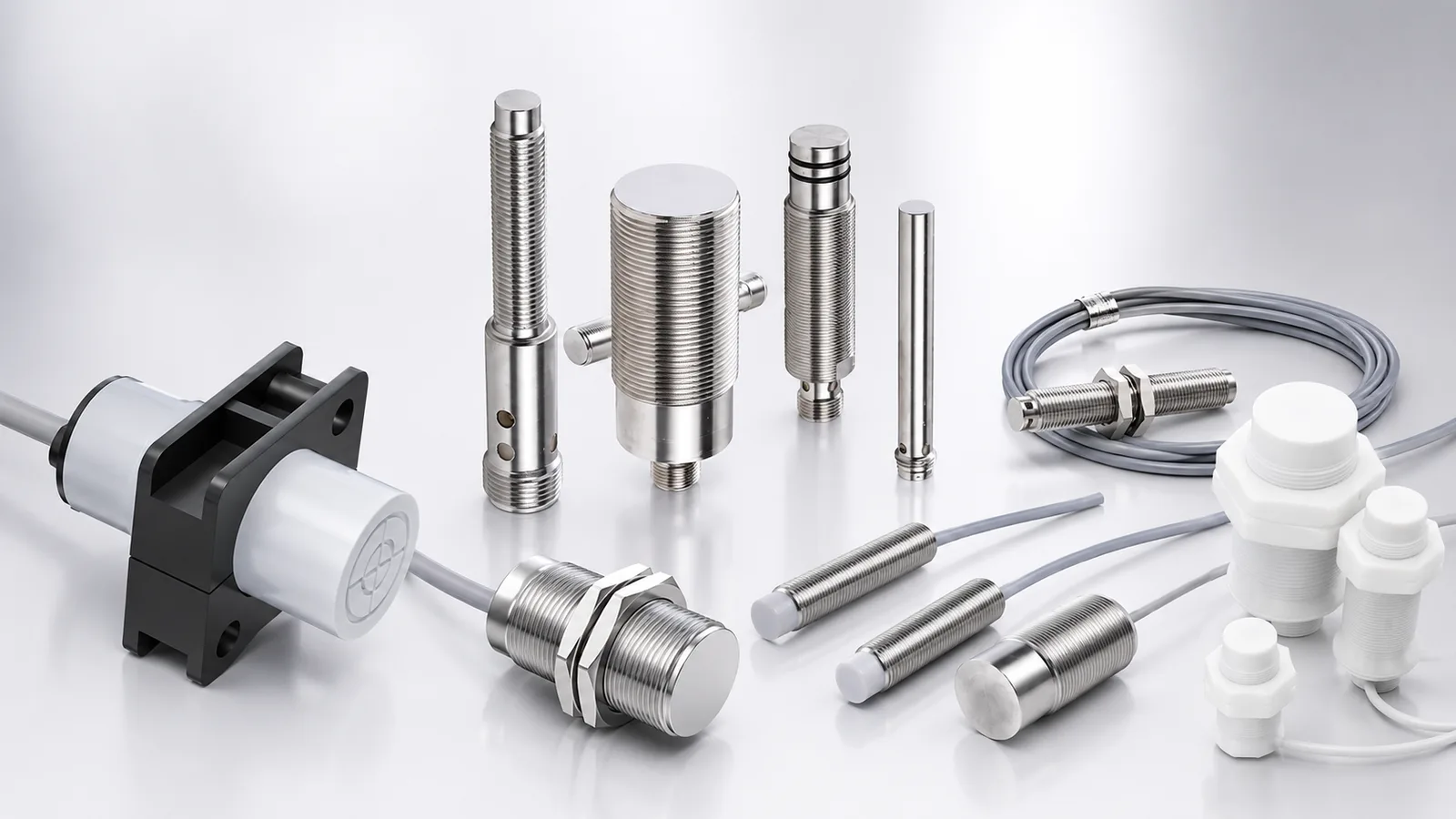
Key facts
SEGMENsensor special-environment proximity sensors are five series with 587 part numbers for mounting points where a general-purpose inductive sensor is not suitable: hydraulic pressure at the sensing face, heat and cold, welding magnetic fields, and distance measurement with an analog output. Choose the series by the condition at the sensor.
- SGI-HP high-pressure sensors are rated 500 bar in M8/M12 and up to 1000 bar in M18.
- SGI-HT high-temperature inductive sensors are rated +120 °C or +150 °C.
- SGC-HT capacitive sensors reach +180 °C, or +200 °C in the M30 split type (T200), and also detect non-metal targets.
- SGI-WR weld-field immune sensors ignore magnetic fields up to 150 mT.
- SGI-AO analog sensors output 4–20 mA or 0–10 V over ranges up to 10 mm; qualification samples are 1–5 pcs for all series.
Watch: how inductive sensors work and how they are tested
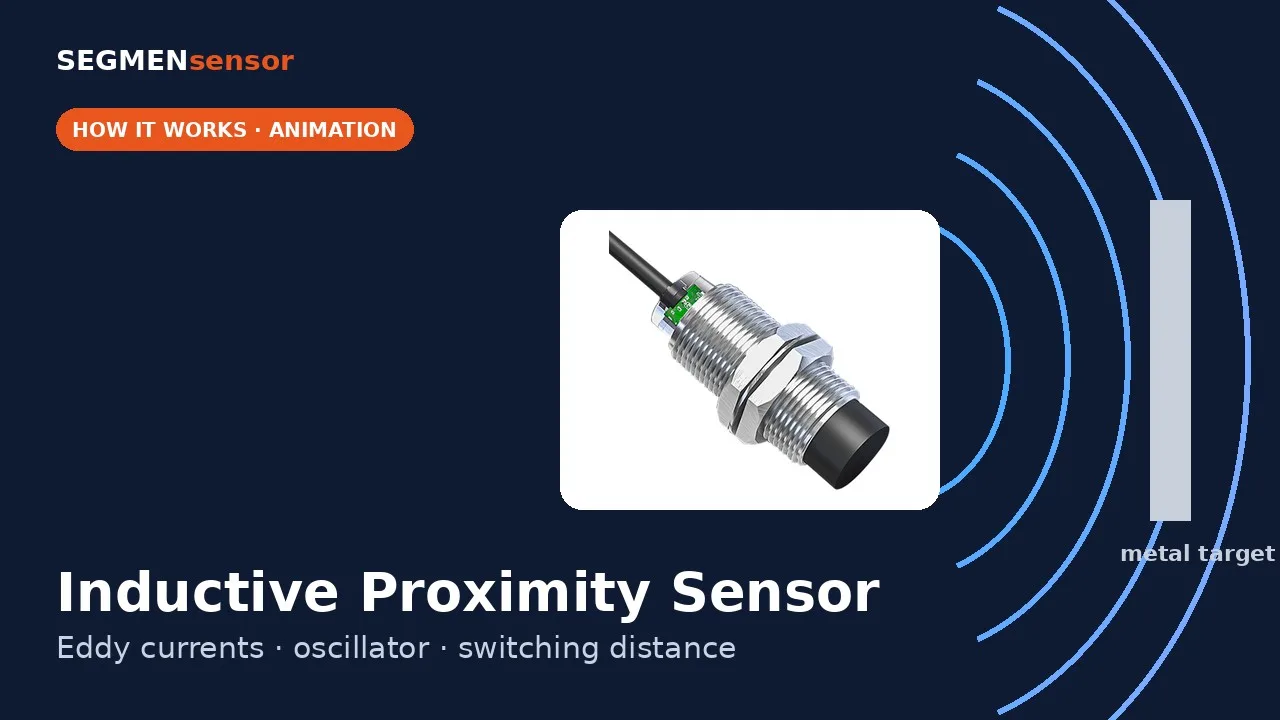
Transcript
How does an inductive sensor detect metal without contact? Inside the sensor, an oscillator drives a coil wound on a ferrite core. It creates a high-frequency magnetic field in front of the sensing face. When a metal target enters the field, eddy currents are induced in the metal. They draw energy from the field, and the oscillation amplitude drops. When the amplitude falls below the threshold, the trigger switches the output, and the LED lights up. The switching distance, Sn, depends on the sensor size and the target material. Mild steel gives the full rated distance. SEGMENsensor inductive sensors: M8 to M30, Sn 1–25 mm. Learn more at segmensensor.com.
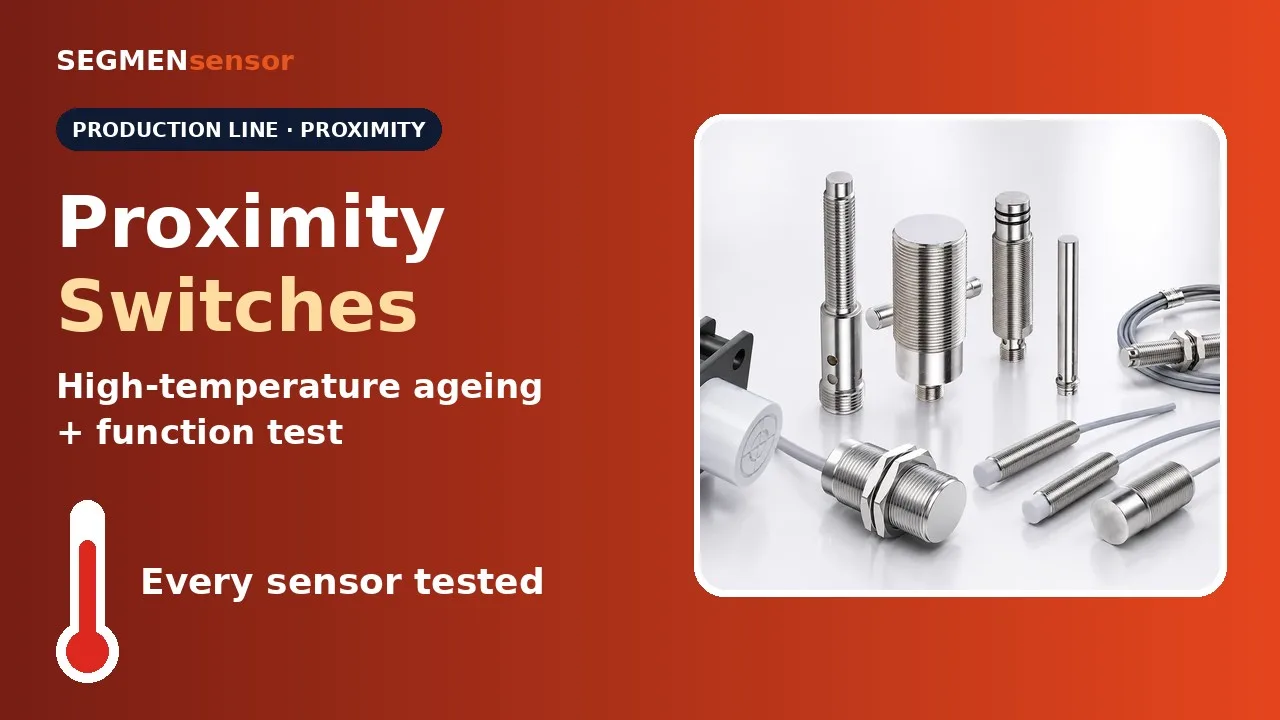
Transcript
Proximity switches on the production line, from sensing element to final test. Reed sensing elements are fed into automatic assembly machines. Each element is positioned, formed and fitted automatically, one after another. Finished switches are aged in a high-temperature test chamber. Dedicated test stations then check the switching function and the output of every sensor. The readings on each station are checked before the sensors are packed. Every sensor tested · OEM volume supply. Request a quote at segmensensor.com.
Quick answer
Which proximity sensor for a harsh environment?
Choose by the condition at the mounting point. Inside hydraulic cylinders, use a pressure-rated sensor (500 bar M8/M12, up to 1000 bar M18). Where it is too hot for a general-purpose sensor, use a high-temperature inductive sensor (to +150 °C) or capacitive sensor (to +200 °C with the T200 split type). Next to welding, use a weld-field immune sensor (150 mT). To measure distance instead of switching, use an analog sensor with 4–20 mA or 0–10 V.
Series
Five series, 587 part numbers
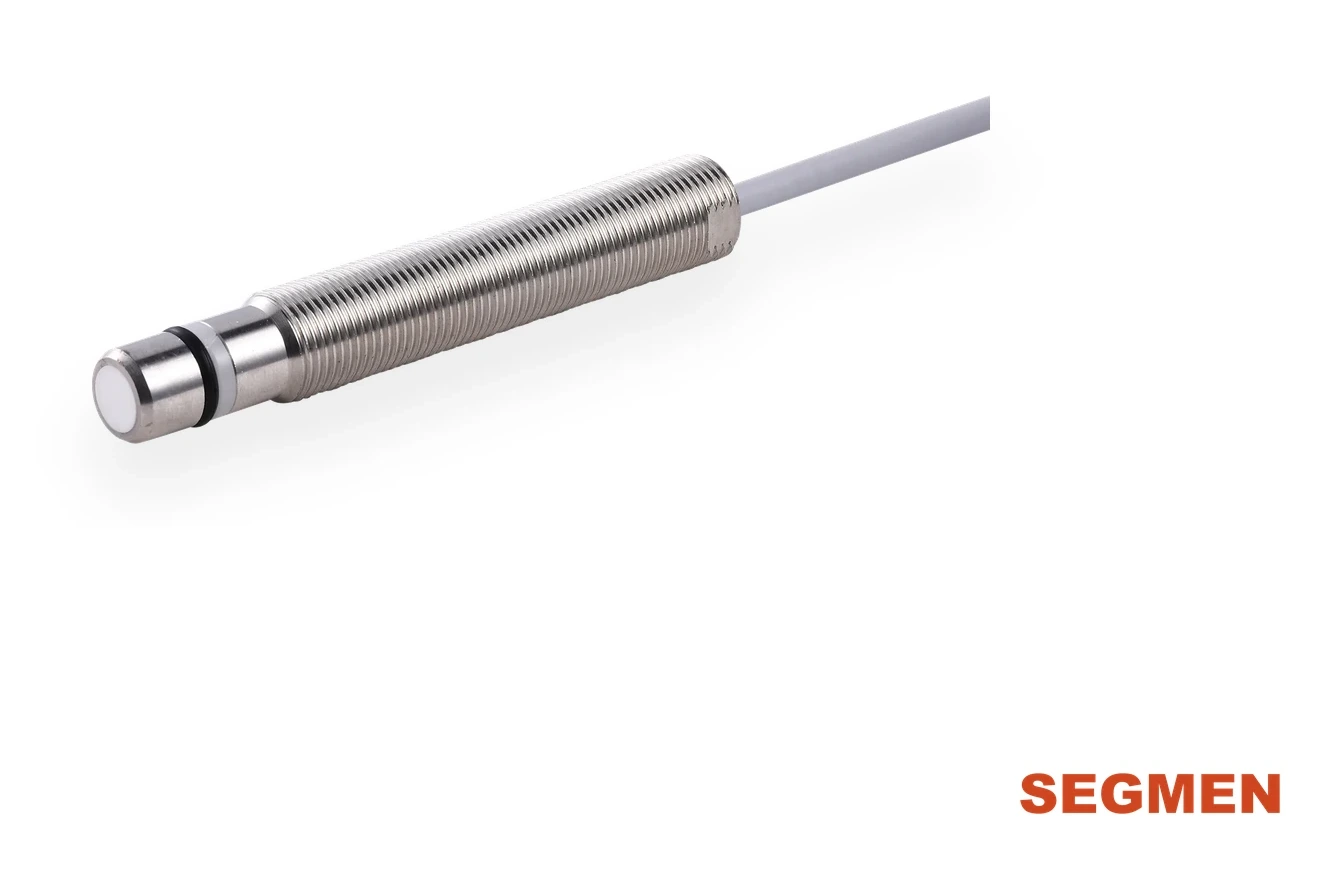
High-Pressure Inductive
M8 / M12 rated 500 bar with ceramic face and IP67 / IP69K; M18 hydraulic-cylinder type in grades up to 1000 bar.
View series →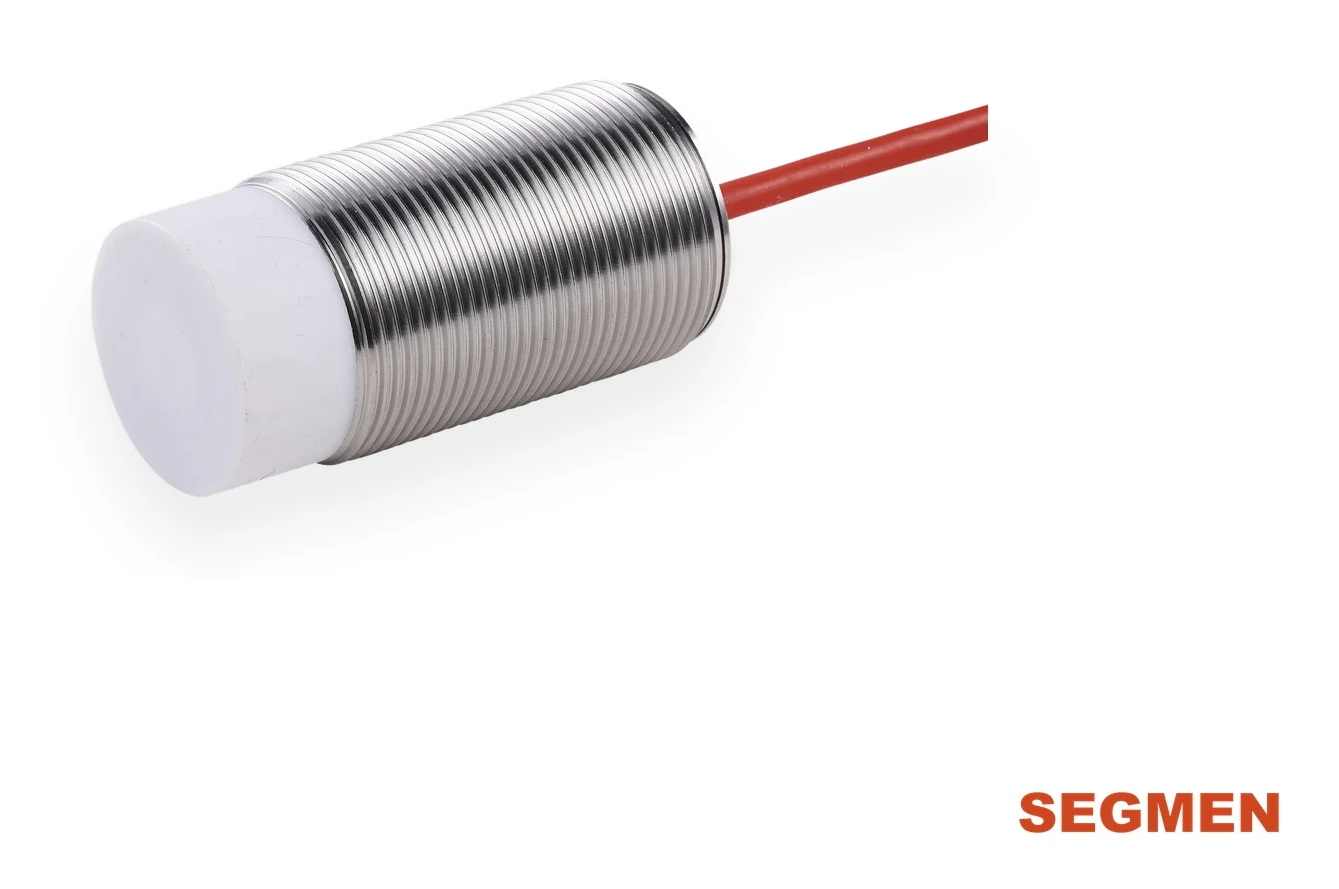
High-Temperature Inductive
T120 and T150 heat ratings plus L30 low-temperature versions, PTFE sensing face, M8–M30.
View series →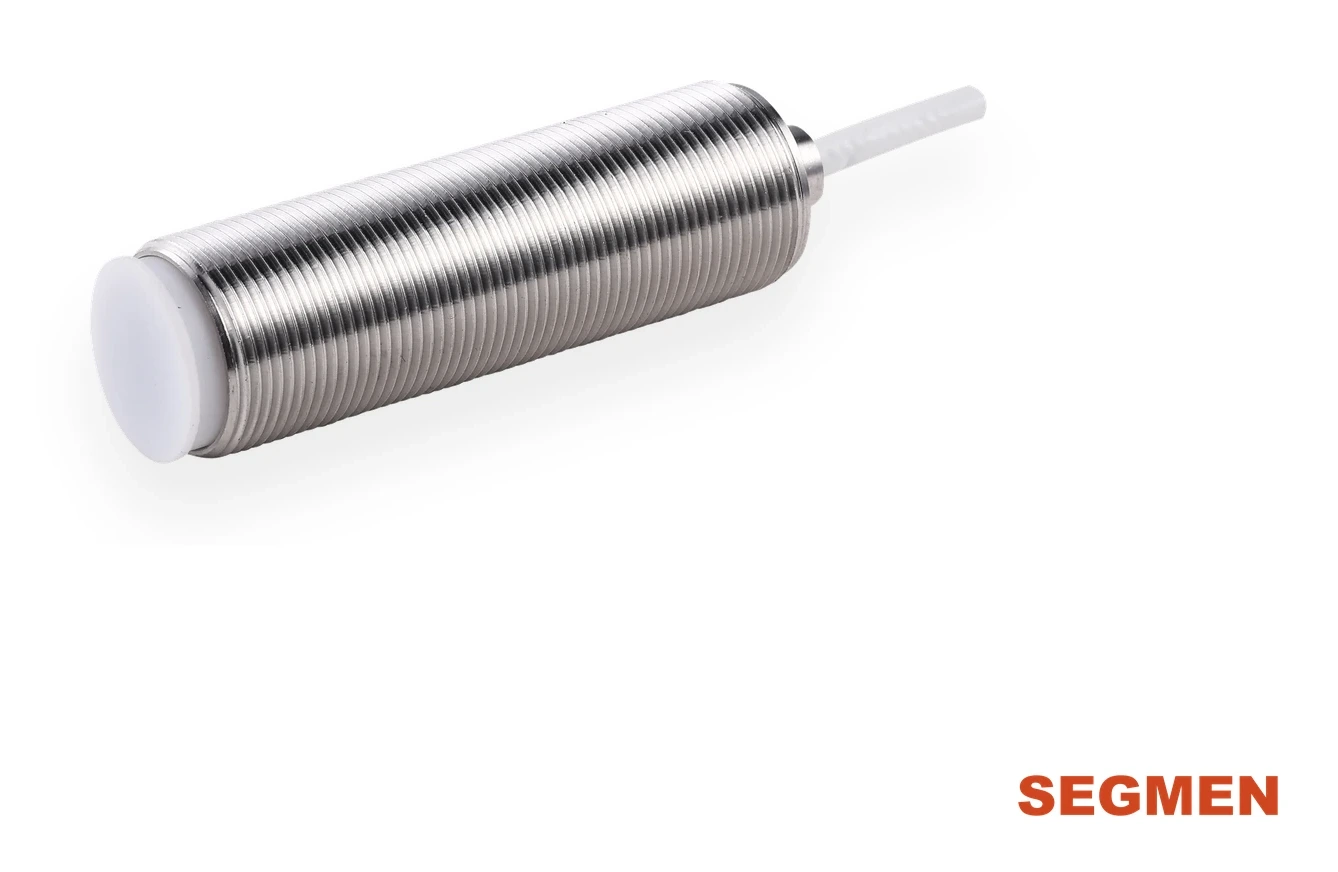
High-Temperature Capacitive
Detects metal and non-metal targets; T120–T200 heat ratings, L30 / L40 cold versions, adjustable sensing.
View series →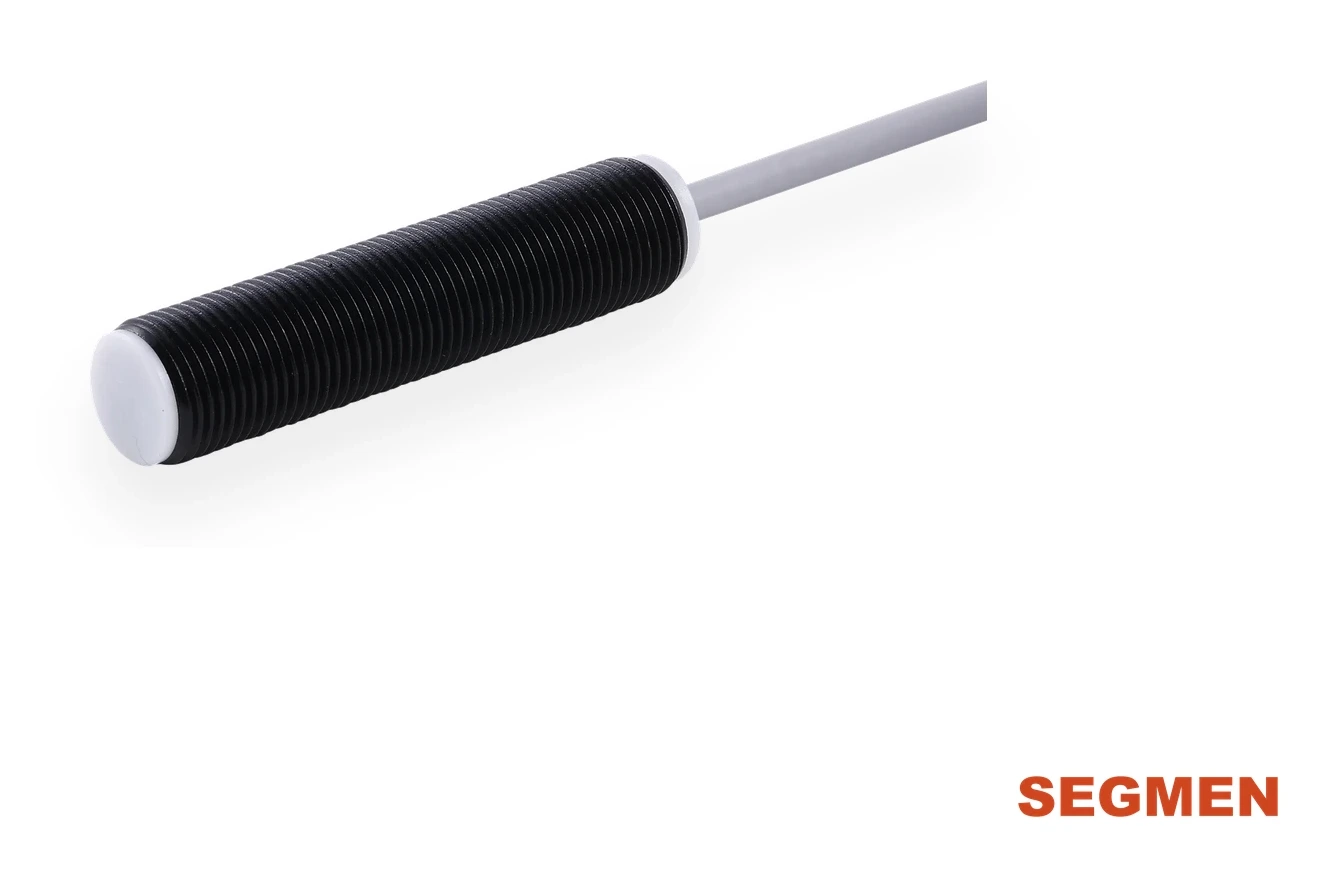
Weld-Field Immune
Immune to constant and alternating welding fields; PTFE-coated brass resists spatter. M8–M30.
View series →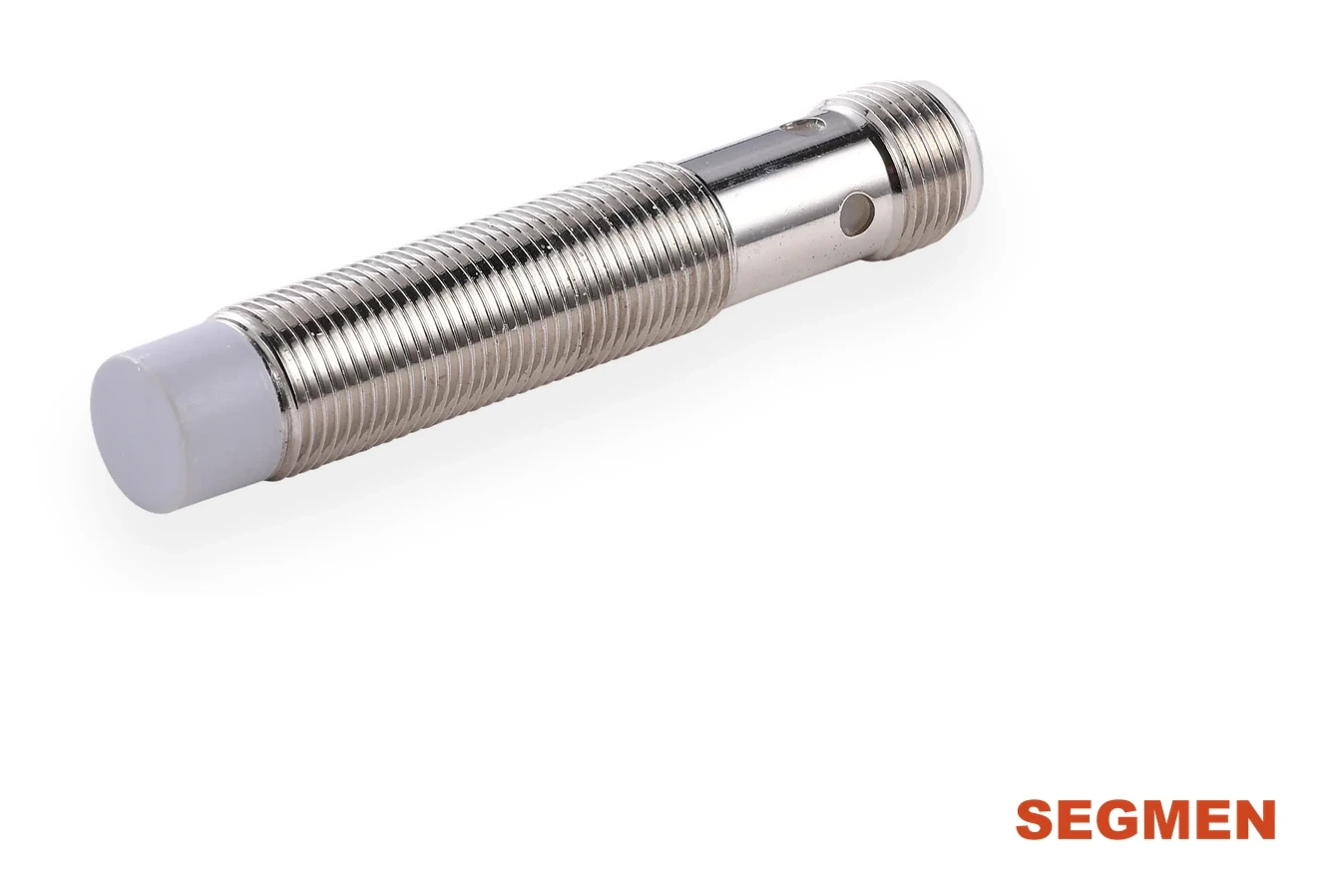
Analog Output Inductive
Continuous distance signal with current, voltage or dual output; D6.5, M8 and M12; 0.02 mm repeatability.
View series →Selection
Match the series to the condition
| Condition at the sensor | Series | Key rating |
|---|---|---|
| Sensing face in hydraulic oil under pressure | SGI-HP High-Pressure | 500 bar (M8/M12), up to 1000 bar (M18) |
| Ambient too hot for a general-purpose sensor, metal target | SGI-HT High-Temperature Inductive | +120 °C / +150 °C |
| Ambient too hot for a general-purpose sensor, non-metal target or level | SGC-HT High-Temperature Capacitive | up to +200 °C (T200) |
| Cold areas too cold for a general-purpose sensor | SGI-HT L30 / SGC-HT L30, L40 | -30 °C / -40 °C |
| Next to resistance or MIG/MAG welding | SGI-WR Weld-Field Immune | 150 mT field immunity |
| Need the distance, not just on/off | SGI-AO Analog | 4–20 mA / 0–10 V, up to 10 mm |
For ordinary machine surroundings, see the full proximity sensor range.
FAQ
Common questions
What counts as a special environment for a proximity sensor?
Any condition where a general-purpose inductive sensor is not suitable: pressure at the sensing face, ambient temperature too hot or too cold for a general-purpose sensor, strong magnetic fields from welding current, or an application that needs a measured distance instead of an on/off signal.
Can one sensor handle both high pressure and high temperature?
Not in the current range. SGI-HP pressure-rated models operate from -25 °C to +70 °C. Tell us your pressure and temperature together and we will check options.
Are all series CE and RoHS compliant?
Yes. All five series carry CE and RoHS documentation, available on request with your quote.
How do SEGMENsensor part numbers work?
Each part number encodes the series, housing, mounting, sensing distance, output, connection and rating, for example SGI-HP12S-015PA-Q4-L69. Each series page explains its code.