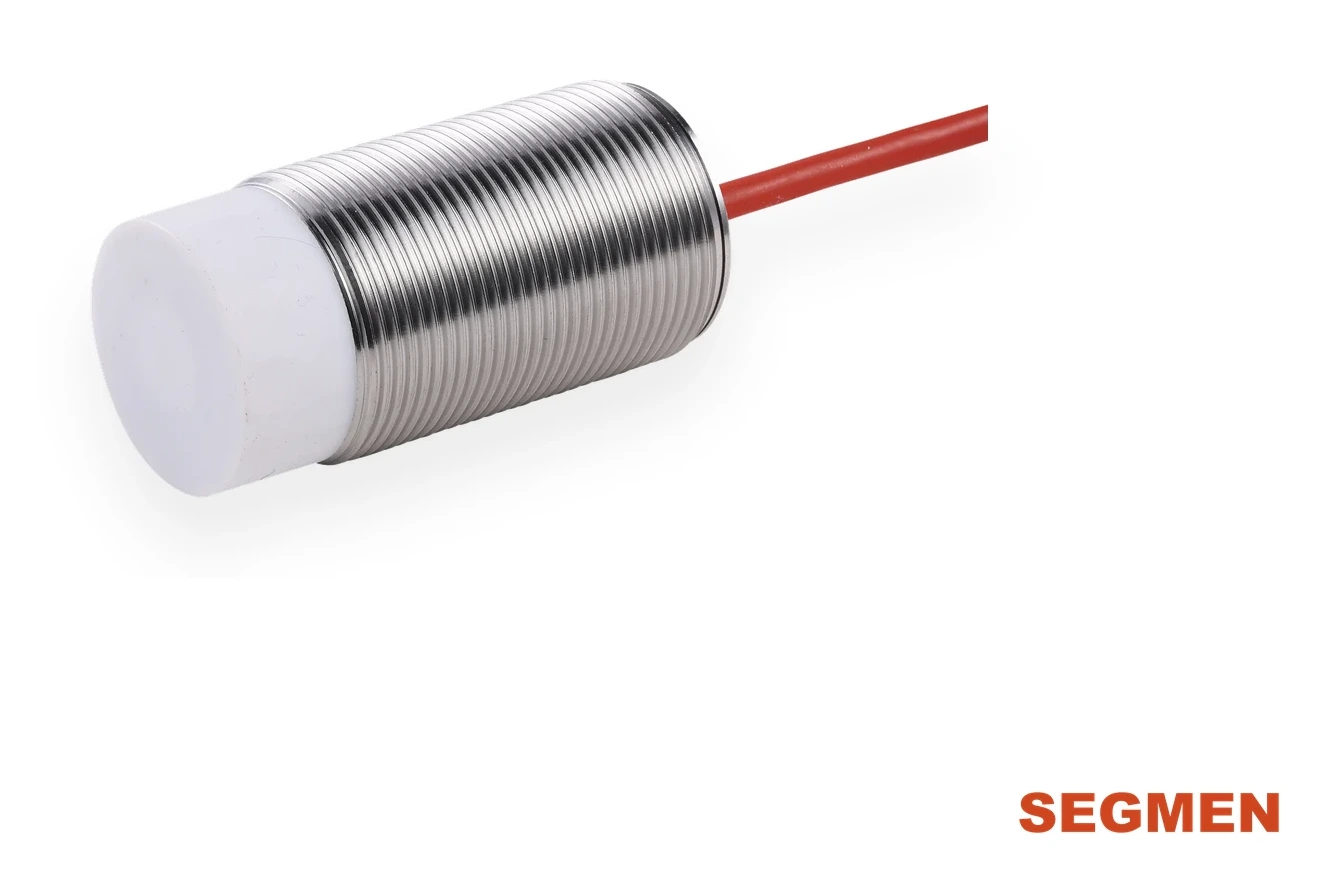
Choose by the ambient temperature at the sensor, with margin. Up to +70 °C a standard sensor is enough. For metal targets use an inductive T120 (+120 °C) or T150 (+150 °C) model; up to +180 °C, or for non-metal targets, use a capacitive T180 model. For cold areas use L30 (-30 °C) or capacitive L40 (-40 °C).
Product series: SEGMENsensor high temperature inductive proximity sensors (T120 / T150 / L30) and high-temperature capacitive proximity sensors (T120–T180, L30 / L40).
A standard inductive proximity sensor is usually rated for about −25 °C to +70 °C. Above that, the plastic sensing face softens, the PVC cable stiffens or melts, and the electronics drift until the switching point moves or the sensor fails. This guide shows how to decide which temperature rating you actually need, what changes between inductive and capacitive high-temperature sensors, and which details besides the rating decide whether the sensor survives.
Step 1 — Find the Temperature That Actually Reaches the Sensor
The rating of a proximity sensor refers to the ambient temperature at the sensor, not the temperature of the process or the target. A 250 °C part passing a sensor a few millimetres away heats the face by radiation and convection; the same part 30 mm away may barely affect it. Measure or estimate:
- the air temperature at the sensor position in the worst operating state (summer, full load, doors closed);
- radiant heat from hot targets, furnace walls, moulds or ovens facing the sensor;
- conducted heat through the mounting bracket;
- heat on the cable route, which is often hotter than the sensor itself;
- the lowest temperature during a cold start or in winter for outdoor machines.
Add a margin above the measured maximum. If the result is close to a rating limit, choose the next rating up or move the sensor away from the heat source; a heat shield or a longer bracket is often cheaper than a higher rating.
Step 2 — Match the Rating
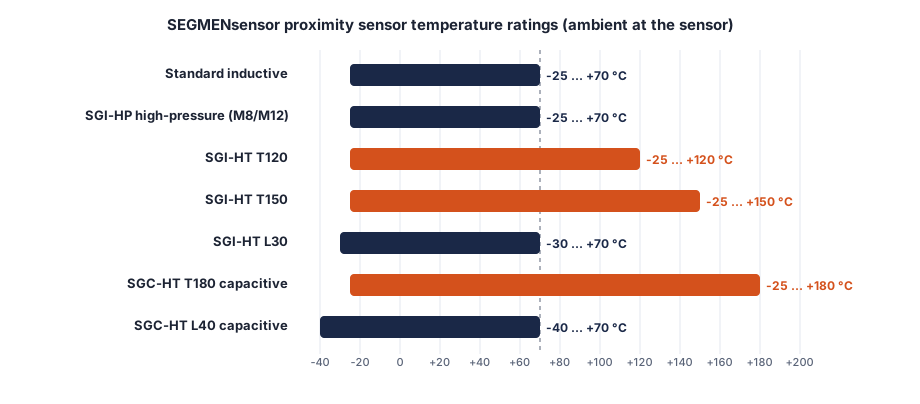
| Ambient at the sensor | Target | Series and rating |
|---|---|---|
| −25 °C to +70 °C | Any | Standard inductive or capacitive sensor |
| Up to +120 °C | Metal | SGI-HT T120 inductive (M8–M30) |
| Up to +150 °C | Metal | SGI-HT T150 inductive (M8–M30) |
| Up to +180 °C | Metal or non-metal | SGC-HT T180 capacitive |
| +70 °C to +150 °C | Non-metal (plastic, glass, bulk material, liquid) | SGC-HT T120 / T150 capacitive |
| Down to −30 °C | Metal | SGI-HT L30 inductive (M8) |
| Down to −30 °C / −40 °C | Metal or non-metal | SGC-HT L30 / L40 capacitive |
The last part of each SEGMENsensor part number is the temperature code (T120, T150, T180, L30 or L40), so the rating is visible on the label and in the order.
Step 3 — Inductive or Capacitive?
The choice depends on the target first and the temperature second:
| SGI-HT inductive | SGC-HT capacitive | |
|---|---|---|
| Detects | Metal only | Metal and non-metal |
| Hottest rating | +150 °C (T150) | +180 °C (T180) |
| Coldest rating | −30 °C (L30) | −40 °C (L40) |
| Sensing distance | 1–25 mm by housing and mounting | M8 1–2 mm fixed; M12–M30 adjustable, up to 30 mm |
| Switching frequency | 150 Hz – 1 kHz by model | 80–100 Hz |
| Repeatability | < 1.0 % Sr | < 5 % Sr |
| Housing / face | Stainless steel / PTFE | Nickel-plated brass / PTFE |
For fast or precise detection of metal parts, an inductive sensor is the better choice wherever its rating is enough. A capacitive sensor is the answer when the target is not metal or when the temperature exceeds +150 °C; set its sensitivity on the real target, because its switching point depends on the material. The differences are covered in more depth in inductive vs capacitive proximity sensors.
Tell Us the Temperature at Your Sensor
Send the ambient range, target and housing size. We recommend the T or L rating and part number within 24 hours. MOQ 1 piece.
Step 4 — Allow for Temperature Drift of the Sensing Distance
The switching distance of every proximity sensor changes with temperature. IEC 60947-5-2 — Proximity switches ↗ allows the real operating distance Sr to lie within ±10 % of the rated distance Sn, and the usable distance Su within ±10 % of Sr over the permitted temperature and supply range. In practice: design the target to pass at no more than about 81 % of Sn (the assured operating distance), and a sensor that switches reliably at room temperature will still switch at the top of its rating.
For HT inductive sensors, the rated distance runs from 1 mm (M8 flush) to 25 mm (M30 non-flush). Non-flush models reach further but need free space around the face, which also keeps them further from hot surfaces.
Step 5 — Check the Sensing Face and the Cable
Temperature ratings only hold if every part of the sensor is built for them. SEGMENsensor HT models use a PTFE sensing face, and the cable is silicone or PTFE on the heat-rated models; the capacitive L models use an oil-resistant PUR cable for the cold. A standard PVC cable run through the same hot zone will fail before the sensor does, so check the whole cable route. The trade-offs between the cable materials are explained in PTFE vs silicone cable for high-temperature sensors.
Temperature ratings of insulating materials are determined by ageing tests; the method is set out in IEC 60216-1 — Electrical insulating materials, thermal endurance properties ↗. That is why a material has a continuous rating lower than its short-term limit.
Typical High- and Low-Temperature Applications
- Ovens, dryers and curing lines: position of carriers, doors and conveyors near the heating zone.
- Plastics and rubber: mould and platen positions on injection moulding and vulcanising presses.
- Metal processing and foundry: hot parts on transfer lines, where the sensor is shielded from direct radiation.
- Glass and ceramics: detection of hot non-metal products with capacitive T150 / T180 models.
- Cold stores and outdoor equipment: L30 and L40 models for freezer doors, conveyors and outdoor machines in winter.
What to Send for a Recommendation
- Maximum and minimum ambient temperature at the sensor and on the cable route
- Target material, size and speed
- Housing size, flush or non-flush, sensing distance
- Output (NPN, PNP, 2-wire; NO or NC) and supply
- Cable length and quantity
Frequently Asked Questions
A standard inductive sensor is usually rated to about +70 °C. SEGMENsensor SGI-HT inductive models are rated to +120 °C (T120) or +150 °C (T150) ambient at the sensor.
The SEGMENsensor SGC-HT T180 capacitive sensor, rated to +180 °C ambient. It detects metal and non-metal targets.
Yes. SGI-HT L30 inductive models work from -30 °C to +70 °C; SGC-HT capacitive models are available as L30 (-30 °C) and L40 (-40 °C).
No. It is the ambient temperature at the sensor. A hot target can be detected by a sensor rated lower than the target temperature if the sensor is far enough away or shielded.
Yes, within limits. IEC 60947-5-2 allows the real operating distance to vary within ±10 % of the rated distance. Design the target to pass within about 81 % of the rated distance.
Yes. The SGI-HT and SGC-HT series carry CE and RoHS documentation, available on request.
MOQ is 1 piece. Sample and production lead times are confirmed with your quotation, and every enquiry receives a written reply within 24 hours.
Related reading: High-temperature inductive proximity sensors · High-temperature capacitive proximity sensors · PTFE vs silicone cable · Inductive vs capacitive proximity sensors · Special-environment proximity sensors
Last updated: 28 September 2026. Specifications reflect the SEGMENsensor product pages at the date of publication; datasheets and dimension drawings are sent on request.