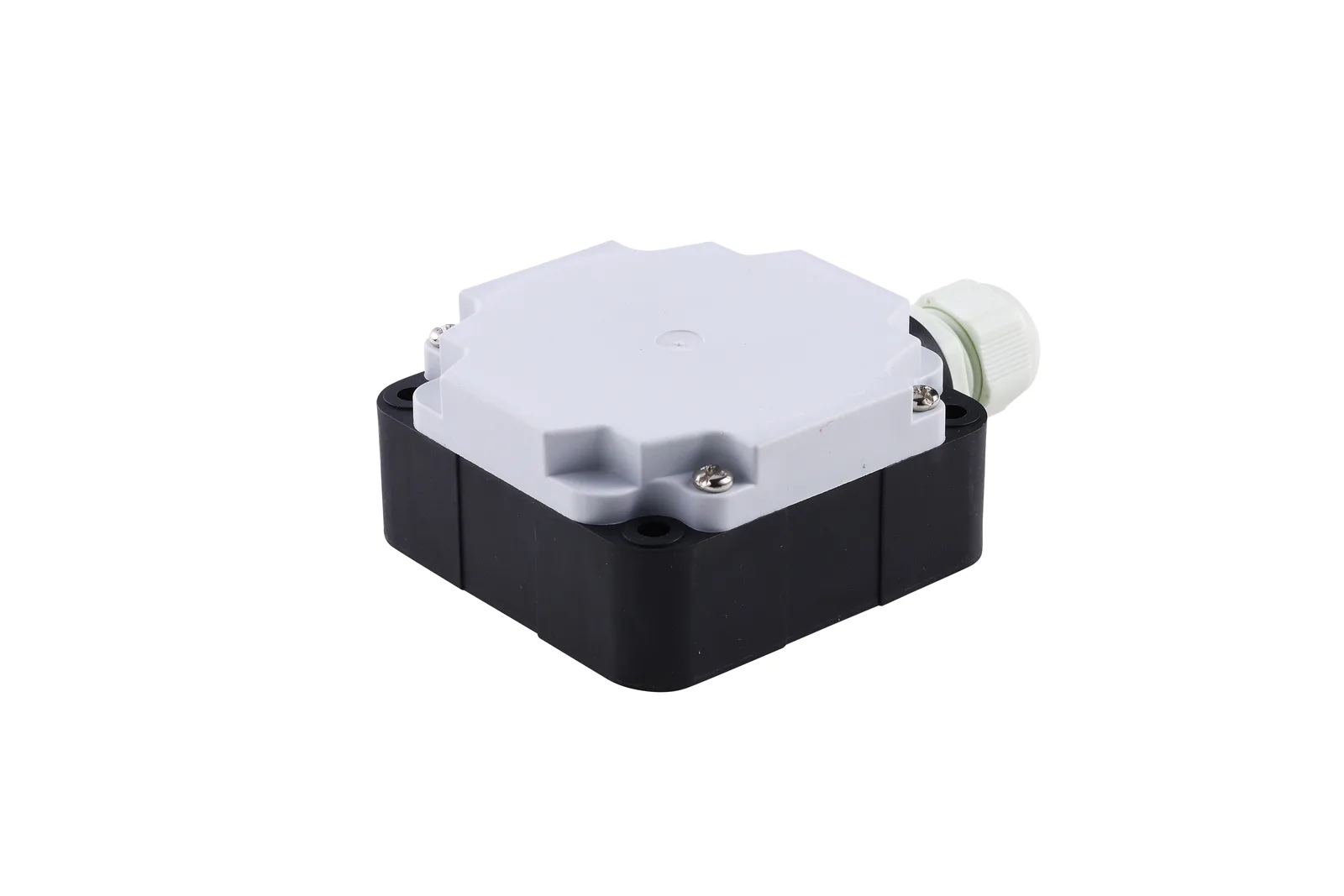
SEGMENsensor is a Shenzhen-based inductive proximity sensor manufacturer supplying M8, M12, M18 and M30 cylindrical and 20/40 mm square sensors with NPN or PNP, NO or NC outputs, IP67 housings and 1–25 mm sensing distances. OEM orders start at 10 pieces, samples of 1–5 pieces ship in 5–7 days, production takes 3–5 weeks, and every enquiry is answered within 24 hours.
Most enquiries we receive for inductive proximity sensors come from design engineers who need to pick one part number for a new machine, or replace a sensor on an existing line without changing the bracket, the cable or the PLC input. This guide is written for that job. It gives a one-line verdict per application, a three-step selection method, the full SE2-series specification table taken from the SEGMENsensor inductive proximity sensor product page, the three mistakes we see most often, and the six parameters that let us quote within 24 hours. The commercial terms for OEM buyers follow at the end.
Which SEGMENsensor Proximity Sensor for Which Machine
If you only read one section, use this one. The verdicts below cover the applications that account for most of our OEM volume; the reasoning is in the sections that follow.
- Conveyor and packaging lines (metal cans, pallets, carriers): M18 shielded, PNP-NO, 8 mm sensing distance, IP67, M12 connector. Switch to M30 unshielded (25 mm) when the target passes at a variable distance.
- Machine tools and hydraulic presses (tool position, die protection, chuck confirmation): M12 or M18 shielded in brass or 316L stainless steel for coolant resistance; M30 unshielded with 25 mm range for detection through guard panels.
- Hydraulic and pneumatic cylinder end positions: M18 or M30 flush-mount (shielded) on the end cap or tie rod; pair with an LVDT displacement sensor if continuous stroke feedback is also needed.
- Welding cells and metal fabrication: weld-immune variant with 316L stainless housing and PTFE-coated sensing face, M12, M18 or M30, NPN or PNP to match the robot controller.
- Semiconductor and cleanroom automation: M8 or M12 stainless steel, low-outgassing cable on request, PNP-NO for European-style controllers or NPN-NO for Asian PLC inputs.
- Mixed stainless, aluminium and copper parts on one fixture: all-metal (factor-1) SE2-AM square sensor so the switch point does not drift between material batches.
Three-Step Selection Method
Step 1 — Fix the application constraints
Write down the target material, the target size, the installation (flush in metal or free-standing), the gap between sensor face and target at the worst mechanical tolerance, and the environment: coolant, wash-down, weld spatter, ambient temperature. These five facts decide the housing size and whether the sensing face may be shielded.
Step 2 — Derive the key parameters
Choose the nominal sensing distance (Sn) so that the actual gap sits at no more than about 80% of Sn on mild steel; on aluminium, stainless steel or copper multiply Sn by the material reduction factor, as explained in proximity sensor sensing distance explained. Then choose the output: PNP (sourcing) or NPN (sinking) to match the PLC input card, and NO or NC to match the fail-safe logic; wiring examples are in NPN vs PNP proximity sensor wiring. Finally check the switching frequency against the fastest target rate on the line.
Step 3 — Select the model and the mechanical options
Pick the SE2 size from the table below, then specify housing material (zinc alloy, brass or 316L stainless steel), sensing-face coating (PBT standard or PTFE weld-immune), and termination (2 m PVC cable or M12 4-pin plug). If the target is non-ferrous, or if the ambient exceeds 70 °C, add the all-metal (AM) or high-temperature (HT) option. If the choice is between an inductive and a capacitive sensor, see inductive vs capacitive proximity sensors.
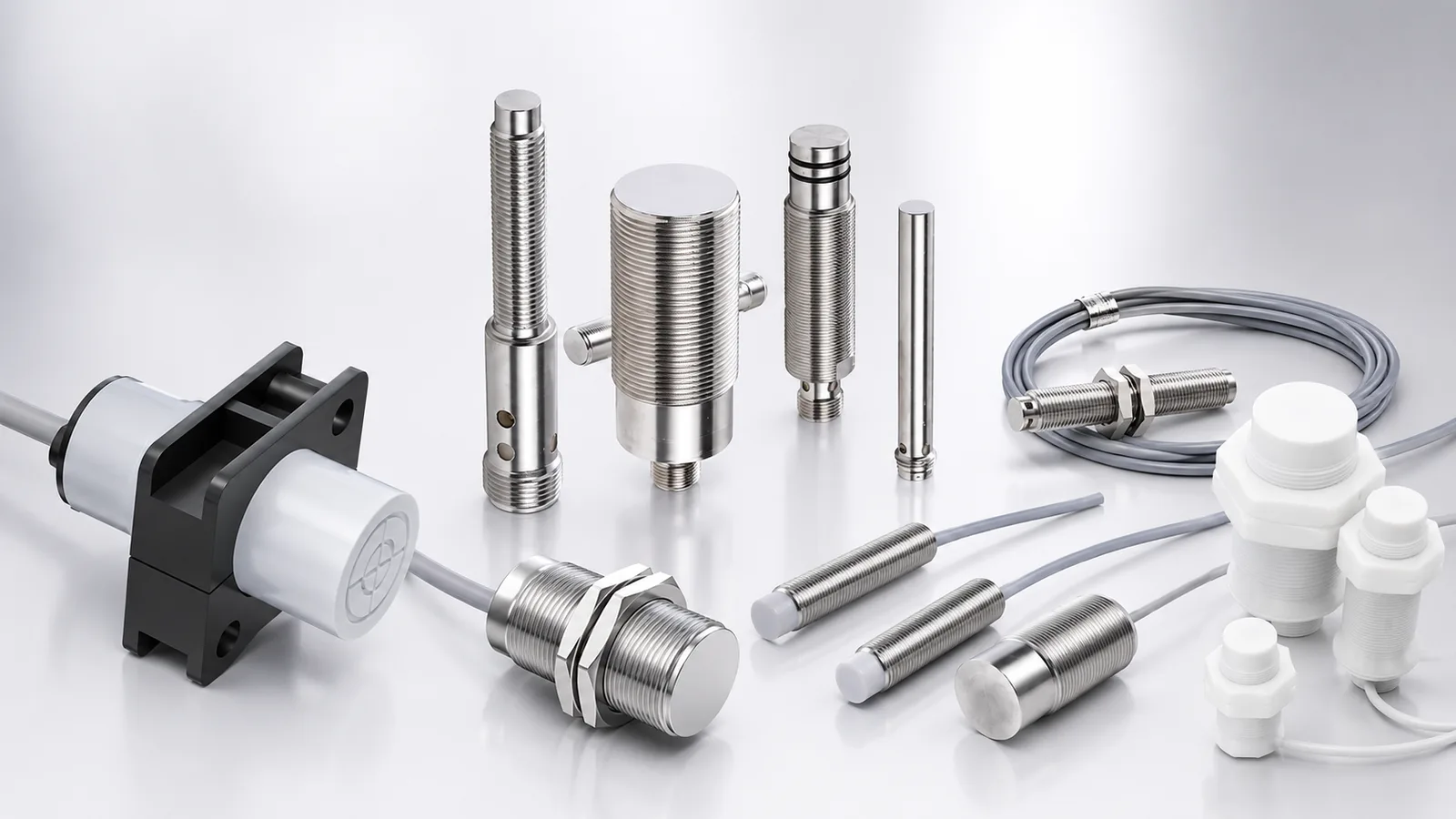
M8 / M12 / M18 / M30 Specification Table
All figures are taken from the SEGMENsensor SE2-series product page. Long-range (LR), high-temperature (HT) and all-metal (AM) variants are available on request; the M18 inductive proximity sensor and the flush-mount inductive sensor have their own pages with drawings.
| Parameter | SE2-M8 | SE2-M12 | SE2-M18 | SE2-M30 |
|---|---|---|---|---|
| Sensing distance Sn, shielded (flush) | 1 mm | 4 mm | 8 mm | 15 mm |
| Sensing distance Sn, unshielded (non-flush) | 2 mm | 8 mm | 12 mm | 25 mm |
| Switching frequency | 3,000 Hz | 1,500 Hz | 1,000 Hz | 500 Hz |
| Output | NPN or PNP, NO or NC, 3-wire DC (specify when ordering); 2-wire AC/DC variants available | |||
| Supply voltage | 10–30 V DC (3-wire DC models) | |||
| Operating temperature | −25 °C to +70 °C standard; −40 °C to +85 °C on the HT variant | |||
| Housing material | Zinc alloy / brass / 316L stainless steel (specify) | |||
| Sensing face | PBT plastic standard; PTFE-coated on the weld-immune variant | |||
| Cable / connection | 2 m PVC cable or M12 4-pin plug; custom 0.5–10 m, PUR or PTFE insulation, straight or right-angle connector | |||
| Protection rating | IP67 standard; IP68 on request | |||
| Square housings | 20 × 20 mm (Sn 5 mm) and 40 × 40 mm (Sn 15 mm), NPN/PNP, NO/NC, all-metal option | |||
| Certifications | CE, RoHS; manufactured in an ISO 9001:2015 certified factory | |||
| OEM MOQ / lead time | 10 pcs · samples (1–5 pcs) in 5–7 days · production in 3–5 weeks · reply within 24 hours | |||
Nominal sensing distance, switching frequency and the shielded/unshielded definitions used above follow IEC 60947-5-2 — Low-voltage switchgear and controlgear, Part 5-2: Control circuit devices and switching elements — Proximity switches ↗, which is the standard against which inductive proximity switches are specified and tested. The IP67 and IP68 ratings follow the enclosure protection code in IEC 60529 — Degrees of protection provided by enclosures (IP Code) ↗.
Download the one-page datasheet (PDF)
The inductive proximity sensor datasheet lists every SE2 size with sensing distance, switching frequency, output options, housing materials, dimensions, wiring colour codes and the ordering code. No registration required.
Need a proximity sensor specified for your machine?
Send target material, gap, output type and quantity to our engineers. MOQ 10 pcs · samples in 5–7 days · reply within 24 hours.
Three Common Selection Mistakes
1. Reading Sn as the working distance
Sn is the nominal distance measured on a standard mild-steel target under laboratory conditions. Manufacturing tolerance, temperature drift and the target material all reduce it. A sensor installed at exactly Sn will switch intermittently on a cold morning or on a stainless target. Keep the actual gap inside roughly 80% of Sn on steel, and apply the material reduction factor for non-ferrous metals, or choose the all-metal variant.
2. Mounting an unshielded sensor flush in a metal bracket
An unshielded (non-flush) sensor gains its longer range by allowing the field to spread sideways; surrounding metal then damps the oscillator permanently and the sensor stays on. Use the shielded (flush) version wherever the face sits level with a steel surface, and leave the free zone specified in the datasheet around an unshielded face.
3. Ordering the wrong output polarity
A PNP sensor on an NPN-type PLC input card, or the reverse, does not switch the input at all and is one of the most common reasons a "faulty" sensor is returned. Confirm the input card type first; SEGMENsensor supplies all four combinations (NPN-NO, NPN-NC, PNP-NO, PNP-NC) at the same MOQ so the sensor can be matched to the controller rather than the other way round.
Typical Applications

Packaging and food lines. M18 and M30 sensors detect metal cans, bottle caps and pallet presence on conveyors; IP67 covers wash-down, and 316L stainless steel housings with IP68 on request are used on filling lines that go through CIP cleaning.
CNC and press automation. Tool-change position feedback, spindle chuck confirmation and door interlocks on machining centres use M12 and M18 brass or stainless sensors with an M12 connector for quick service; sheet-metal blank presence and die protection on hydraulic presses use M30 unshielded sensors with 25 mm range.
Cylinders and actuators. Flush-mount M18 and M30 sensors on tie rods or end caps confirm the rod end position on hydraulic and pneumatic cylinders. Where the machine also needs continuous position, the same enquiry can include a magnetostrictive position sensor for the main axis.
Welding cells, semiconductor equipment and assembly verification. Weld-immune sensors with PTFE-coated faces resist spatter and welding-current interference; stainless M8 and M12 sensors with low-outgassing cable serve wafer-handling robots and FOUP openers; all-metal square sensors verify mixed-material parts on assembly fixtures.
The Six Parameters to Send for a Quote
- Size and mounting: M8, M12, M18, M30 or square; shielded (flush) or unshielded; thread length or bracket constraint.
- Target: material (mild steel, stainless steel, aluminium, copper), size, and the gap between face and target at worst-case tolerance.
- Output: NPN or PNP; NO or NC; 3-wire DC or 2-wire AC/DC; supply voltage on the machine.
- Termination: 2 m PVC cable, custom cable length (0.5–10 m), PUR or PTFE insulation, or M12 4-pin plug (straight or right-angle).
- Environment: ambient temperature, coolant or wash-down exposure, weld spatter, IP67 or IP68, cleanroom or low-outgassing requirement.
- Quantity: sample count now, expected annual volume, destination and Incoterm (EXW, FOB Shenzhen, CIF, DDP), plus private-label requirements if any.
OEM Supply: MOQ, Samples and Lead Time
Segmen Industrial Development Co., Ltd. was founded in Shenzhen in 2019. Its engineering team brings more than 20 years of sensor experience and supplies 200+ OEM customers in 30+ countries. Inductive proximity sensors are built to order on an ISO 9001:2015 certified line, so the sample that passes qualification on your machine is the same configuration that ships in the series order.
| Term | SEGMENsensor standard |
|---|---|
| Minimum order quantity | 10 pieces per configuration |
| Samples | 1–5 pieces, shipped in 5–7 days |
| Production lead time | 3–5 weeks after order confirmation |
| Enquiry response | Within 24 hours, with a written quotation |
| Tooling-free customisation | Cable length, connector type, output type (NPN/PNP, NO/NC), housing material |
| Documentation | CE and RoHS documents, datasheet, wiring diagram; private-label packaging and manuals for OEM customers |
- Reliability evidence: IP67 housings (IP68 on request), −25 °C to +70 °C standard operating range with −40 °C to +85 °C on the HT variant, and specification to IEC 60947-5-2; sample sensors are tested on your machine before the volume order.
- Supply assurance: our own Shenzhen factory since 2019, ISO 9001:2015 certified, 200+ OEM customers in 30+ countries, production in 3–5 weeks and continuity of the same part number across repeat orders.
- Customisation and entry bar: OEM cable, connector, output and housing options from 10 pieces, with 1–5 samples first, so a second source can be qualified without a large commitment.
Frequently Asked Questions
MOQ is 10 pieces per configuration. Samples of 1–5 pieces ship in 5–7 days, production orders in 3–5 weeks, and every enquiry is answered within 24 hours.
M8 (1 mm shielded / 2 mm unshielded), M12 (4 mm / 8 mm), M18 (8 mm / 12 mm), M30 (15 mm / 25 mm) cylindrical, plus 20 × 20 mm (5 mm) and 40 × 40 mm (15 mm) square housings. Long-range, high-temperature and all-metal variants are available on request.
Yes. Every size is available as NPN-NO, NPN-NC, PNP-NO or PNP-NC 3-wire DC, and 2-wire AC/DC variants are also available. The output type is specified on the order and needs no tooling.
Sensors carry CE and RoHS documentation and are built to the proximity-switch requirements of IEC 60947-5-2 in an ISO 9001:2015 certified factory. IP67 protection is standard, with IP68 on request, rated per IEC 60529.
Yes. Custom cable length from 0.5 m to 10 m, PUR or PTFE insulation, straight or right-angle M12 connectors, and zinc alloy, brass or 316L stainless steel housings are available from 10 pieces. Private-label packaging and documentation are available for OEM customers; send the required quantity with the enquiry.
Related reading: Inductive proximity sensors — product page · NPN vs PNP proximity sensor wiring · Proximity sensor sensing distance explained · Inductive vs capacitive proximity sensors
Last updated: 24 September 2026. Specifications reflect the SEGMENsensor product page at the date of publication; contact us for the current datasheet revision.