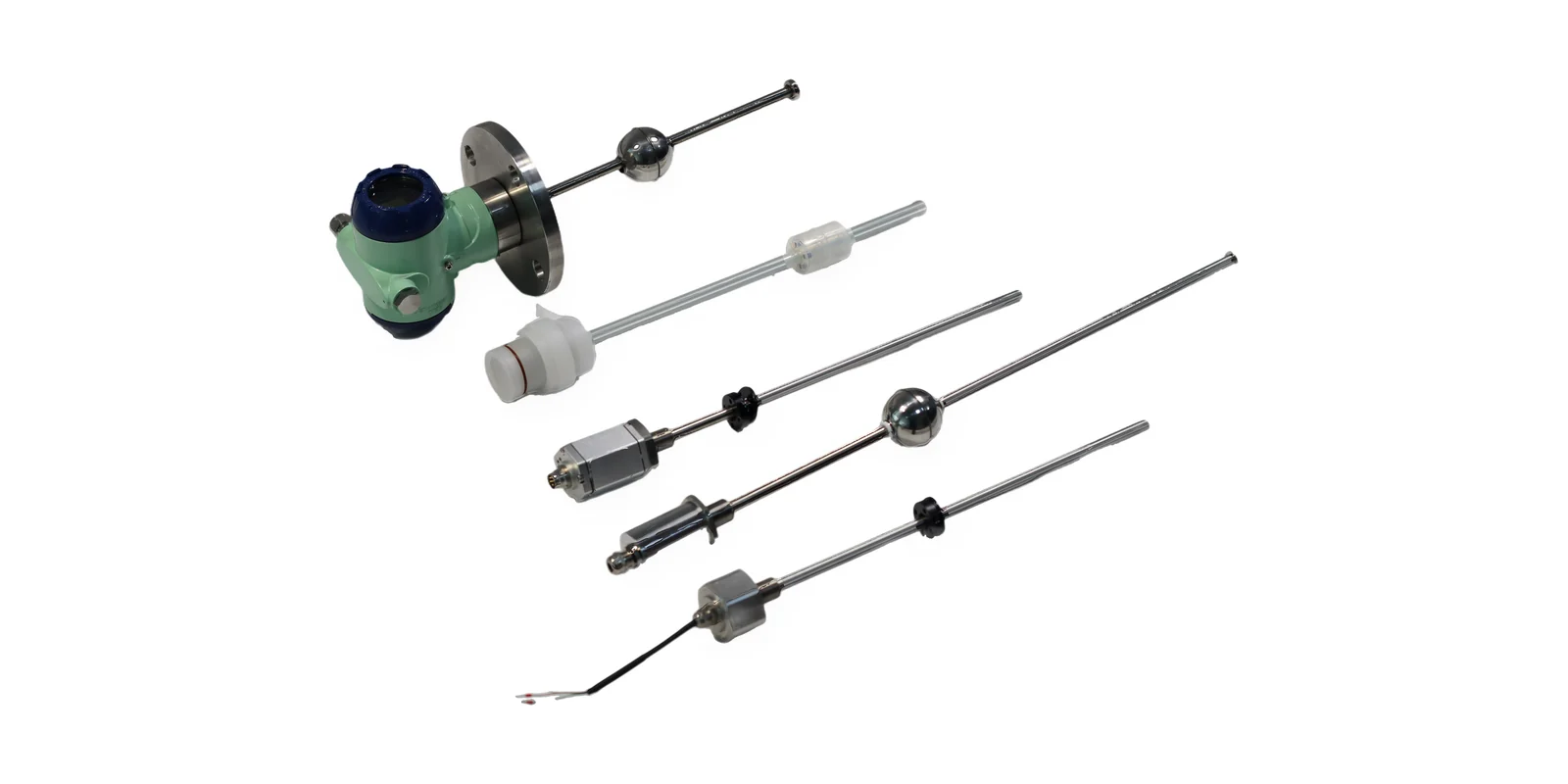
For a hydraulic or lube oil reservoir, use a 316L float level switch when you only need a low-level alarm, and a magnetostrictive level sensor such as SGM-LS10 when you need a continuous 4–20 mA, 0–10 V or RS485 reading that ignores oil density. Hydrostatic probes work in fuel and diesel tanks if the PLC scaling uses the oil's specific gravity.
Oil is a harder medium for level measurement than water. Its specific gravity is lower and changes with temperature, it coats probes and floats, and many oil tanks sit on machines that vibrate, run hot or stand in classified areas. A sensor that works perfectly in a water tank can read 10–15% low in oil, or a float can sink because it was sized for water. This guide sets out which SEGMENsensor oil level sensor fits each type of oil tank, how density affects each technology, and what to send with an enquiry so the first qualification sample fits the reservoir. It is written for OEM engineers who build hydraulic power units, gearboxes, compressors, generator sets, transformers and fuel systems.
Which Oil Level Sensor Fits Which Oil Tank?
The short answer is: a float switch for alarm points, a magnetostrictive sensor for continuous and accurate reading, and a hydrostatic probe where a bottom-mounted or hanging sensor is easier to install than a top-entry rod. The table below shows how SEGMENsensor engineers usually match them to oil applications. A broader comparison of all level technologies is in how to choose a liquid level sensor.
| Oil application | Recommended sensor | Typical configuration | Why |
|---|---|---|---|
| Hydraulic power unit reservoir — low-level / pump protection alarm | Float level switch | 316L float, SPDT reed contact, top or side entry | Simple contact to the pump starter or PLC; 316L float suits mineral oil |
| Hydraulic and lube reservoir — continuous level and condition monitoring | SGM-LS10 magnetostrictive level sensor | 25–8000 mm, M18×1.5 top mounting, 4–20 mA / 0–10 V / RS485 | Absolute float position, independent of oil density, IP68 |
| Gearbox, compressor and machine-tool lube sumps | Compact float switch | Side-entry or top-entry, custom cable gland | Fits small sumps with limited head room |
| Diesel day tanks and fuel oil storage | Magnetostrictive or submersible hydrostatic | Range sized to tank height; 316L diaphragm, Viton seal and PTFE vented cable for the submersible version | Fuel-compatible wetted parts; magnetostrictive avoids density effects |
| Oil-water separators and slop tanks | SE-LX20 / SE-LX30 dual-float | 200–8000 mm, two floats chosen for both densities | Total level and oil-water interface from one probe |
| Power transformer and tap-changer insulating oil | Magnetostrictive level transmitter | 4–20 mA or RS485 to the substation controller | Continuous level with no moving contacts in the oil |
How Does Oil Density Affect Level Sensor Accuracy?
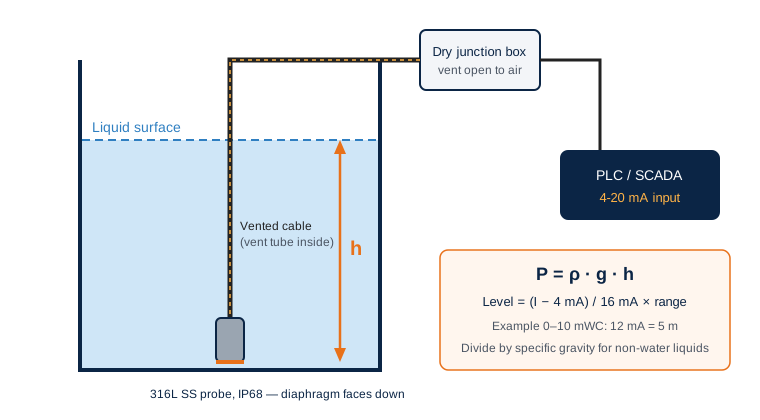
Oil density affects hydrostatic sensors directly and float sensors only through buoyancy. A hydrostatic (submersible) transmitter measures the pressure of the liquid column, and pressure equals density × gravity × height. Typical mineral hydraulic oils have a specific gravity of roughly 0.85–0.89 (check your oil datasheet). If a transmitter scaled for water is placed in oil with SG 0.87, a 1.5 m oil column produces the same pressure as 1.305 m of water, so the reading is 0.195 m — 13% — too low (calculated value, not a measurement). Entering the oil's SG in the PLC scaling removes that error; the hydrostatic level calculator does the conversion.
A magnetostrictive sensor measures where the float is, not how heavy the liquid is, so the level reading does not depend on density. The density still matters for the float itself: it must be chosen so it floats at the surface of the oil. The SGM-LS10 stainless-steel level sensor reports the absolute float position along a 304 stainless tube over 25–8000 mm with ±0.005 mm repeatability, which is why it suits reservoir condition monitoring on hydraulic power units. How the waveguide and float work is explained in how a magnetostrictive level transmitter works.
When Is a Float Level Switch Enough for Oil?
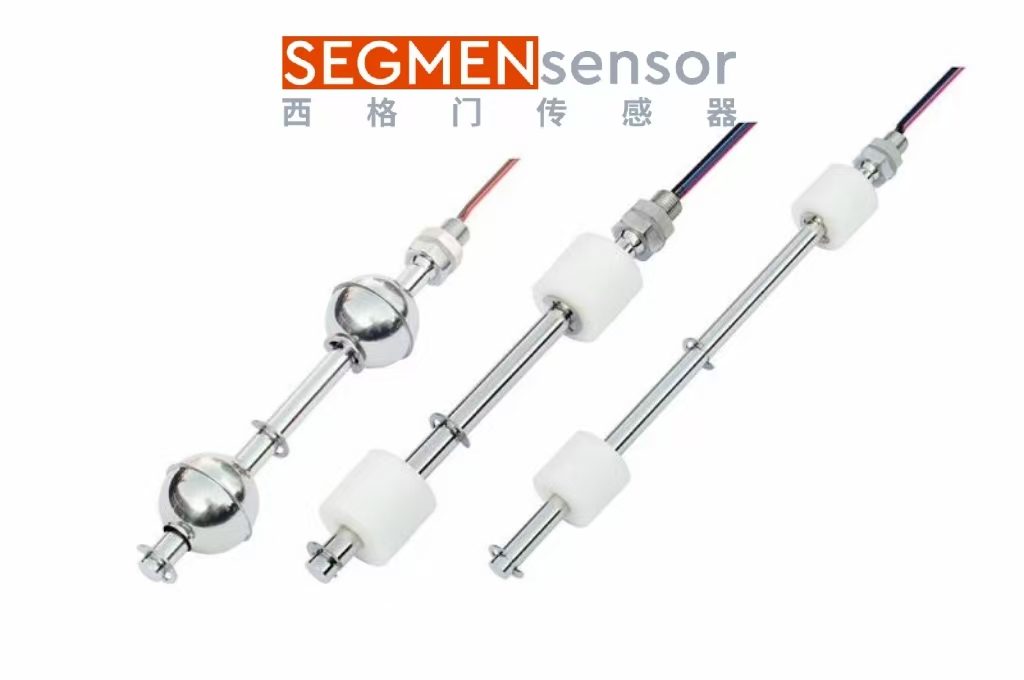
A float switch is enough when the control task is a fixed point: low-level alarm, pump protection or high-level stop. A magnet in the float operates a hermetically sealed reed switch in the stem, so the contact needs no supply. For oil, specify the 316L stainless steel float: it is suitable for oils and fuels, rated -20 °C to +120 °C, but it is heavier than PP, so the oil must have a specific gravity of 0.85 or more for the float to work. PP floats float in liquids with SG ≥0.7 but are limited to +80 °C; for light hydrocarbons with SG 0.65–0.75 a high-buoyancy float with a larger volume is specified. Details of switch points and wiring are in the float level switch selection guide.
Oil Level Sensor Specification Summary
All figures below are taken from the SEGMENsensor float level switch, magnetostrictive level transmitter, submersible level transmitter and liquid level sensor product pages.
| Sensor | Range / function | Output | Temperature | Oil-related notes |
|---|---|---|---|---|
| Float level switch, 316L float | Point level, single or multi-point | SPDT reed contact (C / NO / NC) | -20 to +120 °C (316L float) | Oil SG ≥0.85; IP68 |
| SGM-LS10 magnetostrictive | 25–8000 mm, ±0.005 mm repeatability | 4–20 mA, 0–10 V, RS485 | -40 to +85 °C | Density-independent reading; IP68; M18×1.5 |
| SE-LX20 / SE-LX30 magnetostrictive | 200–8000 mm, level and oil-water interface | 4–20 mA, RS485, 4–20 mA + HART | -40 to +85 °C (rod); -40 to +250 °C high-temperature version | Flameproof; floats chosen for both densities |
| Submersible hydrostatic transmitter | Range from 0–5 m to 0–200 m liquid column | 4–20 mA 2-wire | -20 to +80 °C (process) | 316L diaphragm, Viton seal, PTFE vented cable for fuel oil and diesel; scale with oil SG |
Download the one-page datasheet (PDF)
The liquid level sensor datasheet covers float switches and submersible transmitters; the SGM-LS10 datasheet covers the stainless-steel magnetostrictive level sensor with ranges, outputs, pinout and ordering code. No registration required.
Specifying an oil level sensor for an OEM machine?
Send the tank height, oil type and specific gravity, maximum oil temperature, mounting and output. Qualification samples 1–5 pcs in 5–7 days · production planned around your annual volume · reply within 24 hours.
How Should an Oil Level Sensor Be Installed on a Hydraulic Reservoir?
Mount it away from the return line and the pump suction, where the surface is calm. Return flow creates foam and turbulence that make a float bounce and a continuous reading jump; a baffle or a stilling tube around the probe solves most of it. Check that the float travel covers both the lowest alarm level and the highest fill level, and that the sensor's inactive zones at the top and bottom of the rod stay outside the working range. Hydraulic power units run hot, so compare the highest reservoir temperature with the ratings in the table above, and route the cable away from the motor and valve coils. The same machines often also need position and end-of-stroke sensing; see hydraulic cylinder proximity sensors for high pressure and hot oil.
Sensors on machines that are washed down, or on outdoor fuel tanks, need the right enclosure rating: SGM-LS10 and the float switches are rated IP68 and the SE-LX heads IP67 under the IP code defined in IEC 60529 — Degrees of protection provided by enclosures (IP Code) ↗.
What About Fuel Tanks in Hazardous Areas?
Use a certified explosion-protected version. Fuel farms, generator fuel rooms and oil-water separators are often classified locations; in the United States the electrical requirements for such areas are set out in OSHA 1910.307 — Hazardous (classified) locations ↗. The SE-LX20 and SE-LX30 are flameproof magnetostrictive transmitters, and ATEX/IECEx versions are available as an option on selected float and submersible models. State the zone, gas group and temperature class on the enquiry so the correct variant is quoted; explosion-protected models are confirmed at order.
Factory-Direct Supply for OEM Machine Builders
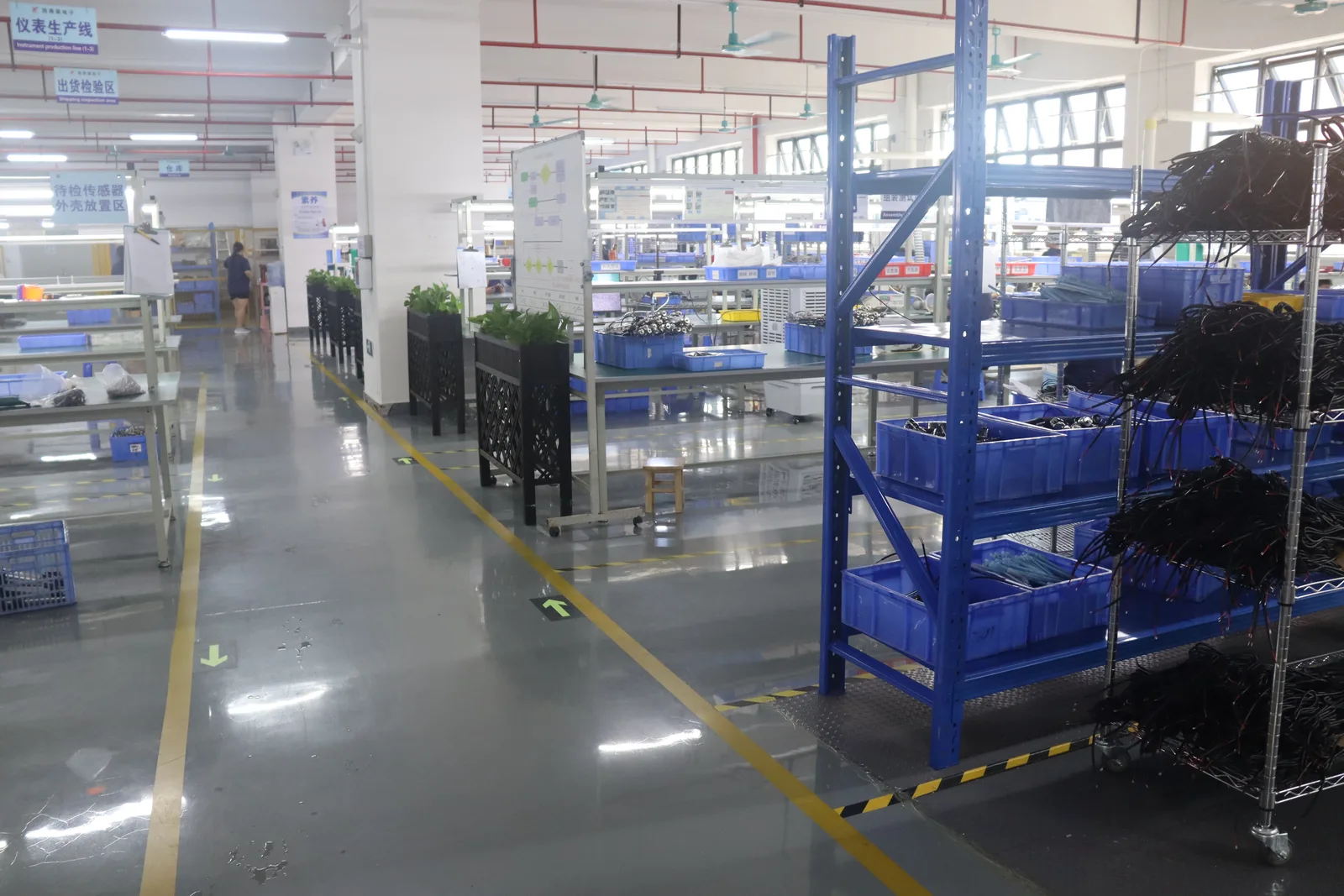
SEGMEN (Shenzhen) Industrial Development Co., Ltd. was founded in Shenzhen in 2019; its engineering team brings more than 20 years of sensor experience and supplies 200+ OEM customers in 30+ countries. Level sensors are built on an ISO 9001:2015 production line (see ISO 9001:2015 — Quality management systems ↗), so a validated qualification sample carries directly into series production. Probe length, float, thread, cable and connector are configured per project.
- Tank: height, mounting position (top, side or submerged), thread or flange.
- Oil: type (hydraulic, lube, diesel, fuel oil, insulating oil), specific gravity, maximum and minimum temperature.
- Function: alarm points (float switch) or continuous reading (magnetostrictive or hydrostatic); oil-water interface if needed.
- Output: relay contact, 4–20 mA, 0–10 V or RS485; cable length and connector.
- Environment: vibration, wash-down, hazardous-area zone if any.
- Quantity: qualification samples now (1–5 pcs) and expected annual volume. Quotations are FOB China with 100% T/T in advance; the warranty is 12 months.
Frequently Asked Questions
For a low-level alarm, a float level switch with a 316L stainless steel float is the simplest choice. For a continuous reading, a magnetostrictive level sensor such as SGM-LS10 measures 25–8000 mm with ±0.005 mm repeatability, mounts on an M18×1.5 thread and outputs 4–20 mA, 0–10 V or RS485.
It affects hydrostatic sensors directly: a transmitter scaled for water reads about 13% low in oil with a specific gravity of 0.87 (calculated value), so the PLC scaling must use the oil's specific gravity. A magnetostrictive sensor measures the float position, so its reading does not depend on density; only the float must be chosen for the oil.
Use a 316L stainless steel float for oils and fuels. It is rated -20 °C to +120 °C and needs a specific gravity of 0.85 or more to float. For light hydrocarbons with a specific gravity of 0.65–0.75, a high-buoyancy float with a larger volume is specified.
Yes. The flameproof SE-LX20 (rigid rod) and SE-LX30 (flexible cable) take two floats to report total level and the oil-water interface over 200–8000 mm. Specify both liquid densities at order so the correct floats are selected.
Qualification samples of 1–5 pcs ship in 5–7 days, production orders take 3–5 weeks, and every enquiry is answered within 24 hours. Quotations are FOB China with 100% T/T in advance, and the warranty is 12 months.
Related reading: Liquid level sensors — product page · SGM-LS10 stainless-steel level sensor · How a magnetostrictive level transmitter works · Float level switch selection guide
Last updated: 18 October 2026. Specifications reflect the SEGMENsensor product pages at the date of publication; contact us for the latest datasheet.