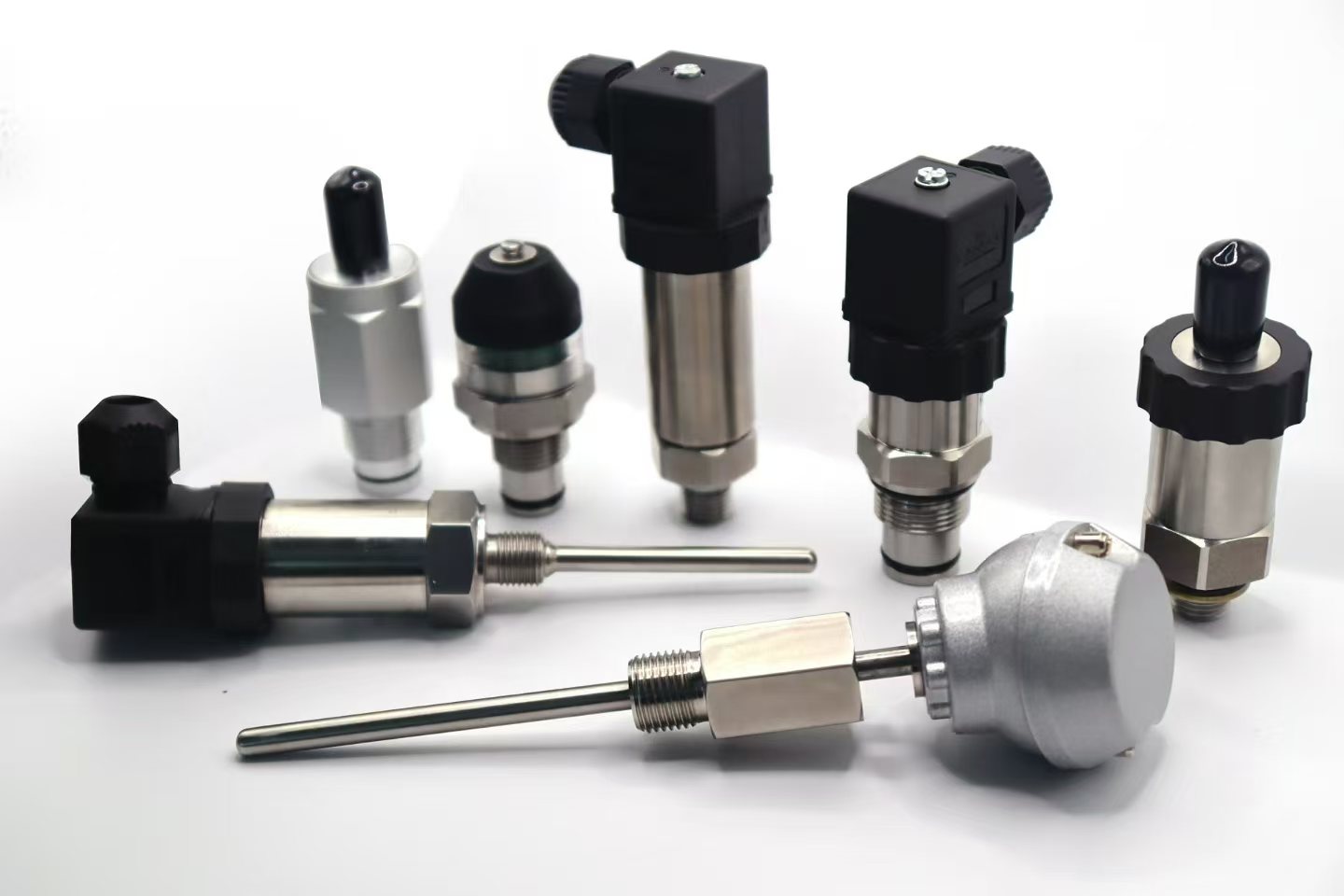
An electrolyzer skid typically needs pressure transmitters on the hydrogen and oxygen gas outlets, the water feed and the cooling loop, plus level sensors on the water tank and each gas-liquid separator. For every point, the enquiry should state range, medium, temperature, wetted material, output and hazardous-area zone. SEGMENsensor quotes each point against its published specifications and confirms hydrogen service per project.
Electrolyzer and hydrogen storage builders are scaling from pilot units to series production, and the instrumentation list grows with every stack. Each measurement point has its own medium — deionized water, potassium hydroxide lye, wet hydrogen, oxygen or glycol coolant — and its own pressure, temperature and hazardous-area class. This guide lists the pressure and level points that OEM engineers usually specify, what to write on the enquiry for each one, and which published SEGMENsensor specifications apply. It does not replace your process hazard analysis: hydrogen compatibility, materials and explosion protection are confirmed for each project before samples are built. The 2026 European Hydrogen Week 2026 (Clean Hydrogen Partnership) ↗ runs 26–30 October in Brussels, and many of the projects presented there are at exactly this specification stage.
Which Pressure and Level Points Does an Electrolyzer Need?
A typical skid has several pressure points and at least three level points: the water tank and the two gas-liquid separators. The U.S. Department of Energy overview of hydrogen production by electrolysis ↗ describes the main stack types: alkaline units circulate a potassium hydroxide lye, PEM units use deionized water. Both separate the gas from the liquid after the stack, so the measurement map below applies to either design; only the media and materials change.
| Measurement point | What is measured | Typical sensor | What the buyer must specify |
|---|---|---|---|
| Deionized water feed tank | Continuous level, low-level pump protection | Float level switch or magnetostrictive level transmitter | Tank height, water conductivity grade, wetted material, alarm points |
| Water feed pump discharge | Feed pressure to the stack | Pressure transmitter, 4–20 mA | Range, maximum pump pressure, wetted material for DI water |
| Hydrogen-side gas-liquid separator | Liquid level in the separator | Magnetostrictive level transmitter (SE-LX series) or float switch | Separator height, operating pressure and temperature, lye or water, Ex zone |
| Oxygen-side gas-liquid separator | Liquid level in the separator | Same type as the hydrogen side, for a balanced pair | As above, plus oxygen service cleaning requirements |
| Hydrogen and oxygen gas outlets | Stack outlet pressure; pressure balance between both sides | Gauge or absolute pressure transmitter, or two transmitters compared in the PLC | Range, gas, temperature, hydrogen material review, Ex zone |
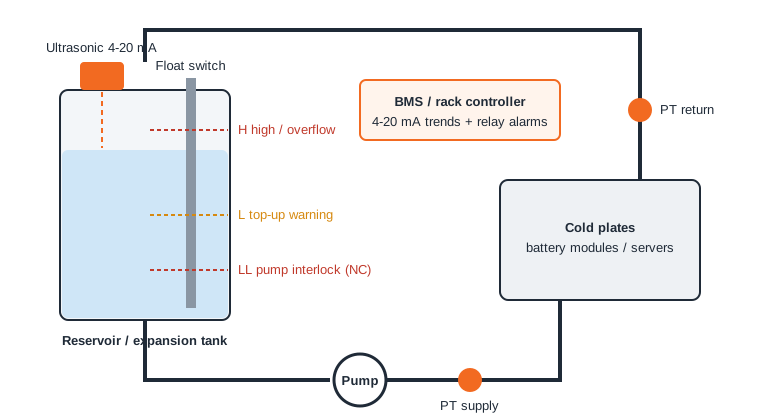
| Stack cooling loop | Coolant pressure and expansion tank level | Pressure transmitter and float level switch | Coolant type (water or glycol), temperature, alarm logic |
| Buffer and storage vessels | Storage pressure, compressor suction and discharge | Pressure transmitter up to 0–400 bar | Range within 0–400 bar, overpressure margin, connection, Ex zone |
Two of the separator points are safety-relevant: if the liquid level in one separator falls too far, gas from one side can cross into the other. That is why separator level is usually measured continuously rather than with a single switch, and why many designs pair a continuous transmitter with an independent high/low switch. How a magnetostrictive level transmitter resolves the float position is explained in how a magnetostrictive level transmitter works.
What Should You Specify for a Hydrogen Pressure Transmitter?
Specify the range, the pressure reference (gauge, absolute or differential), the gas or liquid, the temperature, the wetted material, the output and the hazardous-area zone. The range should leave headroom above normal operation without wasting resolution: a 0–40 bar transmitter on a 30 bar outlet keeps the normal reading at 75% of span. Overpressure and burst ratings are separate values; see overpressure vs burst pressure. Whether a vessel needs gauge or absolute reference is covered in gauge vs absolute vs differential pressure transmitters.
Hydrogen adds one more item: material review. Hydrogen can embrittle some metals and permeate thin diaphragms over time, so the wetted material and diaphragm design for hydrogen gas service must be agreed for each project. SEGMENsensor does not claim a general hydrogen rating; send the gas purity, pressure, temperature and expected service life, and the engineering team confirms the construction at quotation. The SEGMENsensor 4–20 mA pressure transmitter is the usual starting point for water, coolant and lye circuits.
- Range: 0–0.1 bar to 0–400 bar (about 1.45 psi to 5,800 psi, calculated); 1 bar = 14.5 psi.
- Accuracy: ±0.25% FS standard; ±0.1% FS high-accuracy version.
- Reference: gauge, absolute or differential configurations.
- Output: 2-wire 4–20 mA, 0–10 V or RS485.
- Media temperature: -40 to +125 °C.
- Process connection: G1/4, G1/2, 1/4 NPT, 1/2 NPT; stainless steel wetted parts.
- Hazardous areas: ATEX/IECEx versions available as an option on selected models; the Ex marking is as stated on the certificate of the specified model.
What Should You Specify for Separator and Water Tank Level Sensors?
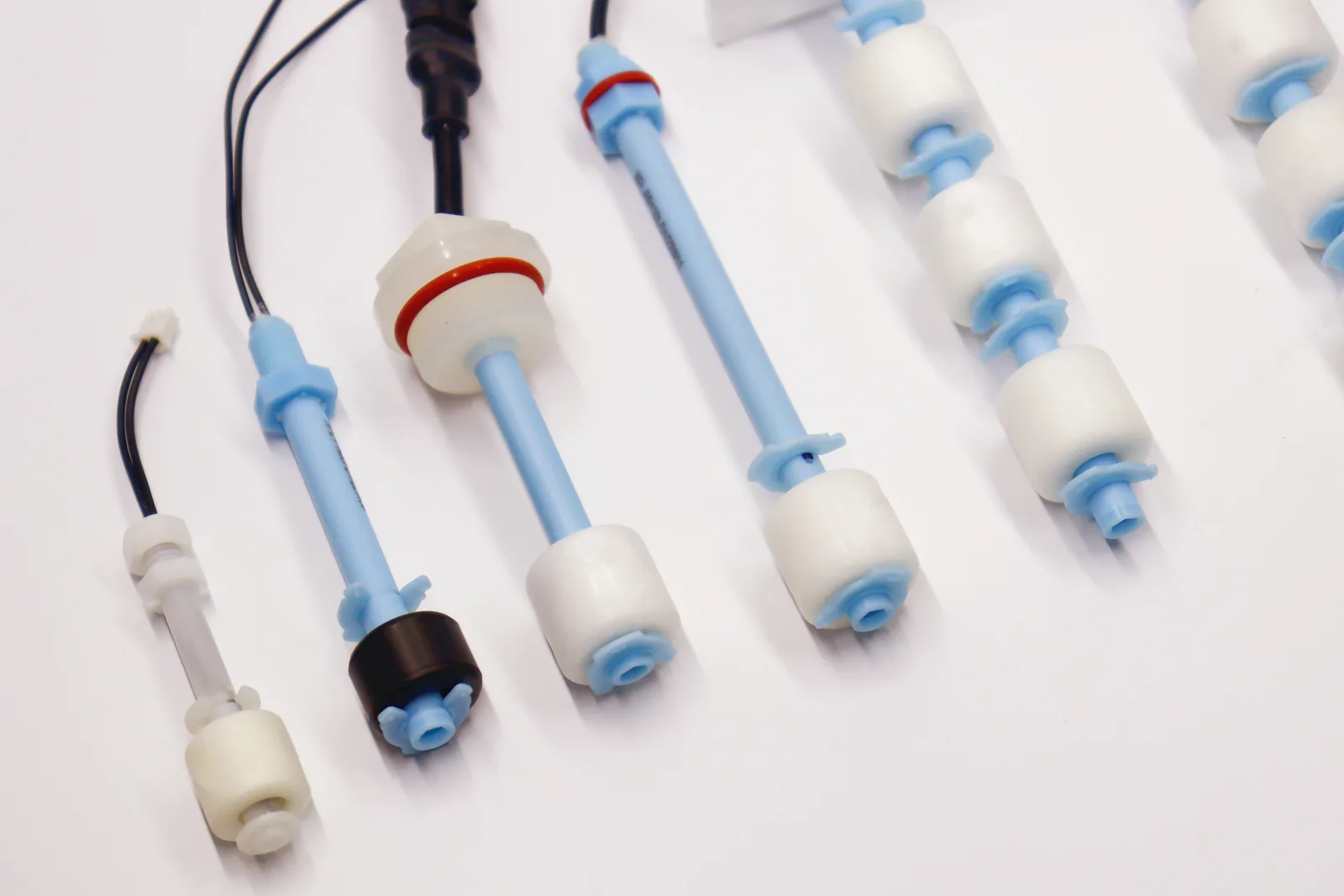
Specify the vessel height, the liquid, its temperature and pressure, the wetted material, the output and the alarm points. For the deionized water tank, a float level switch gives low-level pump protection and a continuous transmitter gives inventory and refill control. For the separators, a continuous reading is the norm: the SE-LX magnetostrictive transmitters measure 200–8000 mm, are flameproof, and output 4–20 mA, RS485 or 4–20 mA + HART. In lye service the float and rod material must be confirmed for the potassium hydroxide concentration and temperature.
- Float level switches: -40 to +120 °C as standard, +150 °C high-temperature version; wetted materials PP, PVDF or 316L stainless steel.
- Submersible level transmitters: 0.5–200 m H₂O (about 0.05–20 bar, calculated), ±0.1% to ±0.5% FS, IP68 for continuous immersion.
- Magnetostrictive SE-LX: 200–8000 mm (about 7.9–315 in, calculated), flameproof, 4–20 mA, RS485 or 4–20 mA + HART.
- Output: relay contact, 4–20 mA, 0–10 V or RS485, depending on the series.
- Hazardous areas: ATEX/IECEx versions are an option on selected models; Ex marking confirmed at order.
Download the one-page datasheet (PDF)
The pressure transmitter datasheet lists ranges, accuracy classes, outputs, process connections, materials and the ordering code; the liquid level sensor datasheet covers float switches and submersible transmitters. No registration required.
Building an electrolyzer or hydrogen storage skid?
Send your measurement list with range, medium, temperature, output and Ex zone for each point. Qualification samples 1–5 pcs in 5–7 days · production planned around your annual volume · reply within 24 hours.
Do Hydrogen Sensors Need ATEX or IECEx Certification?
Sensors installed inside a classified zone around hydrogen equipment need explosion protection suitable for that zone, gas group and temperature class. In the EU the requirements come from the European Commission ATEX directive 2014/34/EU — equipment for potentially explosive atmospheres ↗. Hydrogen belongs to the most demanding gas group, so state the zone, gas group and temperature class on the enquiry. SEGMENsensor offers ATEX/IECEx versions as an option on selected pressure and level models; the Ex marking is as stated on the certificate of the specified model and is confirmed at order. Points outside the classified zone can use standard versions.
What Pressure Ranges Do Hydrogen Buffer and Storage Vessels Need?
It depends on the storage concept. Electrolyzer outlet and low-pressure buffer vessels usually sit well inside the SEGMENsensor 0–400 bar range, as do many compressor suction and intermediate stages. Points above 400 bar are outside the published range and are not quoted. For each vessel, choose a range so the maximum working pressure falls at roughly 60–80% of span and keep the overpressure rating above the relief valve set point.
Factory-Direct Supply for Hydrogen Equipment OEMs
SEGMEN (Shenzhen) Industrial Development Co., Ltd. was founded in Shenzhen in 2019; its engineering team brings more than 20 years of sensor experience and supplies 200+ OEM customers in 30+ countries. Pressure and level sensors are built on an ISO 9001:2015 production line with a monthly capacity of 50,000 units, so a validated qualification sample carries directly into series production. Range, connection, cable, connector and output are configured per project. Typical applications are evaluated per project.
- Measurement list: one line per point — tag, pressure or level, range, reference.
- Medium: deionized water, KOH lye (concentration), wet hydrogen, oxygen or coolant; temperature range.
- Hydrogen service: gas purity, pressure, temperature and expected service life for the material review.
- Output and connection: 4–20 mA, 0–10 V or RS485; thread; connector and cable length.
- Hazardous area: zone, gas group and temperature class for each point inside a classified zone.
- Quantity: qualification samples now (1–5 pcs) and expected annual volume. Quotations are FOB China with 100% T/T in advance; the warranty is 12 months.
Frequently Asked Questions
An electrolyzer typically needs pressure transmitters on the hydrogen and oxygen gas outlets, the water feed and the cooling loop, and level sensors on the deionized water tank and both gas-liquid separators.
SEGMENsensor pressure transmitters cover 0–0.1 bar to 0–400 bar (about 1.45 to 5,800 psi, calculated) with ±0.25% FS or ±0.1% FS accuracy. Points above 400 bar are outside the published range.
Hydrogen gas service is evaluated per project. Send the gas purity, pressure, temperature and expected service life; the engineering team confirms the wetted material and diaphragm construction at quotation before samples are built.
It is usually measured continuously with a magnetostrictive or float-type level transmitter, often backed by an independent high/low switch. The flameproof SE-LX series measures 200–8000 mm with 4–20 mA, RS485 or 4–20 mA + HART output.
Yes. ATEX/IECEx explosion-protected versions are available as an option on selected pressure and level models. The Ex marking is as stated on the certificate of the specified model and is confirmed at order.
Procurement Q&A
Send one line per measurement point with range, medium, temperature, output, connection and hazardous-area zone, plus your expected annual volume. Every enquiry is answered within 24 hours on working days.
Qualification samples of 1–5 pcs ship in 5–7 days for standard configurations and 7–14 days for customized samples. Production lead time is confirmed with the quotation.
Quotations are FOB China with 100% T/T in advance, and every sensor carries a 12-month warranty. The quote depends on range, output, materials, certification options and quantity.
Related reading: Pressure transmitters — product page · 4–20 mA pressure transmitter · Liquid level sensors · Magnetostrictive level transmitter · Coolant level sensors for liquid cooling
Last updated: 19 October 2026. Specifications reflect the SEGMENsensor product pages at the date of publication; contact us for the latest datasheet.